Is English Ivy Toxic to Cats and Dogs?
English ivy is toxic to both cats and dogs. Every part of the plant can cause problems, and the leaves are more dangerous than the berries.
The culprit is a group of natural compounds called triterpenoid saponins. In plain words, these are soapy, bitter substances in the plant's sap that irritate the mouth, stomach and intestines when chewed or swallowed.
The good news: most cases are mild to moderate, and there are pet-safe trailing plants that give you the same cascading look. Here is what to watch for and what to do.
The short answer
- English ivy (Hedera helix) is toxic to cats and dogs.
- It contains triterpenoid saponins, irritating compounds found throughout the plant.
- The leaves are more toxic than the berries.
- Common symptoms: drooling, vomiting, abdominal pain and diarrhea.
- Skin contact with the sap can also cause irritation in pets and people.
- A pet-safe trailing swap: Swedish ivy, which gives a similar cascading look.
Why English ivy is toxic
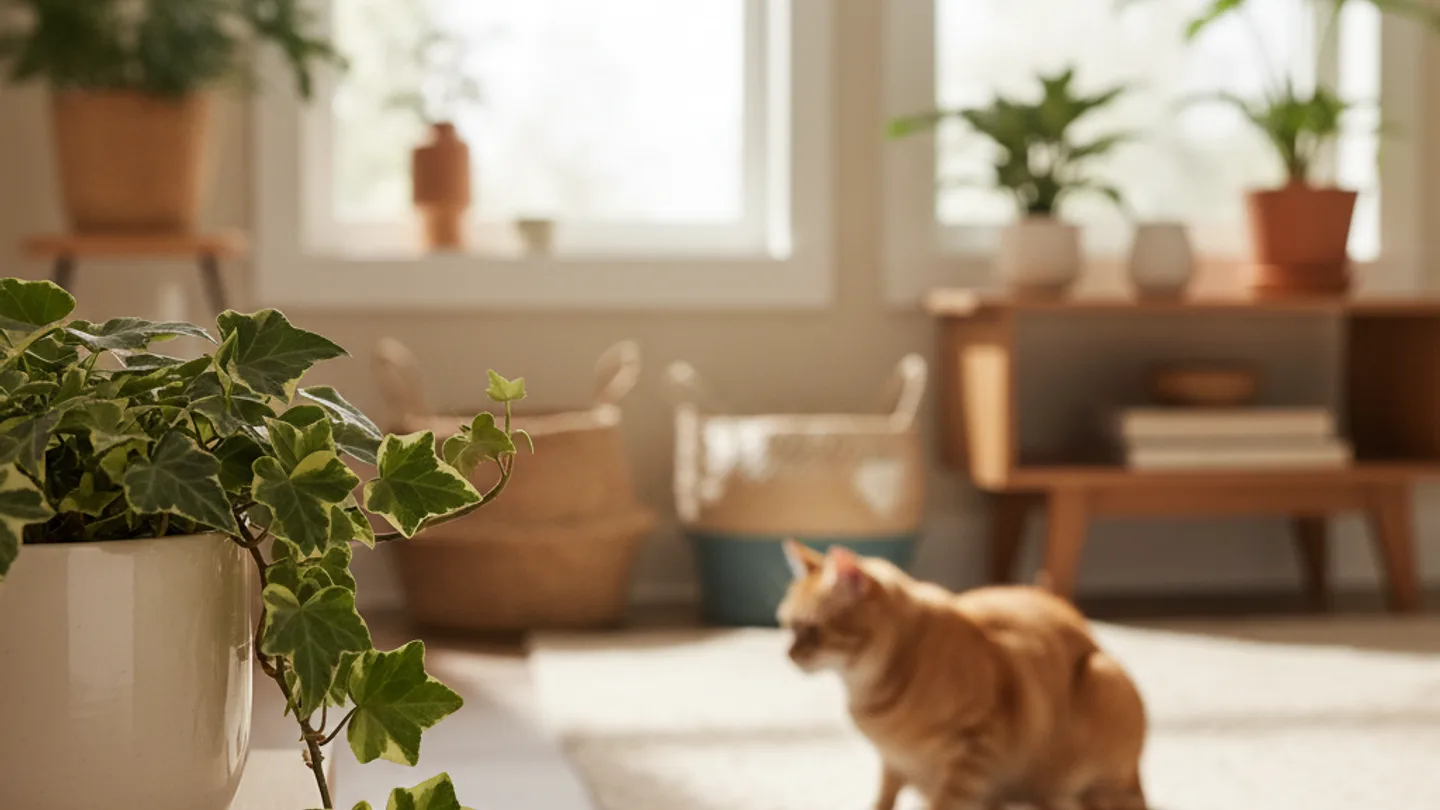
English ivy, botanically known as Hedera helix, is one of the most common trailing and climbing plants in the US. You see it in hanging baskets, on fences and covering walls outdoors.
The plant defends itself with triterpenoid saponins. These are natural chemicals that foam a little like soap when mixed with water. When your cat or dog chews a leaf, the saponins irritate the soft tissue of the mouth, throat and digestive tract.
The concentration is highest in the leaves. That is why the leaves cause more severe reactions than the berries, even though the berries look like the part a pet would go for first.
The sap can also irritate skin. If your pet brushes against a broken stem and then licks its fur, mild skin or mouth irritation can follow.
Symptoms to watch for
Symptoms usually appear within a few hours of chewing or swallowing the plant. The most common signs are:
Drooling or foaming at the mouth, because the saponins irritate the tongue and gums.
Vomiting, as the stomach tries to get rid of the irritant.
Abdominal pain. Your pet may seem restless, hunched or unwilling to be touched around the belly.
Diarrhea, sometimes along with loss of appetite.
Most cases stay mild to moderate because the bitter taste stops pets from eating much. But a small pet that eats a large amount can become dehydrated from repeated vomiting and diarrhea, and that needs a vet.

Indoor and outdoor exposure
Indoors, English ivy usually shows up in hanging baskets or on high shelves. That helps, but cats climb. A trailing vine at cat height is an invitation to chew, so treat any indoor ivy as within reach unless it is truly out of jumping range.
Outdoors, English ivy is a popular ground cover and wall climber across much of the US. Dogs sniffing along a fence line or cats patrolling the garden can chew it without you noticing.
If you have ivy in your yard and a pet that grazes on greenery, consider removing it or fencing off that area. Fallen leaves are still toxic, so raking matters too.
What to do if your pet eats English ivy
Stay calm. Most ivy ingestions are mild and resolve on their own.
Remove any plant pieces from your pet's mouth and rinse the mouth gently with water if your pet allows it.
Offer fresh water. It helps wash the irritating sap from the mouth and throat.
Call your vet or a pet poison hotline if your pet ate more than a nibble, or if you see repeated vomiting, diarrhea, marked drooling or signs of pain. Have the plant name ready: English ivy, Hedera helix.
Do not wait for symptoms to get severe. With small cats, kittens, puppies and senior pets, call sooner rather than later.
A pet-safe trailing swap
Love the cascading look but not the risk? Swedish ivy (Plectranthus verticillatus) is generally considered non-toxic to cats and dogs and trails beautifully from a hanging pot or shelf.
It likes bright, indirect light and tolerates the average apartment's conditions well. Water when the top inch of soil dries out, and pinch the tips to keep it full.
Other safe trailing options include spider plants and Boston ferns. And if you are comparing other popular houseplants, our guide on whether Monstera is toxic to cats and dogs follows the same verdict-first format.
Even with a plant that is generally considered non-toxic, any pet that eats a lot of greenery can get an upset stomach. If symptoms appear, contact your vet.
Common questions about English ivy and pets
Is English ivy toxic to cats?
Yes. English ivy is toxic to cats. The triterpenoid saponins in the leaves and stems irritate the mouth and digestive tract, causing drooling, vomiting and abdominal pain. Call your vet if your cat ate more than a small nibble or shows ongoing symptoms.
Is English ivy toxic to dogs?
Yes. Dogs that chew English ivy can develop drooling, vomiting, diarrhea and belly pain. Outdoor ivy along fences and walls is a common source of exposure for dogs, so keep an eye on sniffing walks through landscaped areas.
Are English ivy berries or leaves more dangerous?
The leaves are more toxic than the berries. The concentration of triterpenoid saponins is highest in the foliage, which is also the part pets most often chew.
Can English ivy irritate my pet's skin?
Yes. The sap can cause skin irritation in pets and people. If your pet brushed against broken stems, a gentle rinse of the coat and a watchful eye for redness or licking are sensible steps.
What is a safe alternative to English ivy?
Swedish ivy is generally considered non-toxic to cats and dogs and gives a similar trailing effect in hanging baskets. Spider plants and Boston ferns are also pet-safe options for the same spots.
When should I call the vet?
Call your vet or a pet poison hotline if your pet ate a meaningful amount, or if you see repeated vomiting, diarrhea, heavy drooling, lethargy or signs of pain. Kittens, puppies, small pets and seniors deserve a lower threshold for calling.