Money Tree Care: A Pet-Safe Plant with a Lucky Story
Money trees are generally considered non-toxic to both cats and dogs. That makes Pachira aquatica one of the friendlier statement plants you can bring into a home with pets.
Good money tree care comes down to a few simple things: bright indirect light, a deep drink only when the soil dries out, and a pot that drains well. This guide covers the braided trunk, watering, light, and what to do when leaves start dropping.
One warning up front. The jade plant is also sold as a 'money plant', and jade is toxic to cats and dogs. We will show you how to tell them apart.
The short version
- Money tree (Pachira aquatica) is generally considered non-toxic to cats and dogs.
- Water deeply, but only when the top few inches of soil feel dry.
- Bright, indirect light is ideal. Direct sun can scorch the leaves.
- Leaf drop is usually a watering or light problem, and it is fixable.
- The jade 'money plant' (Crassula ovata) is a different plant and is toxic to cats and dogs.
- If your pet eats any plant and shows symptoms, call your vet or a pet poison helpline.
Is the money tree safe for cats and dogs?
Yes. The money tree, Pachira aquatica, is generally considered non-toxic to both cats and dogs. It does not contain the insoluble calcium oxalate crystals found in many popular houseplants, like the monstera.
Non-toxic does not mean snack-worthy. A cat that chews a lot of leaves can still get a mild upset stomach, simply because plant material is hard to digest. If your pet vomits, drools, or seems off after chewing any plant, call your vet.
Placement still matters. A floor-standing money tree at cat height will get nibbled. A plant stand or a hanging barrier keeps both the plant and your pet happier.
The braided trunk: what it is and what it needs
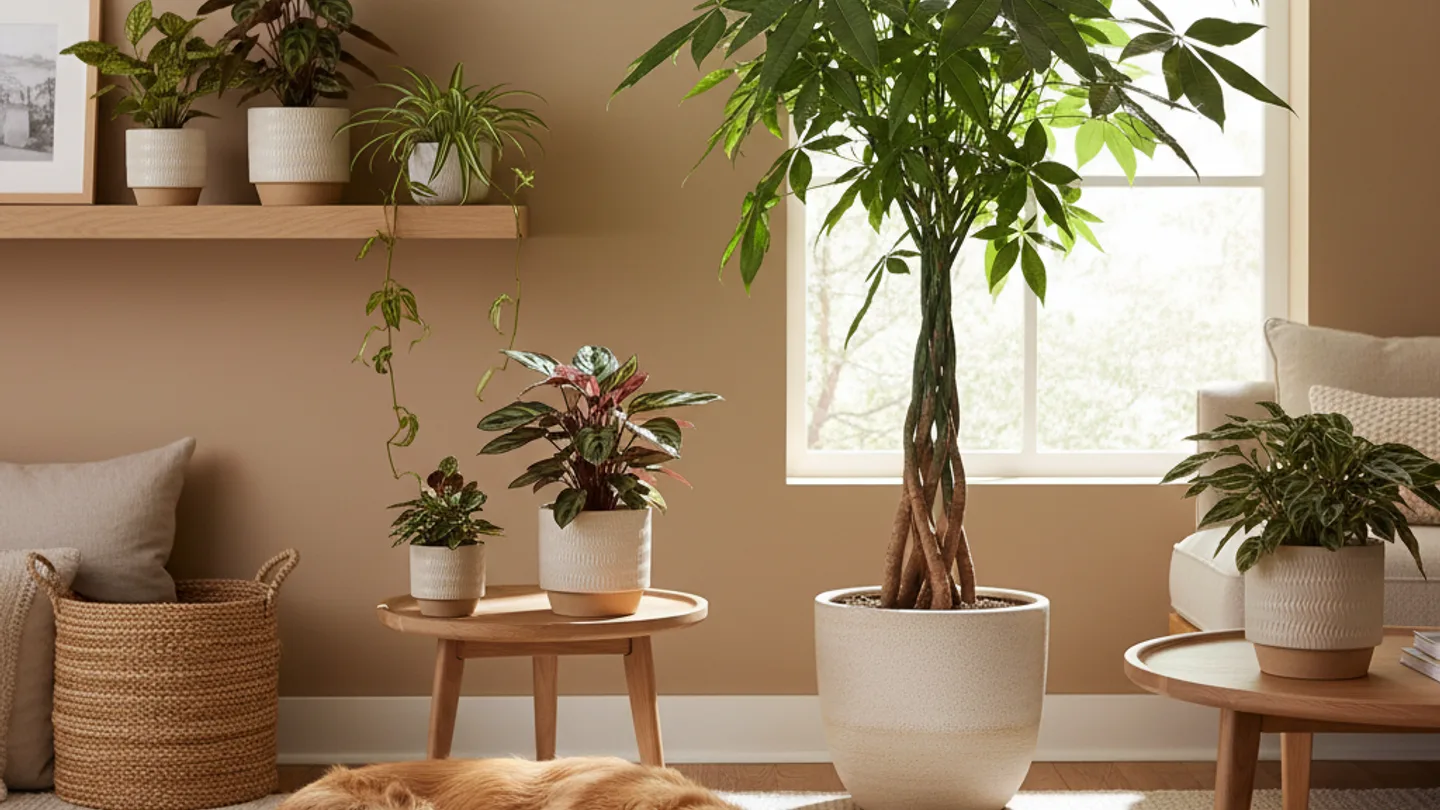
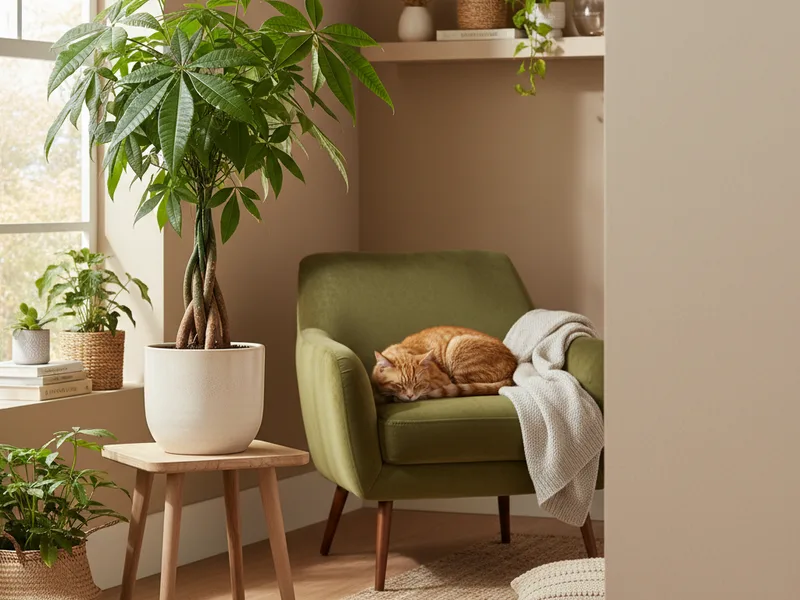
That signature braided trunk is not natural. Growers braid several young, flexible stems together while the plants are still small. As the trunks thicken, the braid locks in place.
The braid is mostly decorative, so it needs little from you. Do not try to tighten or re-braid a mature trunk. Forcing it can crack the bark and let in rot.
One thing to watch: as the tree grows, the braid can squeeze the stems. If you see one stem in the braid dying back or the bark looking pinched, trim away the dead stem cleanly. The rest of the tree will carry on.
The swollen base of the trunk stores water. That is why money trees forgive a missed watering better than many plants, and why overwatering is the bigger danger.
Light: bright but not harsh
Money trees want bright, indirect light. Think a spot near an east-facing window, or a few feet back from a south or west window.
They adapt to medium light, which makes them realistic apartment plants. Growth will slow and the leaves may stretch toward the window, but the plant will live.
Direct afternoon sun is the main thing to avoid. It can scorch the leaves, leaving brown, crispy patches. If your only spot gets harsh sun, a sheer curtain fixes it.
Rotate the pot a quarter turn every week or two. Money trees lean toward the light, and rotating keeps the growth even.
Watering: deep drink, then dry
Water your money tree when the top 2 to 3 inches of soil feel dry to the touch. In most homes that works out to roughly every one to two weeks, but always check the soil instead of the calendar.
When you do water, water thoroughly. Let it run until it drains from the bottom of the pot, then empty the saucer. A money tree sitting in standing water is on its way to root rot.
Root rot is a fungal decay that sets in when roots sit in soggy soil. The first signs are yellowing leaves and a soft, mushy trunk base. By the time the trunk feels squishy, the damage is serious, so drainage is everything.
In winter, growth slows and the plant drinks less. Stretch the time between waterings and let the soil dry a bit deeper.
Fixing leaf drop, step by step
Check the soil first
Stick a finger 2 to 3 inches into the soil. Soaking wet points to overwatering or poor drainage. Bone dry points to underwatering. This one check solves most cases.
Adjust your watering
If the soil is wet, stop watering and let it dry out fully. Make sure the pot drains and the saucer is empty. If the soil is dry, give the plant a deep, thorough drink.
Look at the light
Sudden leaf drop often follows a move. A money tree shifted from a bright shop to a dim corner will protest by dropping leaves. Move it closer to a window, gradually.
Check for drafts
Money trees dislike cold drafts and blasts of hot, dry air. Keep yours away from exterior doors, AC vents, and radiators.
Give it time
Some leaf drop after any change is normal. If the soil, light, and placement are right, the tree will settle and push out new growth within a few weeks.
| Money tree | Jade plant ('money plant') |
|---|---|
| Pachira aquatica | Crassula ovata |
| Generally considered non-toxic to cats and dogs | Toxic to cats and dogs |
| Braided trunk with hand-shaped leaf clusters | Thick, fleshy, oval leaves on woody stems |
| Likes bright indirect light and evenly moist soil that dries between waterings | Succulent: wants lots of light and very infrequent watering |
| Safe choice for pet homes | Skip it, or keep it fully out of reach |
Why the lucky story?
The money tree's reputation comes from a folk tale about a poor man who found the plant, sold its seeds, and made his fortune. Its five-leaflet clusters are said to represent the five elements of feng shui, and the braided trunk is said to trap good luck inside.
Whether or not you buy the legend, the plant itself earns its place. It grows quickly, tolerates average indoor conditions, and asks little of you.
As a gift, it is a thoughtful pick for a friend with pets, since you are not handing them a hidden hazard. Just make sure the label says Pachira aquatica, not jade.
Common questions about money trees and pets
Is the money tree toxic to cats?
No. Pachira aquatica is generally considered non-toxic to cats. Eating a large amount of leaves can still cause mild stomach upset, so call your vet if your cat vomits or seems unwell after chewing one.
Is the money tree toxic to dogs?
No. It is generally considered non-toxic to dogs as well. The same advice applies: a big mouthful of leaves may cause a mild upset stomach, and symptoms are a reason to call your vet.
Is a money tree the same as a money plant?
Not always. 'Money plant' is a nickname used for several plants, including the jade plant (Crassula ovata), which is toxic to cats and dogs. Check the botanical name before you buy. The pet-safe one is Pachira aquatica.
Why is my money tree dropping leaves?
The usual causes are overwatering, underwatering, a sudden change in light, or a cold draft. Check the soil first, then the light, then nearby vents and doors. Mild leaf drop after a move is normal and usually stops on its own.
How often should I water a money tree?
When the top 2 to 3 inches of soil feel dry, usually every one to two weeks in most homes. Water deeply, let it drain fully, and never let the pot sit in standing water.
Can a money tree live in low light?
It can survive in medium light, but it will not thrive. Expect slower growth and leggier stems. Bright, indirect light keeps it full and healthy.