Pet-Safe Ferns: The Full List (and the Fake Fern to Avoid)
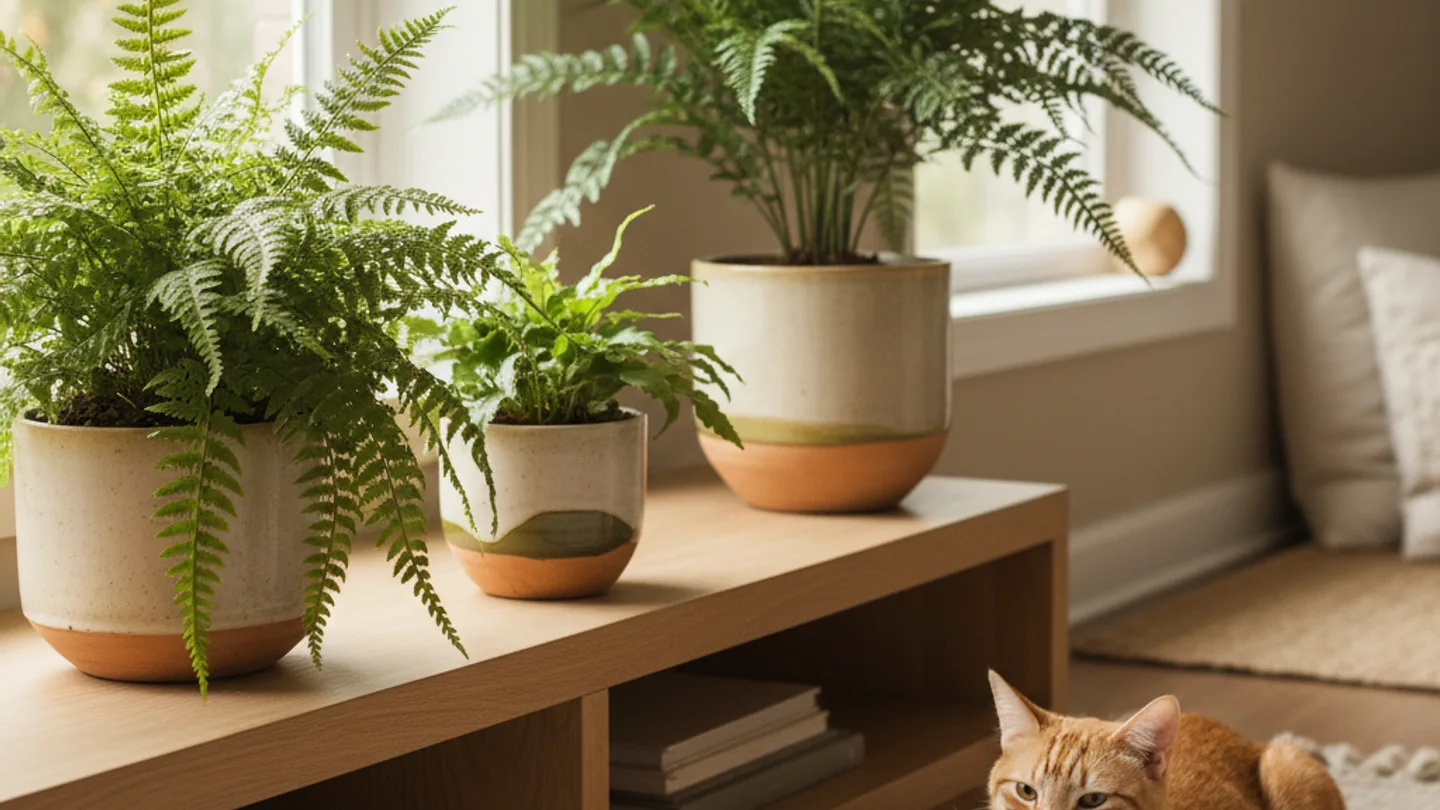
True ferns are generally considered non-toxic to cats and dogs. If your cat nibbles a frond or your dog brushes past a hanging basket, a true fern is one of the safer choices you can make.
There is one big catch. A popular plant called the asparagus fern is not a fern at all, and it is toxic to both cats and dogs. It shows up in the same shops and the same Instagram posts as the safe ones.
This list covers the pet safe ferns worth bringing home, how hard each one is to keep alive in a real apartment, and how to spot the fake fern before it lands in your cart.
In this article
The short answer
- True ferns, including Boston fern, bird's nest fern, maidenhair fern and staghorn fern, are generally considered non-toxic to cats and dogs.
- The asparagus fern is not a true fern. It is toxic to cats and dogs and can cause vomiting, diarrhea and skin irritation.
- Even a non-toxic fern can cause a mild upset stomach if your pet eats a lot of it. Call your vet if symptoms appear.
- Most true ferns want indirect light and steady moisture, so they suit bathrooms and shaded corners better than sunny sills.
What counts as a true fern
Ferns are an old plant family that reproduces with spores instead of flowers and seeds. That botanical detail matters here because the plants on this list belong to that true fern family, and the ones to avoid do not.
Plant shops use the word fern loosely. Anything with feathery, lacy leaves gets the label, which is exactly how the toxic asparagus fern ends up sold next to the safe Boston fern.
The rule of thumb is simple. If the plant's scientific name places it in a true fern family, it is generally considered non-toxic to cats and dogs. If it is a lookalike from another family, check before you buy.
| Fern | Safe for cats | Safe for dogs | Care difficulty | Light it likes |
|---|---|---|---|---|
| Boston fern | Yes, generally non-toxic | Yes, generally non-toxic | Moderate | Bright indirect light |
| Bird's nest fern | Yes, generally non-toxic | Yes, generally non-toxic | Easy to moderate | Medium indirect light |
| Maidenhair fern | Yes, generally non-toxic | Yes, generally non-toxic | Hard | Medium indirect light, high humidity |
| Staghorn fern | Yes, generally non-toxic | Yes, generally non-toxic | Moderate | Bright indirect light |
| Button fern | Yes, generally non-toxic | Yes, generally non-toxic | Easy | Low to medium indirect light |
| Kimberly Queen fern | Yes, generally non-toxic | Yes, generally non-toxic | Easy to moderate | Bright indirect light |
| Rabbit's foot fern | Yes, generally non-toxic | Yes, generally non-toxic | Moderate | Medium indirect light |
| Asparagus fern | No, toxic | No, toxic | Easy, but skip it | Bright indirect light |
The safe ferns, one by one
Boston fern is the classic hanging basket fern. It likes bright indirect light and soil that stays lightly moist. Dry air turns its fronds brown and crispy, so a bathroom with a window is ideal.
Bird's nest fern has broad, wavy fronds that grow from a central rosette. It tolerates lower light than most ferns and forgives the occasional missed watering, which makes it a good first fern for beginners.
Maidenhair fern is the delicate one with fan-shaped leaflets on dark stems. It is beautiful and demanding. It wants steady moisture and high humidity, and it will collapse fast if it dries out. Skip it unless you enjoy fussing over a plant.
Staghorn fern grows on a board or in a basket and looks like antlers. It needs a soak-and-dry routine rather than regular watering, which takes a little practice but is not hard once you get the rhythm.
Button fern is small and compact, a good fit for shelves and small apartments. It handles lower light and is one of the easiest ferns on this list.
Kimberly Queen fern looks like a tidier Boston fern and holds up better in drier indoor air. It is a solid pick if you want the full, lush fern look without daily misting.
Rabbit's foot fern grows fuzzy rhizomes that creep over the edge of the pot. Those rhizomes are part of the plant, not a problem, and cats often find them interesting. The plant itself is generally considered non-toxic.
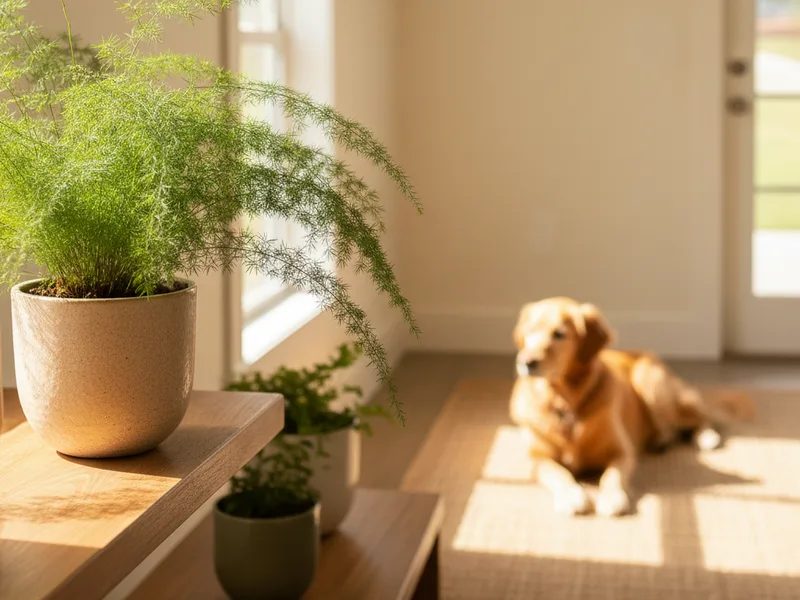
The fake fern to avoid: asparagus fern
The asparagus fern is toxic to both cats and dogs. It is not a fern at all. It belongs to the asparagus family, and it is related to the vegetable on your plate.
You will see it sold as asparagus fern, foxtail fern, emerald fern or lace fern. The foliage looks soft and ferny, which is why it ends up in so many pet owners' homes by mistake.
If a cat or dog eats it, the plant can cause vomiting, diarrhea and stomach pain. Repeated skin contact with the foliage can also irritate some pets. If your pet eats part of an asparagus fern, call your vet or a pet poison helpline for advice.
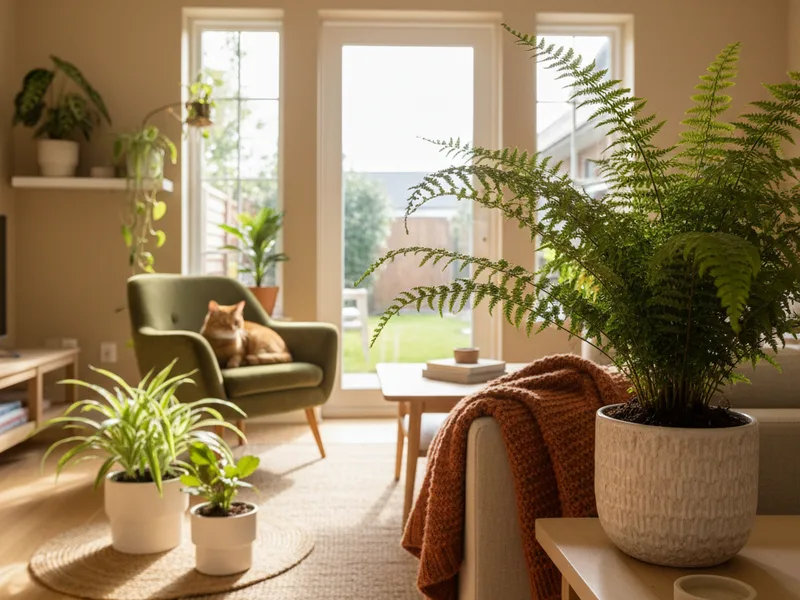
Want the same soft, feathery look without the risk? A Boston fern or Kimberly Queen fern gives you a similar full, airy shape and a similar preference for bright indirect light. You get the look, and your pet stays safe.
Common questions about ferns and pets
Are ferns safe for cats and dogs?
True ferns like Boston fern, bird's nest fern and maidenhair fern are generally considered non-toxic to cats and dogs. The exception is the asparagus fern, which is not a true fern and is toxic to both.
What happens if my cat eats a Boston fern?
Boston fern is generally considered non-toxic, so a nibble is unlikely to cause serious harm. Eating a large amount of any plant can still cause a mild upset stomach. Watch for vomiting or diarrhea and call your vet if symptoms appear or continue.
How can I tell an asparagus fern from a true fern?
Asparagus ferns have very fine, needle-like or feathery foliage on wiry stems, and some types grow small red berries. True ferns have fronds that uncurl from fiddleheads and never produce flowers or berries. When in doubt, check the plant tag for the scientific name before buying.
My dog digs in plant pots. Are ferns still a good choice?
The plant itself is generally considered non-toxic, but potting soil, fertilizer and any pesticides on the leaves can cause problems if swallowed. Place ferns where your dog cannot dig, or use a heavy pot and a top layer of large pebbles.
Which pet safe fern is easiest for beginners?
Bird's nest fern and button fern are the most forgiving. Both handle medium indirect light and the occasional missed watering better than a Boston fern or a maidenhair fern.