Purple Passion Plant Care: Fuzzy, Vivid and Pet-Safe
Purple passion plant is generally considered non-toxic to cats and dogs. That is the answer first, because it matters most.
The purple passion plant (Gynura aurantiaca) is one of the most striking houseplants you can buy. Its leaves are covered in soft purple hairs that shimmer in bright light. And unlike many dramatic-looking plants, it is a safe pick for homes with pets.
This guide covers purple passion plant care in plain terms: light, water, pinching, and what to do when it gets leggy.
The short version
- Purple passion plant is generally considered non-toxic to cats and dogs.
- Bright, indirect light keeps the purple color vivid. Low light turns it green and leggy.
- Water the soil, not the leaves. Wet fuzz can rot.
- Pinch stem tips often to keep the plant full and compact.
- The orange flowers smell unpleasant. Many owners snip them off.
- If your pet eats any plant and shows symptoms, call your vet.
The verdict
Is purple passion plant toxic to cats or dogs?
No. The purple passion plant is generally considered non-toxic to both cats and dogs. It is not on the ASPCA list of plants known to be toxic to pets.
That said, no plant is completely risk-free. Eating a large amount of any plant can cause a mild upset stomach, even a safe one. Cats that chew leaves out of boredom may vomit afterward, not because of poison, but because plant fiber is hard to digest.
If your cat or dog eats part of your gynura and then vomits, seems lethargic, or stops eating, contact your vet. When in doubt, a quick call is always the right move.
Want to compare with a plant that is risky? Read our guide on monstera toxicity to see how different the answer can be.
Light: where the purple comes from
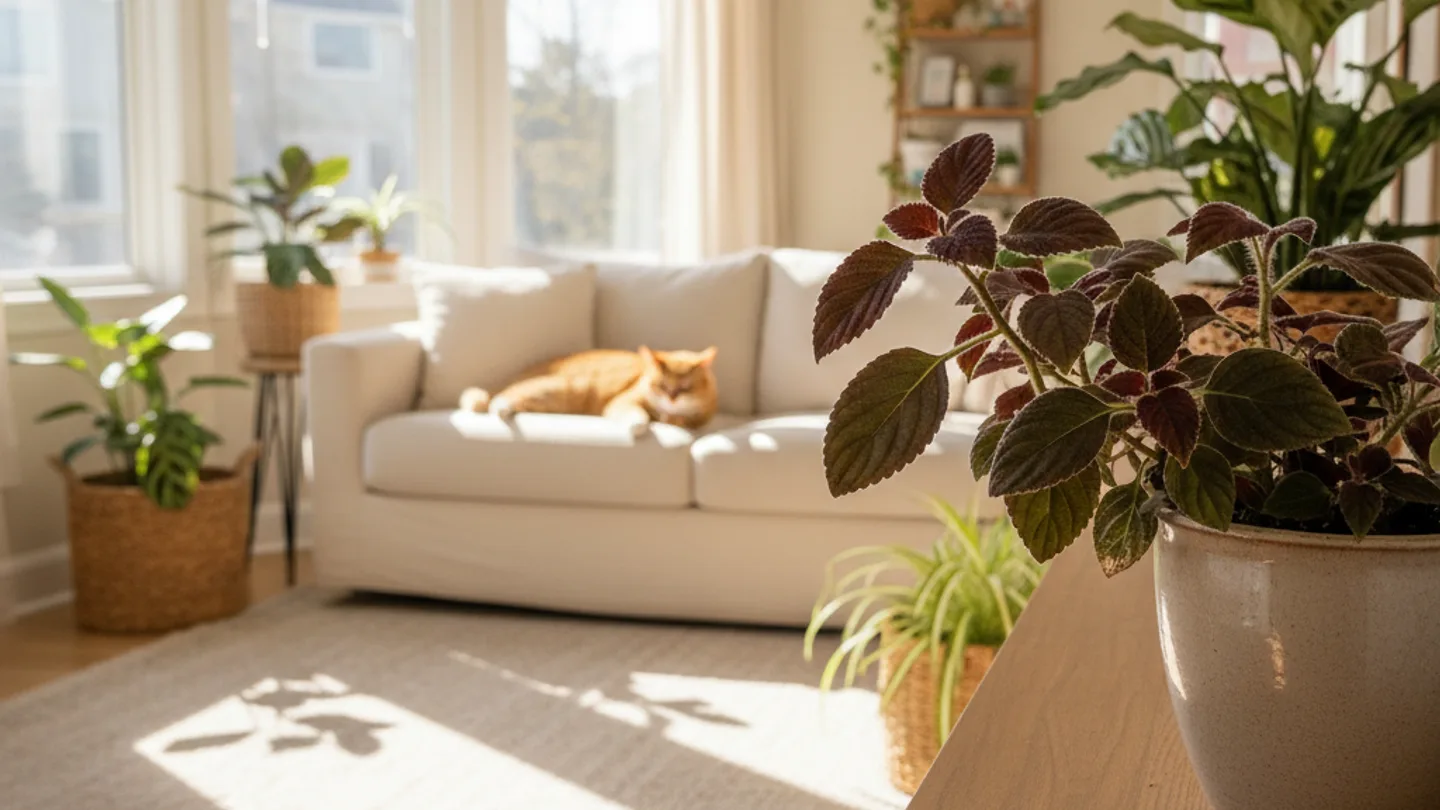
The purple color is not in the leaf itself. It comes from thousands of tiny soft hairs that cover the green leaf underneath. These hairs show their best color in bright light.
Give your plant bright, indirect light. A spot near an east or west window works well in most US homes. A few hours of gentle direct sun is fine and often deepens the color.
In low light, the plant tells you it is unhappy. The purple fades toward green, stems stretch toward the window, and the spaces between leaves get longer. That stretched look is called leggy growth.
If your apartment is dim, a small grow light for a few hours a day keeps the color strong. Purple passion plant is a good candidate for a sunny kitchen window or a bright shelf.
Watering without soaking the fuzz
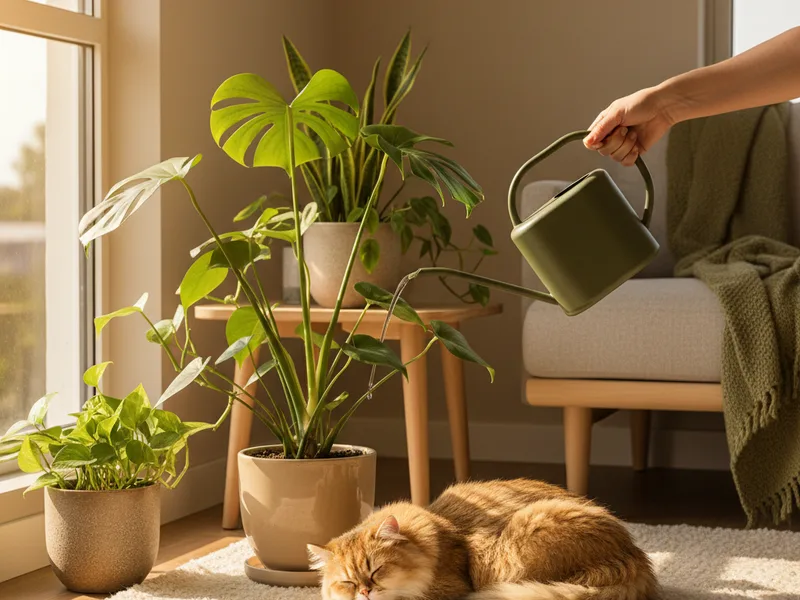
Those soft hairs hold water. When the leaves stay wet, they can rot or develop spots. The fix is simple: water the soil, not the plant.
Water from below or aim the spout at the soil surface. Let the top inch of soil dry out before watering again. In most homes that means roughly once a week in summer and less in winter, but always check the soil instead of the calendar.
Use a pot with drainage holes. Soggy soil causes root rot, and this plant dislikes wet feet.
Skip the misting bottle. Many tropical plants like mist, but gynura's fuzz traps the droplets. Average household humidity is fine.
Pruning
How to pinch a leggy purple passion plant
Find the longest stems
Look for stems that have stretched out with big gaps between leaves. These are the ones to pinch first.
Pinch just above a leaf pair
Use your fingertips or clean scissors to remove the stem tip, cutting just above a set of leaves. New growth will branch from that point.
Pinch little and often
Removing the tips every few weeks keeps the plant bushy. A hard chop once a year works too, but regular pinching looks better.
Root the cuttings if you like
Stem tips root easily in water or moist soil. Purple passion plants tend to get woody and sparse after a couple of years, so fresh cuttings are a free way to restart.
Flowers, feeding and repotting
Mature plants produce small orange flowers. They look cheerful, but they smell bad, often compared to something burnt or musty. Most owners snip the buds off as soon as they appear. Flowering also takes energy away from the foliage.
Feed with a balanced houseplant fertilizer at half strength once a month in spring and summer. Skip feeding in fall and winter when growth slows.
Repot in spring when roots fill the pot. Go one pot size up and use a light, well-draining potting mix. Because the plant can get leggy with age, many owners simply root cuttings every year or two instead of keeping an old plant going.
Common questions about purple passion plant
Is purple passion plant safe for cats and dogs?
Yes, it is generally considered non-toxic to both cats and dogs. Eating a lot of any plant can still cause a mild stomach upset, so call your vet if your pet shows symptoms after chewing.
Why is my purple passion plant turning green?
Not enough light. The purple hairs show their strongest color in bright, indirect light. Move the plant closer to a window or add a small grow light and the color should return on new growth.
Can I mist my purple passion plant?
No. The fuzzy leaves trap water droplets, which can lead to rot and spotting. Water the soil directly and keep the leaves dry.
How do I fix a leggy purple passion plant?
Pinch the stem tips just above a leaf pair. This makes the plant branch and grow fuller. Also move it to brighter light, since low light is usually the cause of the stretching.
Do the flowers hurt the plant?
No, but they smell unpleasant and drain energy from the leaves. Most owners remove the buds. The plant does fine either way.
How long does a purple passion plant live?
Plants often get woody and sparse after two to three years. The good news: stem cuttings root very easily, so you can keep the plant going indefinitely by starting fresh ones.