String of Turtles Care: The Trendy Trailer That Is Actually Pet-Safe
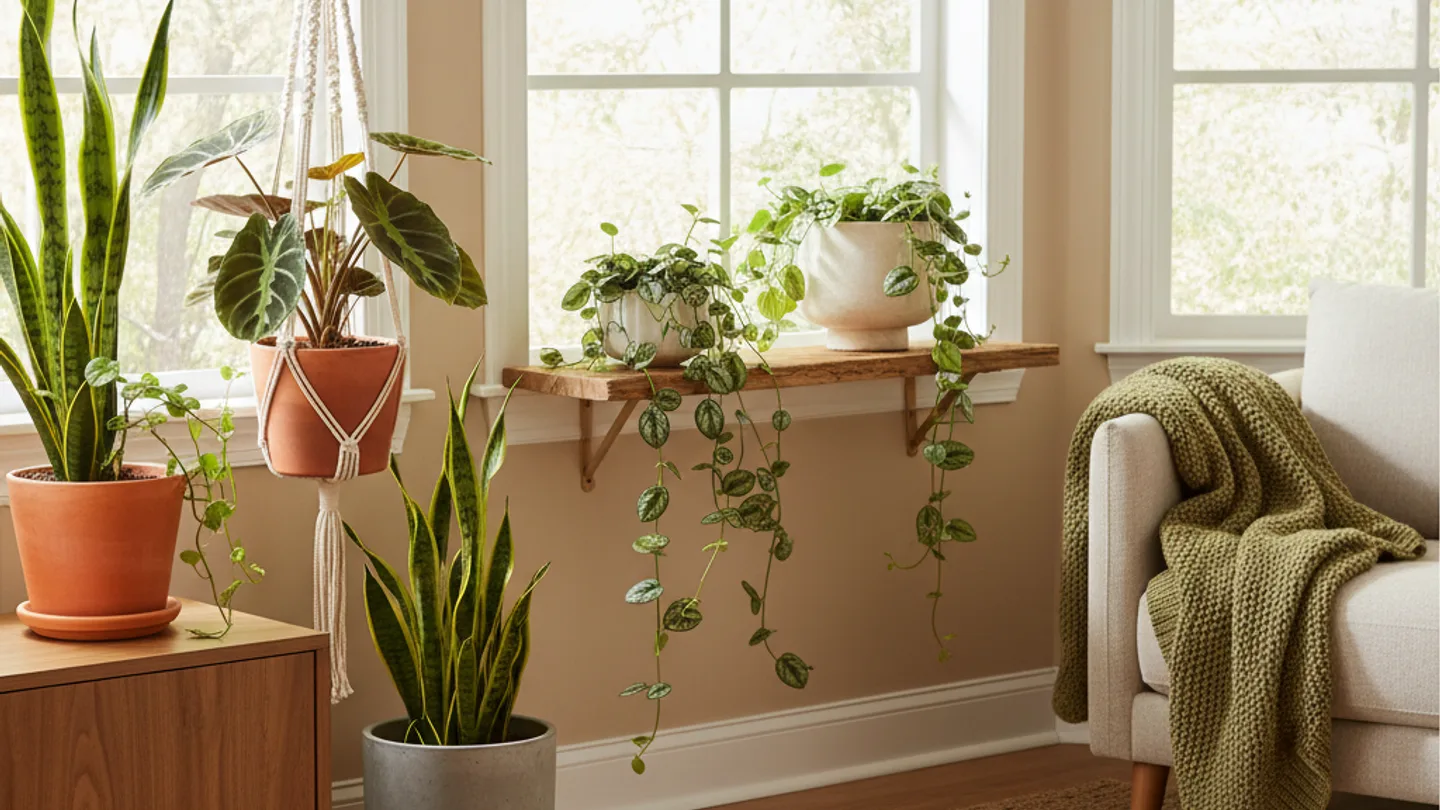
String of turtles (Peperomia prostrata) is generally considered non-toxic to both cats and dogs. That is the short answer, and it is a big part of why this plant is everywhere right now.
You get the trailing, patterned look of string of pearls without the toxicity worry. If a curious cat bats at a strand or a dog samples a fallen leaf, the risk is low.
Here is how to keep it healthy in a real home, with the light and watering routine it actually wants.
String of turtles at a glance
- String of turtles is generally considered non-toxic to cats and dogs.
- Unlike string of pearls, which is toxic to pets, it gives you the same trailing look without the risk.
- It wants bright, indirect light and light watering. Think gentle, not generous.
- It grows slowly, so a small pot stays small for a long time.
- It is a peperomia, so care is closer to a radiator plant than to a succulent.
Is string of turtles toxic to cats or dogs?
No. String of turtles is a peperomia, and peperomias are generally considered non-toxic to cats and dogs.
That puts it in a small, valuable group: trailing plants with a delicate, patterned look that do not come with a poison warning attached.
A quick note on what non-toxic means here. It does not mean the plant is a snack. Eating a large amount of any plant can still cause mild stomach upset in pets. It means the plant contains no known toxins that are dangerous to cats or dogs.
If your pet eats some and shows symptoms like vomiting, drooling or low energy, call your vet. That advice applies to every plant, safe or not.
Why people compare it to string of pearls
String of turtles and string of pearls get mentioned in the same breath all the time. Both trail, both look delicate, both photograph beautifully on a shelf. But they are very different plants when it comes to pet safety.
String of pearls (Senecio rowleyanus) is toxic to cats and dogs. It contains compounds that can cause vomiting, drooling and lethargy if eaten. It also wants much more direct light than string of turtles, which trips people up.
If you love the trailing look and have pets, string of turtles is the safer way to get it.
| Feature | String of turtles | String of pearls |
|---|---|---|
| Toxic to cats and dogs | No, generally considered non-toxic | Yes, toxic if eaten |
| Plant family | Peperomia | Succulent (Senecio) |
| Light needs | Bright, indirect light | Bright light, some direct sun |
| Watering | Light, when the top of the soil dries | Sparse, like a succulent |
| Growth speed | Slow | Moderate to fast |
| Look | Small round leaves with turtle-shell pattern | Round bead-like leaves |
Light: bright and gentle
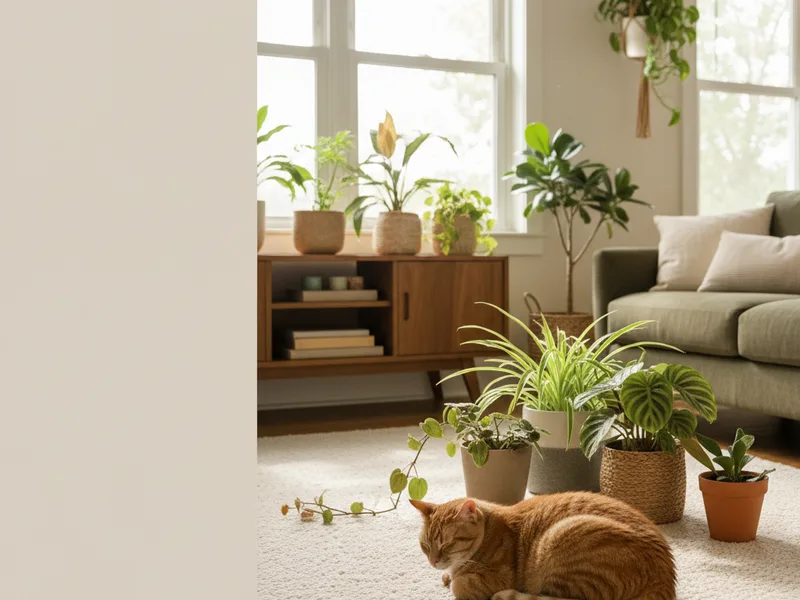
String of turtles wants bright, indirect light. An east-facing window is ideal. A spot a few feet back from a south or west window also works well.
Because it is a peperomia and not a succulent, it does not want hours of harsh direct sun. Strong afternoon sun can scorch the small leaves and fade the pattern.
Too little light is the more common problem in apartments. Signs include slow or stalled growth, long gaps between leaves and a fading pattern. Move it closer to the window and it usually recovers, slowly but surely.
Watering: less than you think
This is where most string of turtles plants struggle. The leaves are small and slightly fleshy, and they store some water. The roots are fine and shallow. That combination means overwatering is the biggest risk.
Let the top of the soil dry out before you water again. Then water lightly and let the excess drain. Never let the pot sit in water.
The leaves tell you what is happening. Soft, mushy leaves usually mean too much water. Wrinkled or shriveled leaves usually mean too little. Check the soil before you react, because the fix is opposite in each case.
In winter, growth slows and the plant needs less water. Stretch the time between waterings.
Care routine
A simple watering routine
Check the soil
Push a finger about an inch into the soil. If it still feels moist, wait a few more days.
Water lightly
When the top has dried, water slowly around the base until a little drains from the bottom. Avoid soaking the leaves.
Empty the saucer
Pour out any water that collects under the pot. Sitting in water rots the shallow roots.
Adjust with the seasons
In summer you may water every week or so. In winter, often much less. Let the soil, not the calendar, make the call.
Soil, pot and feeding
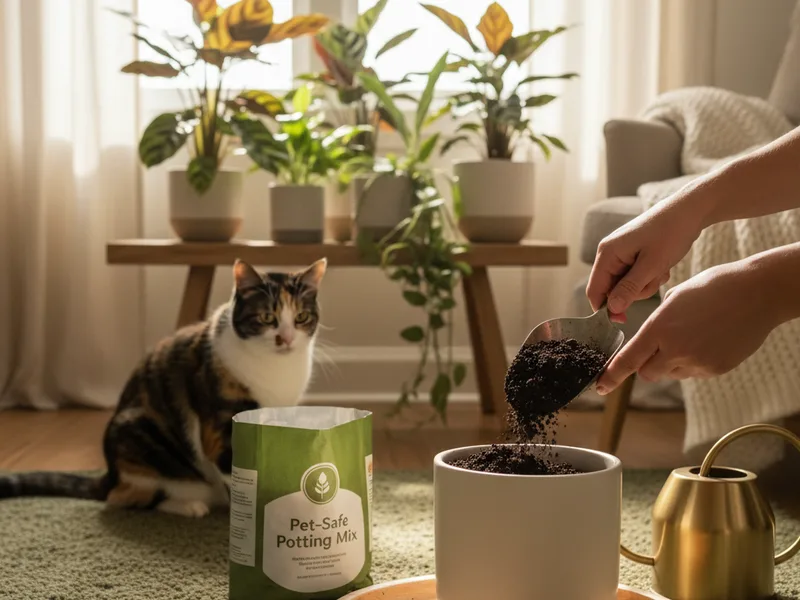
Use a light, free-draining mix. A standard houseplant potting soil with some perlite mixed in works well. The goal is a mix that holds a little moisture but never stays soggy.
Choose a small pot with a drainage hole. String of turtles has a small root system and prefers to be slightly snug. A pot that is too big holds wet soil the roots never reach, which invites rot.
Feed lightly during spring and summer with a diluted houseplant fertilizer, about once a month. Skip feeding in fall and winter. This plant is a slow grower and does not need much.
Growth: slow and steady
Do not expect fast results. String of turtles grows slowly, even in good conditions. Strands lengthen gradually and stay delicate.
This is actually useful in a pet household. A plant that stays compact is easier to keep on a high shelf or in a hanging planter, away from playful paws, even though you do not strictly need to hide this one.
If strands get leggy or sparse, you can trim them and lay the cuttings on moist soil. They root where the leaf nodes touch the soil, which slowly fills the pot out.
Common questions
Is string of turtles safe for cats?
Yes. String of turtles is a peperomia, and peperomias are generally considered non-toxic to cats. Eating a lot of any plant can still cause mild stomach upset, so call your vet if your cat shows symptoms like vomiting or drooling.
Is string of turtles safe for dogs?
Yes, it is generally considered non-toxic to dogs as well. It is one of the few trendy trailing plants that is safe to keep within reach of both cats and dogs.
Is string of turtles the same as string of pearls?
No. They look similar at a glance, but string of pearls is a succulent that is toxic to cats and dogs. String of turtles is a peperomia and is non-toxic. If you have pets, string of turtles is the safer choice.
Why are my string of turtles leaves falling off?
The most common cause is overwatering. Check whether the soil stays wet for a long time. Cold drafts and very low light can also cause leaf drop. Let the soil dry more between waterings and move the plant somewhere brighter and warmer.
How fast does string of turtles grow?
Slowly. Expect gradual growth rather than dramatic trailing in a few months. Bright indirect light and light feeding in spring and summer help, but patience is part of the deal with this plant.
Can I grow string of turtles in low light?
It tolerates lower light better than string of pearls, but growth will slow and the leaf pattern can fade. Bright, indirect light gives the best results.