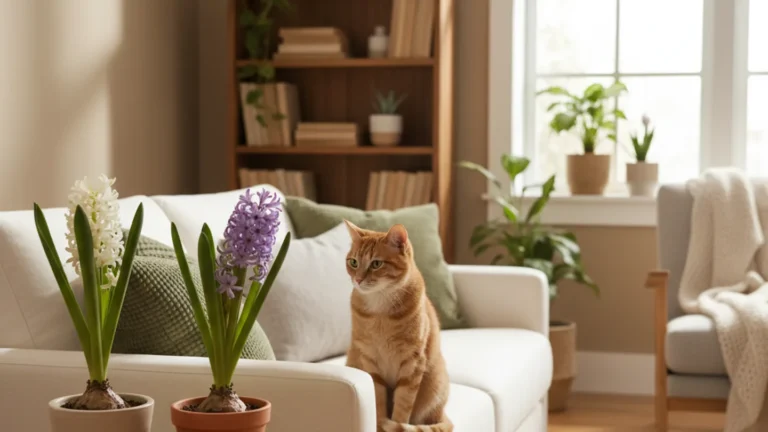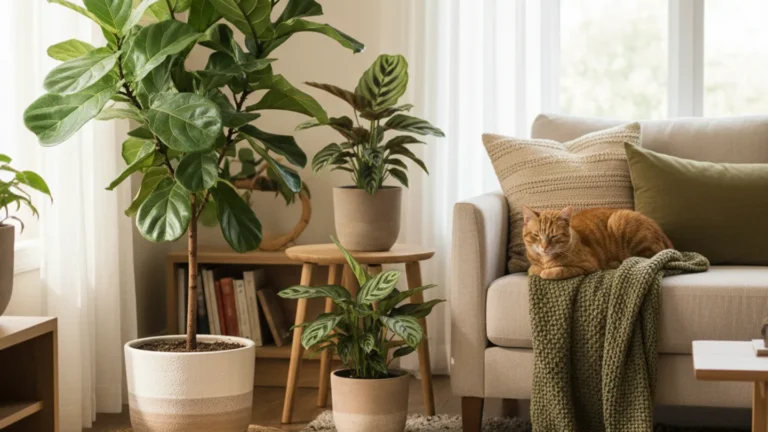

Is Cyclamen Toxic to Cats and Dogs?
Yes, cyclamen is toxic to cats and dogs. Every part of the plant contains natural compounds called terpenoid saponins, and the tuber hidden under the soil holds the highest concentration. A quick nibble usually means an upset stomach. A pet that digs up and eats the tuber can become seriously ill.
Cyclamen is one of the few houseplants that flowers in the darkest months, so stores fill up with it from late fall through winter. That is exactly when pets spend more time indoors and closer to your plants.
Here is what makes cyclamen risky, which symptoms to watch for, what to do if your pet takes a bite, and which winter-flowering plants are safer choices.
In this article
Key takeaways
- Cyclamen is toxic to both cats and dogs. All parts contain terpenoid saponins, bitter compounds that irritate the mouth, stomach and gut.
- The tuber under the soil is the most dangerous part, with the highest concentration of saponins.
- The usual symptoms are drooling, vomiting and diarrhea, often starting within a few hours.
- Serious cases are rare and almost always involve a dog that dug up and ate the tuber. Large amounts can affect heart rhythm and cause seizures.
- If your pet eats cyclamen, call your vet or a pet poison hotline, especially if the tuber was touched or symptoms appear.
- Want winter flowers without the worry? African violets, moth orchids, Christmas cacti and bromeliads are generally considered non-toxic.
The toxin, explained
What makes cyclamen toxic
The toxic agents in cyclamen are terpenoid saponins. In plain words: saponins are bitter, soap-like compounds the plant produces to protect itself from being eaten. When your pet chews or swallows them, they irritate the lining of the mouth, stomach and intestines.
That irritation causes the classic signs of cyclamen poisoning: drooling, vomiting and diarrhea. In much larger amounts, saponins can also affect the heart, which is why the dose matters so much.
And the dose depends on the part of the plant. Leaves, stems and flowers contain relatively little. The tuber, the swollen brown mass that sits at or just under the soil surface, stores the highest concentration of saponins by far.
So a cat that nibbles a leaf takes in a small amount. A dog that knocks over the pot and chews the tuber takes in a large one. Same plant, very different risk.
Cats and dogs meet this plant differently
Usually leaf and flower nibbles
Cats rarely dig, so their exposure is usually small: a chewed leaf, stem or petal. The typical picture is sudden drooling, maybe pawing at the mouth, and possibly vomiting.
Most cats recover quickly. Still, kittens and determined chewers can take in more than a taste, so treat any chewed cyclamen as a reason to watch your cat closely and call the vet if symptoms show.
Usually the tuber cases
Dogs star in most serious cyclamen cases, not because the plant is more toxic to them, but because dogs dig. A dog that tips the pot and eats the tuber swallows a concentrated dose.
That is when vets see the severe picture: repeated vomiting and diarrhea, abnormal heart rhythm and, in the worst cases, seizures. Puppies and small breeds carry extra risk, because a smaller body needs less toxin to get into trouble.
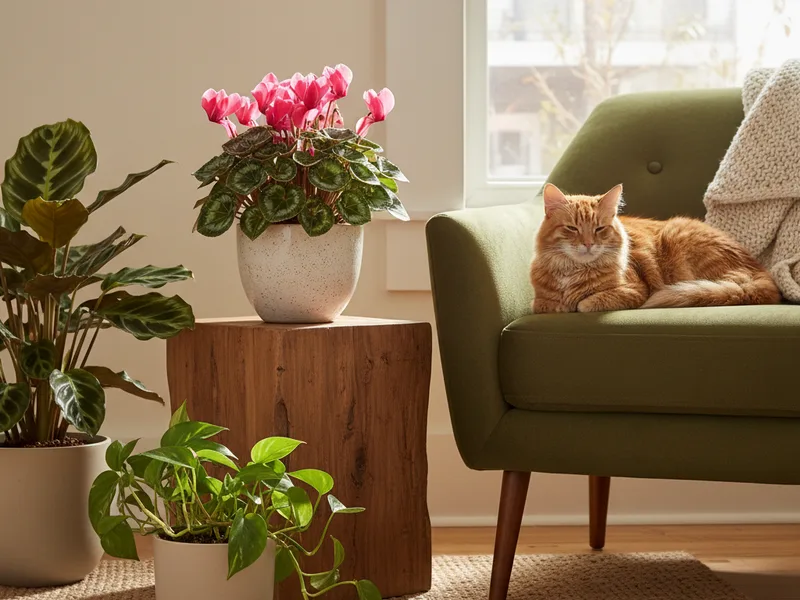
Symptoms to watch for
Symptoms usually start within a few hours of eating the plant. The common ones are drooling, vomiting and diarrhea. Some pets also refuse food or seem low on energy.
Most cases stay mild and pass within a day, especially when only leaves or flowers were chewed. The saponins irritate, the stomach empties, and the worst is over.
Call your vet promptly if vomiting or diarrhea keeps repeating, if your pet seems weak or shaky, or if you know or suspect the tuber was eaten. Heart rhythm problems and seizures are rare, but they are exactly why tuber cases belong with a vet rather than on a wait-and-see list.
Not sure how much was eaten? Call anyway. Your vet, an emergency animal clinic or a pet poison hotline such as the ASPCA Animal Poison Control Center can tell you whether watching at home is enough. Poison hotlines may charge a consultation fee.
Step by step
What to do if your pet eats cyclamen
Separate pet and plant
Move your pet to another room or put the plant out of reach. If you can do it safely, gently remove any plant pieces still in your pet's mouth.
Check what is missing
Look at the plant. Are only leaves or flowers chewed, or is the soil disturbed and the tuber exposed or bitten? That one detail decides how urgent this is.
Call a professional
Phone your vet or a pet poison hotline. Tell them what was eaten, roughly how much, your pet's weight and when it happened. Do not wait for symptoms before calling.
Skip home remedies
Do not make your pet vomit unless a vet explicitly tells you to. Done at the wrong moment or in the wrong way, it can make things worse.
Watch for 24 hours
Follow the advice you were given. Note any drooling, vomiting or diarrhea, and call back if symptoms start or worsen.

Living with cyclamen when you have pets
Honest answer first: if your dog digs in pots, skip cyclamen. The dangerous part is buried exactly where a digging dog wants to be, and no training tip changes that overnight.
With cats, placement does most of the work. A high shelf or a room that stays closed can be enough. But be realistic about your own cat, because many are better climbers than their owners expect.
Think beyond the windowsill too. Hardy cyclamen species grow in garden beds in milder parts of the US, and their tubers sit shallow in the soil. If you moved into a home with an established garden, or your dog digs outside, check what is planted there.
Comparing other trendy plants? Our guide to whether Monstera is toxic follows the same verdict-first format, with safe swaps that match a similar look.
| Plant | Look and feel | Light | Water | Pet safety |
|---|---|---|---|---|
| African violet | Compact plant with velvety leaves and purple, pink or white blooms | Bright, indirect light | Keep soil lightly moist and avoid wetting the leaves | Generally considered non-toxic to cats and dogs |
| Moth orchid (Phalaenopsis) | Elegant arching stems with flowers that last for months | Bright, indirect light | About once a week, letting the bark dry slightly | Generally considered non-toxic to cats and dogs |
| Christmas cactus | Cascading green segments with pink, red or white winter flowers | Bright, indirect light | Water when the top inch of soil dries out | Generally considered non-toxic to cats and dogs |
| Bromeliad (Guzmania) | Bold tropical rosette with a long-lasting central bloom | Bright, indirect light | Keep the central cup topped up with fresh water | Generally considered non-toxic to cats and dogs |
Frequently asked questions
Is cyclamen toxic to cats?
Yes. Cyclamen is toxic to cats. All parts of the plant contain terpenoid saponins, with the tuber holding the highest concentration. A cat that chews a leaf will usually drool and may vomit. If symptoms appear, or if you think the tuber was eaten, call your vet.
Is cyclamen toxic to dogs?
Yes, and dogs account for most serious cases because they dig. The tuber is the dangerous part, and a dog that eats it can develop repeated vomiting, diarrhea, heart rhythm problems or seizures. Treat a dug-up cyclamen as a vet call, not a wait-and-see moment.
Which part of the cyclamen is most toxic?
The tuber, the swollen mass at or just below the soil surface. Leaves, stems and flowers contain the same saponins in much smaller amounts, which is why most leaf nibbles stay mild and most tuber cases do not.
My cat ate a cyclamen leaf. What should I do now?
Stay calm and take the plant away. A single leaf usually causes mild, short-lived stomach upset. Watch for drooling, vomiting or diarrhea over the next 24 hours. Call your vet if symptoms appear, if your cat is a kitten, or if you are unsure how much was eaten.
Are garden cyclamen toxic too?
Yes. Hardy cyclamen species planted outdoors contain the same terpenoid saponins, and their tubers sit shallow in the ground. If your dog likes to dig in beds, outdoor cyclamen deserves the same caution as the potted kind.
What are safe alternatives to cyclamen for winter color?
African violets, moth orchids, Christmas cacti and bromeliads all bloom in the darker months and are generally considered non-toxic to cats and dogs. You can find more verdict-first answers in our [plant guides](blog).