Is Shamrock Plant Toxic to Cats and Dogs?
Shamrock plants are toxic to both cats and dogs. The plant sold as a shamrock is usually Oxalis, a wood sorrel with clover-like leaves, and it contains soluble oxalates. Most pets that nibble a leaf end up with drooling and an upset stomach. Eating a large amount is more serious, because soluble oxalates can affect the kidneys.
This matters most in March. Shamrock plants show up in grocery stores and garden centers around St. Patrick's Day as small gift pots, often with no warning label. They look like lucky clover, they fit on a windowsill, and pets can reach them easily.
Here is what the toxin does, which symptoms to watch for, what to do if your pet takes a bite, and which pet-safe plants give you the same clover look.
The short answer
- Shamrock plants (Oxalis) are toxic to cats and dogs.
- They contain soluble oxalates: salts that dissolve in body fluids and, in large amounts, can bind calcium and strain the kidneys.
- Most real-life cases are mild: drooling, vomiting, and diarrhea after a nibble.
- Risk rises with the amount eaten, and small pets reach a risky amount faster.
- Call your vet or an animal poison control service if your pet shows symptoms or ate more than a leaf or two.
- Pet-safe swaps like prayer plant, baby's tears, and peperomia give a similar look without the risk.
Why it is toxic
What makes shamrock plants risky for pets
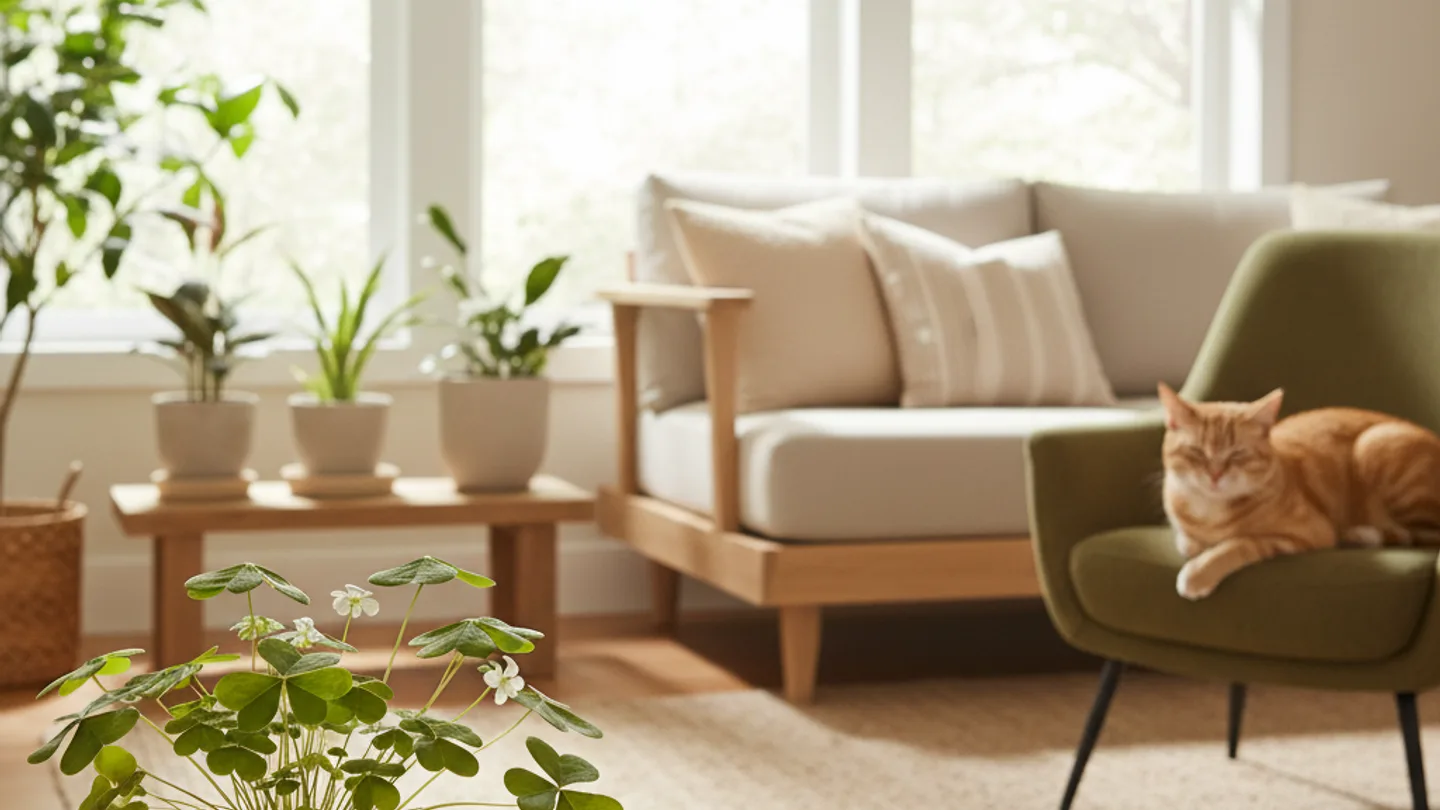
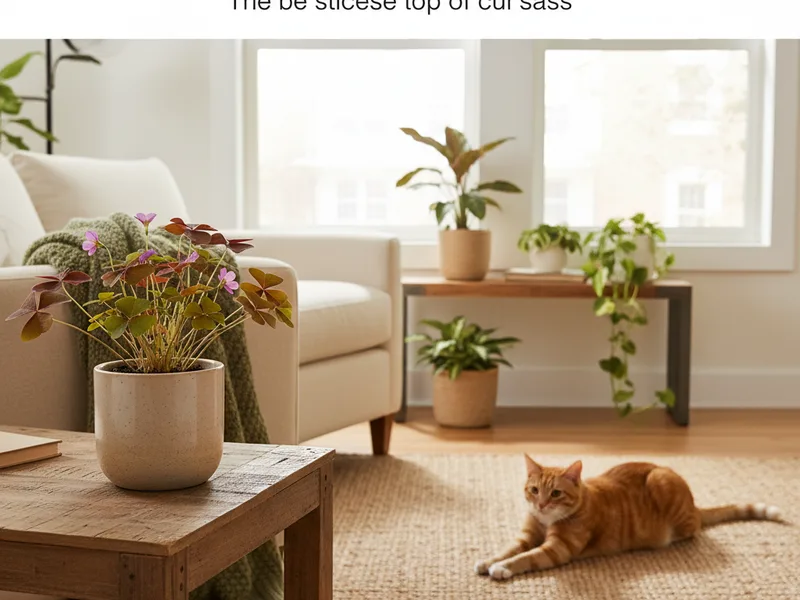
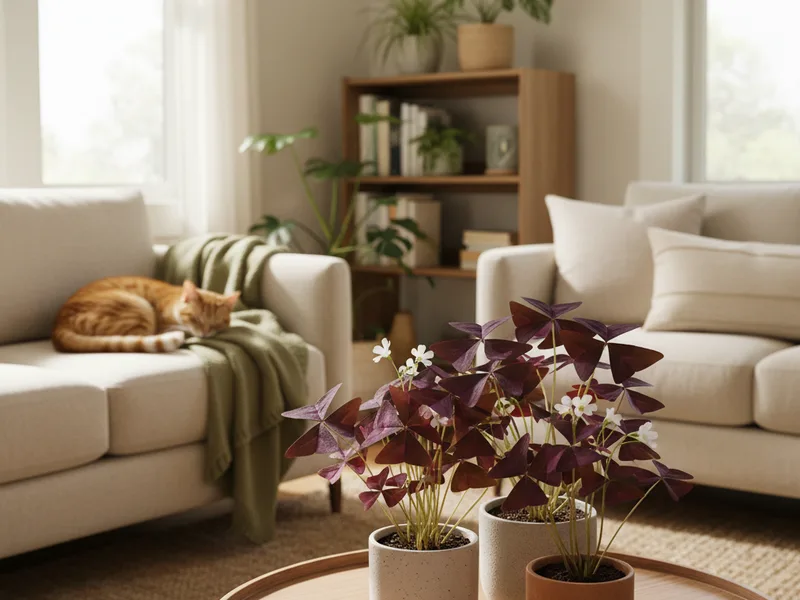
The shamrock plant you see in stores is almost always an Oxalis species, also called wood sorrel or false shamrock. Its leaves are made of three heart-shaped leaflets, often green or deep purple, and they fold down at night. True lucky clover is a different plant, Trifolium, but gift pots labeled shamrock are nearly always Oxalis.
Oxalis contains soluble oxalates. In plain words, these are salts of oxalic acid that dissolve in your pet's body fluids. When a pet eats a lot of them, the oxalates can bind calcium in the blood. That sudden drop in available calcium, and the crystals that can form from it, is what can strain the kidneys.
This is different from plants like Monstera, which contain insoluble calcium oxalate crystals. Those are tiny sharp crystals that irritate your pet's mouth and throat on contact, like chewing on needles. Shamrock's soluble oxalates do their damage after swallowing, which is why the amount eaten matters so much.
For most pets, a bite or two of shamrock leads to a sore mouth, drooling, vomiting, or diarrhea, and then it passes. The kidney risk appears when a pet eats a large portion of the plant. Cats and small dogs weigh less, so it takes fewer leaves to reach a worrying dose.
Symptoms to watch for include drooling, pawing at the mouth, vomiting, diarrhea, loss of appetite, and low energy. If a pet has eaten a lot, more serious signs like trembling, weakness, or changes in drinking and urination need prompt veterinary attention.
If a bite happens
What to do if your pet eats shamrock
Move your pet away from the plant
Take the plant out of reach and gently clear any leaf pieces from your pet's mouth and fur so they do not swallow more.
Offer water and rinse gently
A few laps of water or a wet cloth wiped inside the mouth can ease the irritation. Do not force large amounts of water.
Note what was eaten and when
Estimate how many leaves or stems are missing and when it happened. This helps your vet judge the risk, especially for small pets.
Call your vet or a poison control service
If your pet shows symptoms or ate more than a small nibble, call your veterinarian, the ASPCA Animal Poison Control Center, or the Pet Poison Helpline. Do not induce vomiting unless a professional tells you to.
Watch your pet for the next 24 hours
Keep an eye out for drooling, vomiting, diarrhea, trembling, or changes in drinking and urination. Call the vet again if anything gets worse. Bring a piece of the plant if you visit a clinic.
Why shamrock plants catch pet owners off guard
Every March, shamrock plants arrive in stores as ready-made St. Patrick's Day gifts. They come in small decorative pots, they cost little, and they are marketed as living lucky charms. The label often just says shamrock, with no mention of Oxalis and no pet warning.
That is how a toxic plant ends up on a kitchen table or desk, right at cat height. Cats chew the thin stems out of boredom, and dogs will graze on fallen leaves. Because the plant looks like harmless clover, many owners do not think to check it.
It is the same pattern as other seasonal gift plants. Cyclamen, for example, is another popular gift pot that is toxic to cats and dogs. If you are buying a plant for a friend with pets, pick one of the safe swaps below. If you received a shamrock, either place it somewhere your pets truly cannot reach, including high shelves a climbing cat cannot access, or pass it on to a pet-free home.
| Plant | Safe for cats and dogs? | The look | Light it likes |
|---|---|---|---|
| Shamrock plant (Oxalis) | Toxic to both cats and dogs | Clover-like leaves that fold at night, small white or pink flowers | Bright indirect light |
| Prayer plant (Maranta) | Generally considered non-toxic | Patterned oval leaves that also fold up at night | Medium indirect light |
| Baby's tears | Generally considered non-toxic | Dense carpet of tiny round green leaves | Medium indirect light |
| Peperomia | Generally considered non-toxic | Small rounded leaves in many shades of green | Medium to bright indirect light |
| Spider plant | Generally considered non-toxic | Arching green and cream striped leaves | Bright indirect light, tolerates less |
| Boston fern | Generally considered non-toxic | Soft, feathery green fronds | Medium indirect light with some humidity |
Common questions about shamrock plants and pets
Is shamrock plant toxic to cats?
Yes. Shamrock plants (Oxalis) are toxic to cats. The soluble oxalates they contain can cause drooling, vomiting, and diarrhea after a small nibble, and large amounts can affect the kidneys. Because cats are small, it takes fewer leaves to reach a risky dose.
Is shamrock plant toxic to dogs?
Yes, dogs are affected the same way. A curious bite usually means mouth irritation and stomach upset, while eating a large part of the plant can be more serious. Puppies and small breeds should be treated as higher risk.
My cat ate one shamrock leaf. Should I panic?
Stay calm. One leaf usually causes mild symptoms like drooling or a single episode of vomiting, if anything. Remove the plant, offer water, and watch your cat for the next day. Call your vet if symptoms appear, get worse, or if you are not sure how much was eaten.
Is a shamrock plant the same as the clover in my yard?
No. Gift shamrocks are Oxalis, a different plant from lawn clover (Trifolium). Oxalis has heart-shaped leaflets and often small flowers, and it is the one with the clear toxicity warning. Lawn clover is not the focus of this guide, but any plant eaten in quantity can upset a pet's stomach.
Are all Oxalis species toxic to pets?
Yes, treat the whole genus as toxic. Purple shamrock, green shamrock, and wild wood sorrel all contain soluble oxalates. The same rule applies indoors and in the garden: keep pets from chewing them.
Can I keep a shamrock plant if I have pets?
The safest choice is to swap it for a non-toxic look-alike. If you keep one, it needs a spot your pets genuinely cannot reach, and remember that cats climb and fallen leaves land on the floor. For most homes with curious pets, the swap is the easier and safer answer.