Big Pet-Safe Floor Plants That Make a Statement
Yes, you can have a big, dramatic floor plant and a curious pet in the same room. There are large pet safe plants that fill an empty corner just as well as the popular toxic classics, and they are generally considered non-toxic to both cats and dogs.
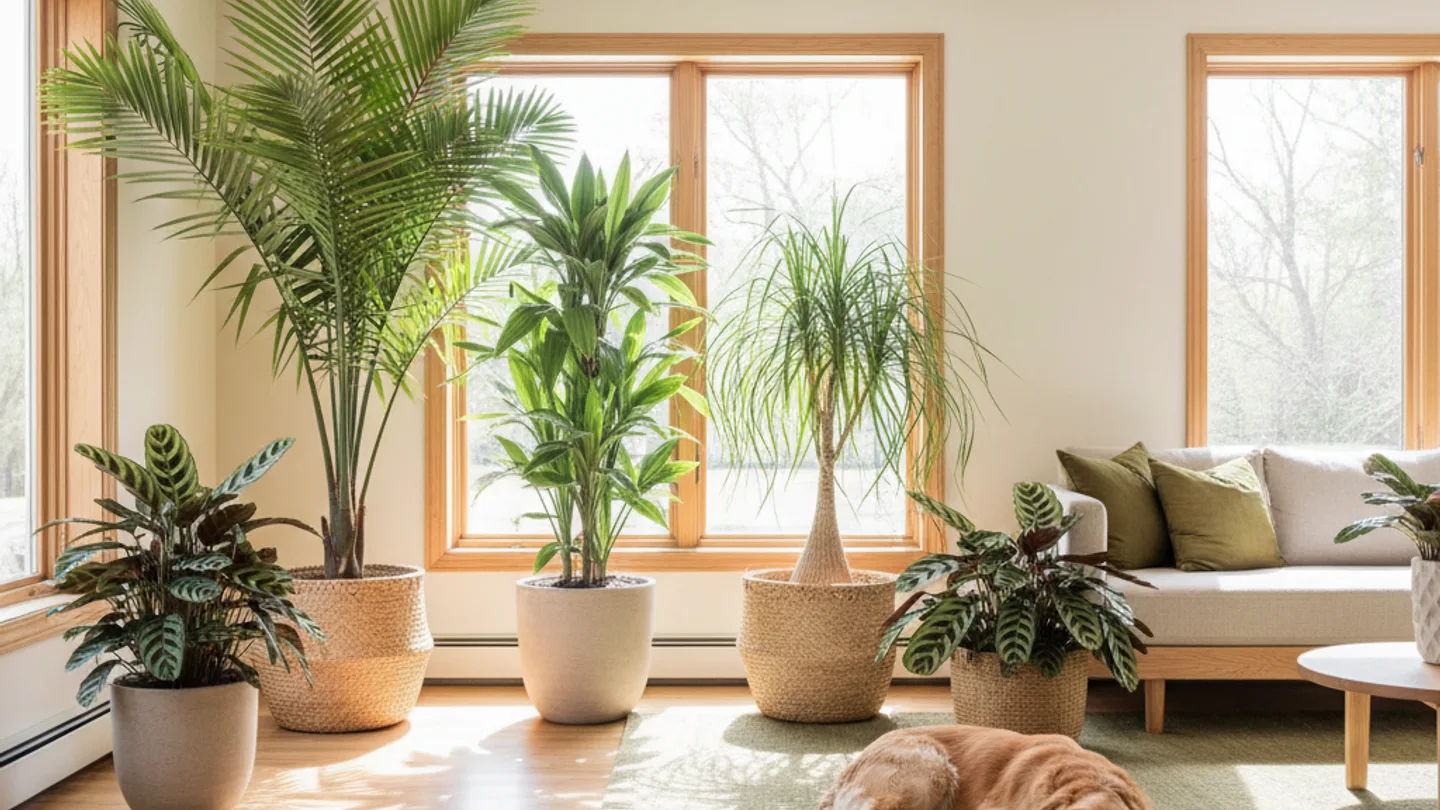
The trick is choosing plants with real presence: tall palms, broad banana leaves, big rosettes. Below you will find the best options, their mature size, and how heavy the pot needs to be so a dog cannot knock it over.
Key takeaways
- Palms like parlor palm, areca palm and ponytail palm are generally considered non-toxic to cats and dogs and grow tall enough to anchor a room.
- Banana plants and bird's nest ferns give you the big-leaf look of toxic plants without the risk.
- Pot weight matters as much as plant choice. Aim for a heavy, wide-based pot of at least 15 to 20 pounds for medium dogs, more for large breeds.
- Even with non-toxic plants, chewing can cause mild stomach upset. Call your vet if symptoms appear.
- Skip toxic statement plants like monstera, fiddle leaf fig and sago palm, and use the safe swaps below instead.
Why large pet safe plants are worth the search
Most of the plants that dominate Instagram and Pinterest are a problem for pet owners. Monstera, philodendron, pothos and snake plant all look great in a corner, and all of them are toxic to cats or dogs or both.
The good news: the safe alternatives have caught up. Growers now offer mature palms, banana plants and big ferns that reach four to eight feet indoors. You get the same lush, architectural look without worrying every time your cat walks past.
Before you buy, check the plant's botanical name against a trusted toxicity list, like the ASPCA database. Common names overlap, and two plants sold under the same name can have very different safety profiles.
The toxic classics these plants replace
It helps to know exactly what you are swapping out, so you can match the look and light level.
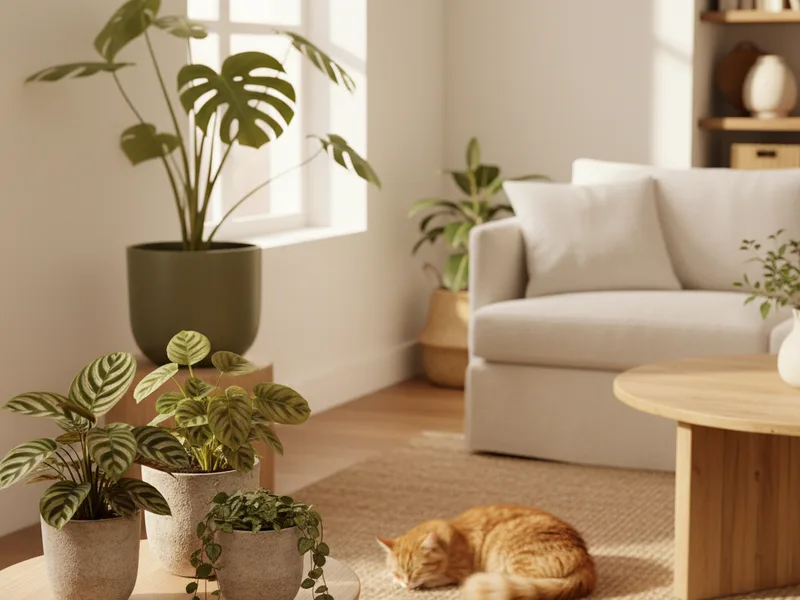
Monstera deliciosa is toxic to both cats and dogs. It contains calcium oxalate crystals, tiny sharp crystals that can irritate your pet's mouth and throat. If you love that split-leaf silhouette, read our full guide on whether monstera is toxic before deciding.
Snake plants and philodendrons cause similar problems, and pothos trails are tempting cat toys. Sago palm is in a different league: it is highly toxic and can cause liver failure, so it has no place in a home with pets.
Every option below is generally considered non-toxic to cats and dogs. Non-toxic does not mean a free snack, though. Large amounts of any plant material can cause vomiting or diarrhea, so placement and training still matter.
| Plant | Mature size indoors | Light needed | Look it replaces | Tipping risk notes |
|---|---|---|---|---|
| Areca palm (Dypsis lutescens) | 6 to 8 ft tall | Bright, indirect | Fiddle leaf fig | Feathery top growth; needs a wide, heavy pot once past 4 ft |
| Parlor palm (Chamaedorea elegans) | 2 to 4 ft tall | Low to medium, indirect | Tall snake plant | Slow growing and dense; naturally bottom-heavy |
| Ponytail palm (Beaucarnea recurvata) | 4 to 6 ft tall | Bright, some direct sun | Dracaena | Thick trunk stores water; very stable in a clay pot |
| Banana plant (Musa spp.) | 5 to 8 ft tall | Bright, direct sun | Bird of paradise | Fast grower with big leaves; repot yearly into heavier containers |
| Bird's nest fern (Asplenium nidus) | 2 to 3 ft wide | Medium, indirect | Small monstera | Wide rosette sits low; place on a heavy plant stand for height |
| Money tree (Pachira aquatica) | 6 to 8 ft tall | Bright to medium, indirect | Corn plant | Braided trunk adds visual weight; pair with a 14 in pot or larger |
Palms: the safest way to go tall
If you want height, palms are your best friend. Areca palms grow into a soft, arching fountain of green and handle typical living room light well. Parlor palms stay smaller but tolerate low-light corners that would kill most statement plants.
Ponytail palm is not a true palm, but it earns its spot. The swollen trunk base stores water, so it forgives missed waterings, and that same trunk makes it naturally bottom-heavy and hard to tip.
All three are generally considered non-toxic to cats and dogs. The main risk is your cat treating palm fronds as a toy. A heavy pot and a spot away from launch pads like sofas solves most of that.
Banana and bird's nest fern: the big-leaf look
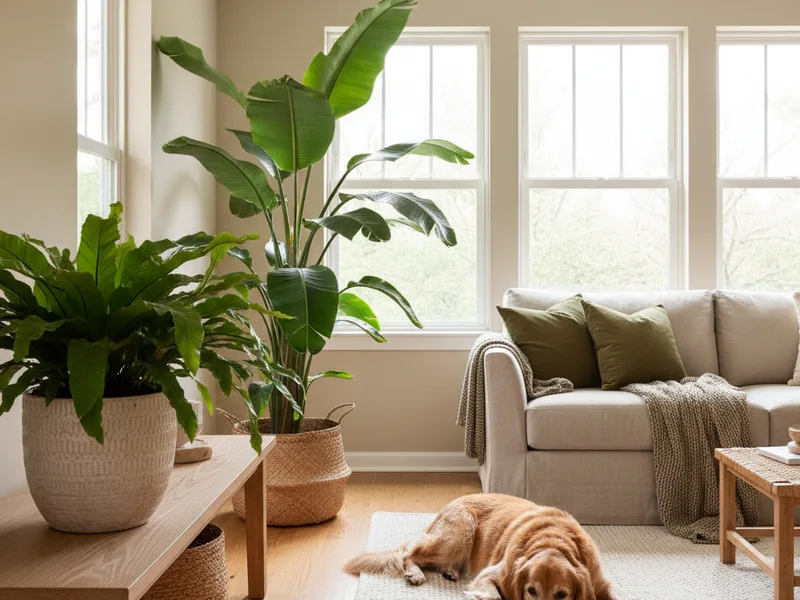
Banana plants are the closest safe match to a bird of paradise. The leaves are huge, the growth is fast, and the plant is generally considered non-toxic to cats and dogs. Indoors, expect five to eight feet with enough sun. A south or west facing window works best.
Bird's nest fern gives you broad, rippled leaves in a wide rosette. It prefers medium indirect light and higher humidity, so it suits bathrooms and kitchens with windows.
Both plants have soft, chewable leaves. Even though they are safe, a determined chewer can shred them. Bitter apple spray on the lower leaves discourages most pets within a few weeks.
Pot weight: how to stop a dog from tipping your plant
A tall plant in a light plastic nursery pot is a tipping accident waiting to happen. One playful dog bump or a cat climbing the trunk is enough.
As a rule of thumb, a floor plant for a home with medium or large dogs should sit in a pot that weighs at least 15 to 20 pounds on its own, before soil. Clay, ceramic and concrete planters reach that weight easily in the 12 to 16 inch size range.
Three things add stability fast. First, choose a pot with a base wider than the plant's canopy is tall. Second, add a layer of stones at the bottom before potting. Third, place the plant in a corner so two sides are protected by walls.
If your dog still nose-checks the pot, a low barrier like a decorative fence panel or a cluster of smaller pots around the base usually ends the habit.
Why big safe plants work
- Same visual impact as the toxic classics: height, big leaves, room-anchoring presence
- Most options tolerate real apartment light, not just greenhouse conditions
- Palms and ponytail palms are low maintenance once settled
- Heavy pots that stop tipping also suit the statement-plant look
Cons
- Safe statement plants often grow slower than the toxic favorites they replace
- Large, heavy pots are awkward to move and can cost more than the plant
- Non-toxic leaves still cause mild stomach upset if a pet eats enough of them
- Big safe plants can be harder to find locally and may need to be ordered as smaller specimens
Common questions about large pet safe plants
Are large palms really safe for cats and dogs?
Parlor palm, areca palm and ponytail palm are generally considered non-toxic to both cats and dogs. Watch out for lookalikes: sago palm is not a true palm and is highly toxic. Always check the botanical name before buying.
What is the biggest pet-safe floor plant I can buy?
Areca palms and money trees both reach six to eight feet indoors with good light, which makes them the tallest widely available safe options. Banana plants can match that height but need strong direct sun.
How heavy should a pot be so my dog cannot knock it over?
For medium dogs, aim for a pot that weighs 15 to 20 pounds before soil. For large or boisterous dogs, go heavier and choose a wide base. Clay, ceramic and concrete pots in the 12 to 16 inch range usually get you there.
My cat chews palm fronds. Is that dangerous?
The palms listed here are generally considered non-toxic, so a chewed frond is mostly a cosmetic problem for the plant. Large amounts of any plant material can still cause vomiting or diarrhea. If symptoms appear, contact your vet.
What is a pet-safe alternative to monstera?
For a big-leaf statement, a banana plant or a large bird's nest fern fills the same visual space without the calcium oxalate crystals that make monstera toxic to cats and dogs.
Can a big plant hurt my pet if it falls?
Yes, the pot itself is the real hazard. A heavy ceramic pot falling on a small pet can cause injury, which is another reason to stabilize pots and protect them with corner placement.