Pet-Safe Plants for the Bathroom
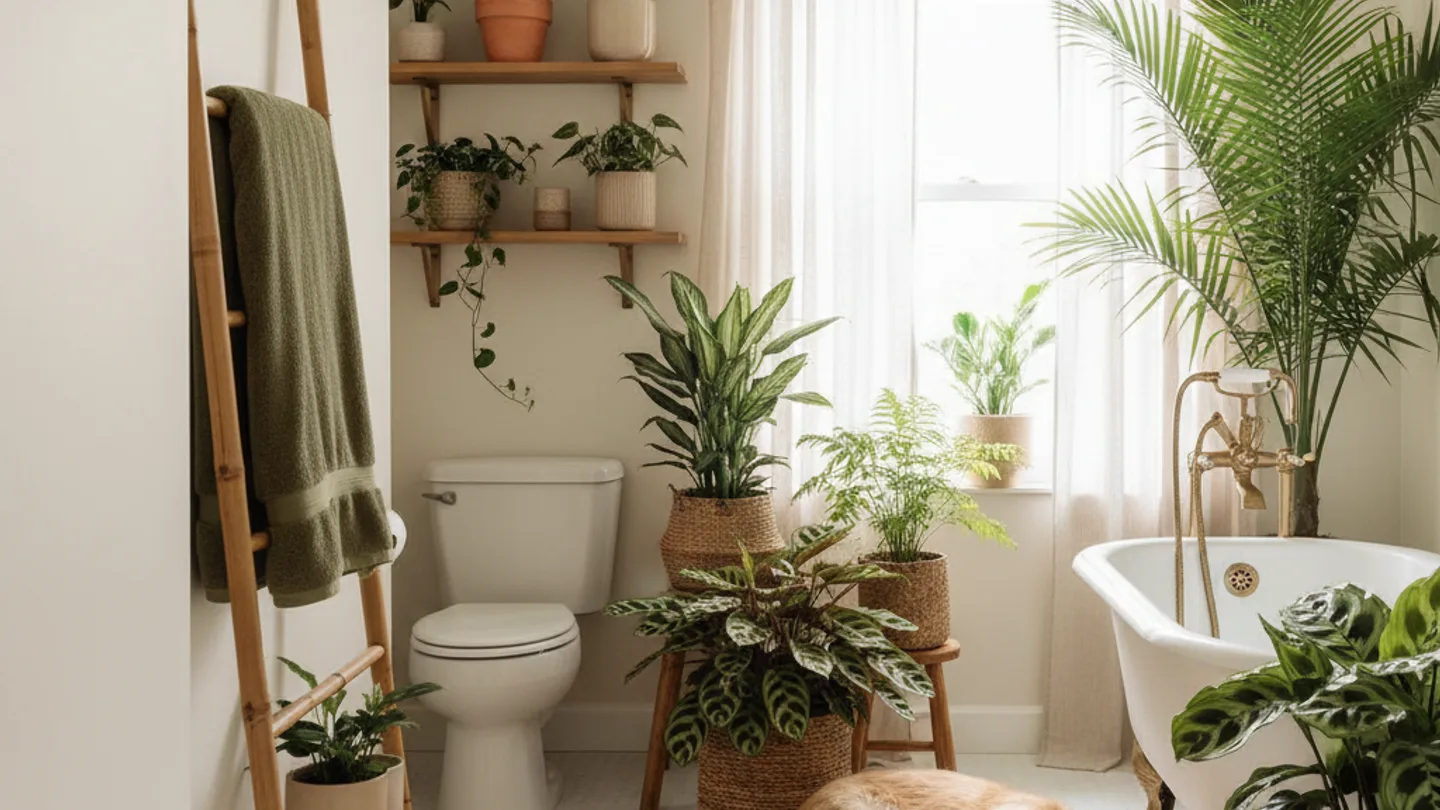
Good news first: yes, there are pet safe bathroom plants, and some of the best ones actually prefer steamy, low-light bathrooms. Ferns and calatheas are the stars, and both are generally considered non-toxic to cats and dogs.
Bathrooms are tricky plant spots. Light is often weak, humidity swings fast, and curious pets treat any new green thing as a snack. This list covers safe options for bathrooms with windows and without, plus a simple light workaround for each.
The short version
- Boston fern, bird's nest fern, calatheas, parlor palm, spider plant, and prayer plant are all generally considered non-toxic to cats and dogs.
- Calatheas and ferns love bathroom humidity and forgive low light better than most houseplants.
- No window? Rotate plants to a brighter room weekly, or add a small grow light on a timer.
- Skip pothos and philodendron in reach of pets. Both are toxic, even though they thrive in bathrooms.
- Non-toxic does not mean risk-free. Any chewed plant can upset a pet's stomach, so call your vet if symptoms appear.
Why the bathroom is a great plant room, with one catch
Showers push humidity up, and many tropical plants evolved in exactly that kind of air. Brown, crispy leaf edges often disappear once a plant moves into a bathroom.
The catch is light. Most bathrooms have a small frosted window, or none at all. Plants that tolerate low light and love moisture are the winners here, and luckily several pet-safe ones qualify.
One more catch: pets. Cats especially like to chew ferny, dangly foliage. That is why every plant below is generally considered non-toxic to both cats and dogs, so a curious nibble is far less likely to become an emergency.
Ferns: the bathroom classics
Boston fern is the classic hanging basket plant, and it earns that spot. It loves humidity, handles medium to low indirect light, and is generally considered non-toxic to cats and dogs. In a windowless bathroom, move it to a brighter room for a few days each week, or hang it near a small grow light.
Bird's nest fern has wide, rippled leaves and a tidier shape. It likes the same steamy conditions and low to medium light. Keep water out of the center of the rosette, since sitting water there can cause rot.
A word of caution on the fern family: not every plant sold as a fern is a true fern. Asparagus fern, for example, is toxic to cats and dogs. Stick to the two above and check the plant tag before you buy.
Calatheas and their prayer plant cousins
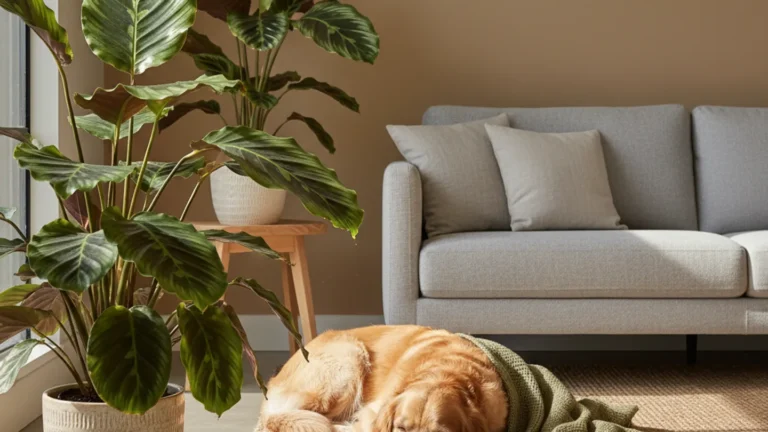
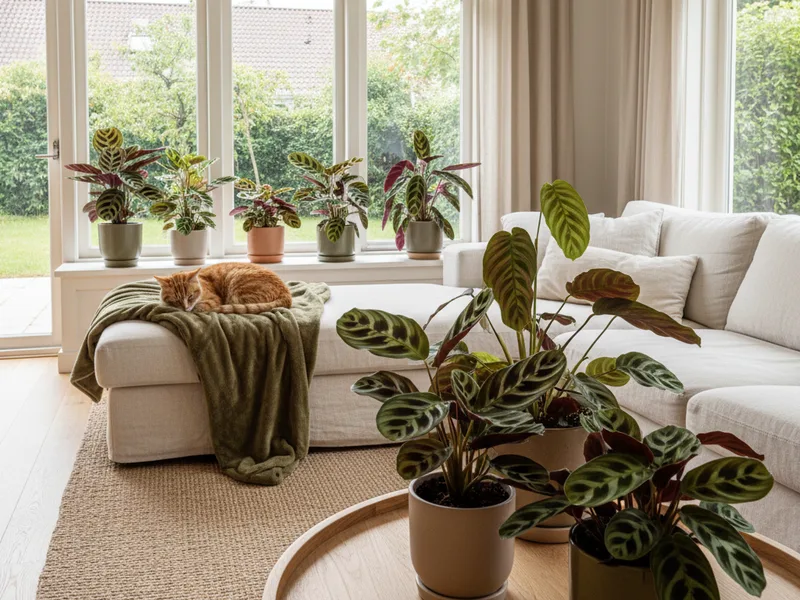
Calatheas are the divas of the bathroom, in a good way. Their patterned leaves fold up at night, and they thrive in humid air with low to medium indirect light. They are generally considered non-toxic to cats and dogs.
They do have one demand: consistent moisture. Water when the top inch of soil feels dry, and use filtered or distilled water if your tap water is very hard, since brown leaf tips often trace back to minerals in the water.
The prayer plant, a close relative, gives you the same leaf-folding show with slightly easier care. Both do fine in a windowless bathroom if you run a grow light for several hours a day or swap them into a brighter spot on weekends.
More safe picks: palms, spider plants, and friends
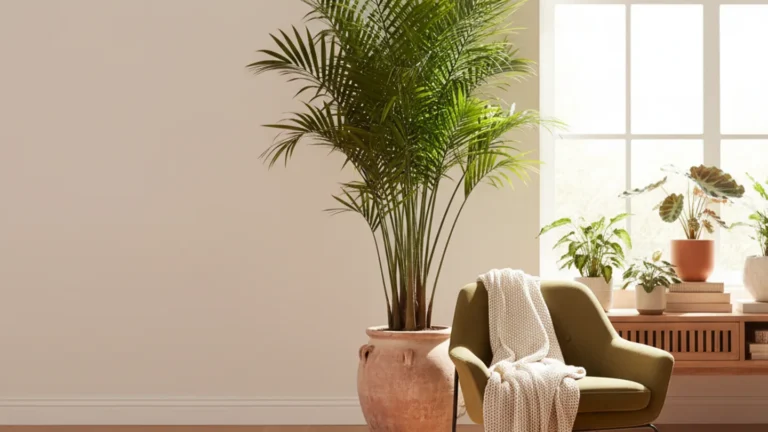
Parlor palm is a slow-growing, compact palm that tolerates low light well and is generally considered non-toxic to cats and dogs. It is a good choice for a bathroom counter or floor corner.
Spider plant handles almost anything, including low light and irregular watering. Its arching leaves are irresistible to cats, so the safe move is a hanging planter, which also suits the plant perfectly.
Baby rubber plant and peperomia varieties round out the list. They stay small, forgive missed waterings, and fit on narrow shelves. As with all plants on this list, generally considered non-toxic still means a big chewing session can cause mild stomach upset.
| Plant | Light needs | Humidity fit | Windowless workaround |
|---|---|---|---|
| Boston fern | Low to medium indirect | Loves it | Rotate to a bright room weekly, or use a grow light |
| Bird's nest fern | Low to medium indirect | Loves it | Grow light a few hours daily |
| Calathea | Low to medium indirect | Loves it | Grow light on a timer, keep soil evenly moist |
| Prayer plant | Low to medium indirect | Loves it | Weekend swap to a brighter spot |
| Parlor palm | Low indirect | Happy in steamy air | Slow grower, tolerates dim rooms with a grow light |
| Spider plant | Low to bright indirect | Adaptable | Thrives almost anywhere with occasional brighter days |
| Peperomia | Low to medium indirect | Adaptable | Small grow light on a shelf works well |
Plants to skip, even though they love bathrooms
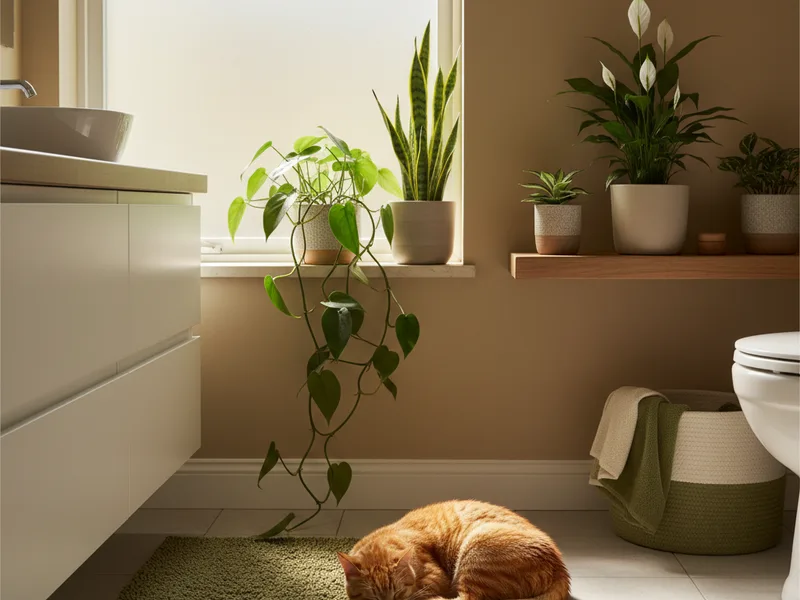
Some of the most popular bathroom plants are toxic to pets. Pothos is the big one: it thrives in low light and humidity, which makes it tempting, but it is toxic to cats and dogs. The same goes for philodendron and snake plant, two other bathroom favorites.
These plants contain calcium oxalate crystals. Those are tiny sharp crystals that can irritate your pet's mouth and throat, causing drooling, pawing at the mouth, and vomiting. You can read the details in our guides on pothos, philodendron, and snake plants.
If you love the trailing pothos look, a spider plant in a hanging basket gives you a similar cascade without the risk.
A light workaround for every bathroom
If your bathroom has a window, even a small frosted one, most plants on this list will manage. Place them within a few feet of the glass.
If there is no window, you have two realistic options. First, rotation: give each plant a week in the bathroom, then a week in a brighter room, and keep two sets of plants swapping places. Second, a grow light: a small LED bulb in a regular fixture, run for 6 to 8 hours a day on a cheap outlet timer, covers the needs of every plant in this guide.
Watch the plant, not the calendar. Pale new growth, leggy stems, or leaves dropping mean it wants more light. Adjust before the plant declines.
Common questions about bathroom plants and pets
Are ferns safe for cats and dogs?
True ferns like the Boston fern and bird's nest fern are generally considered non-toxic to cats and dogs. Watch out for lookalikes: asparagus fern is not a true fern and is toxic to both.
Can a calathea survive in a bathroom with no window?
Yes, with help. A small grow light on a timer for 6 to 8 hours a day, or a weekly rotation to a brighter room, keeps a calathea healthy in a windowless bathroom.
My cat chewed a bathroom plant. What should I do?
If the plant is one of the non-toxic ones on this list, mild stomach upset is the most likely outcome, and it usually passes. Remove the plant, watch your cat, and call your vet if you see vomiting, drooling, loss of appetite, or anything that worries you.
Is pothos safe for pets if it hangs out of reach?
Pothos is toxic to cats and dogs wherever it hangs. Out of reach lowers the risk, but vines grow, leaves drop, and cats climb. A pet-safe trailing plant is the calmer choice.
How do I keep humidity high without mold?
Run the exhaust fan after showers, let the room dry out between uses, and avoid letting water sit in saucers. The plants get their humidity boost during and after shower time, which is enough for the ones on this list.