Pilea Peperomioides Care: The Pet-Safe Pass-Along Plant
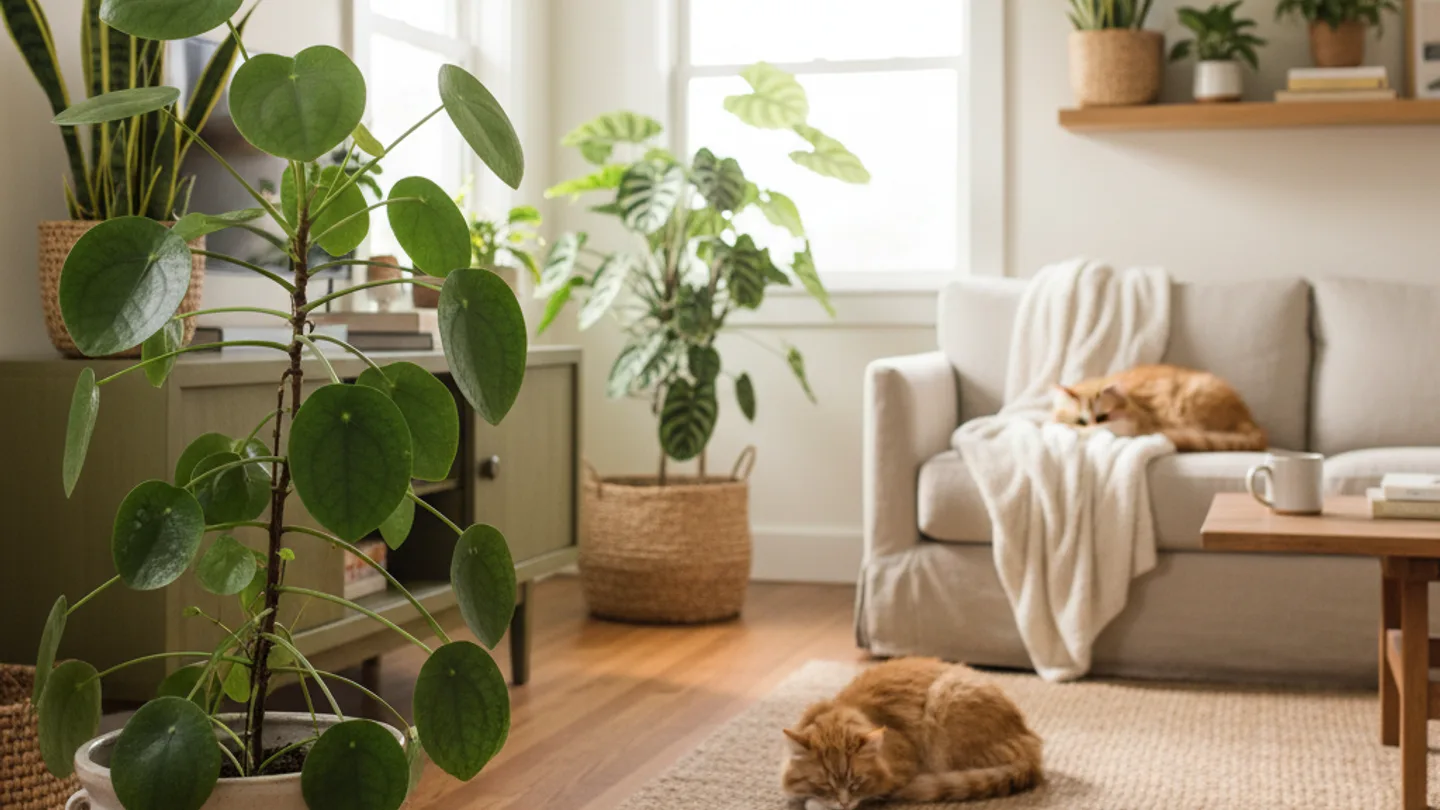
Pilea peperomioides is generally considered non-toxic to cats and dogs. That is the short answer, and it is a big part of why this plant has become so popular with pet owners.
The Chinese money plant, also called the pancake plant or pass-along plant, gives you round, playful leaves on slim stems. It looks great on a shelf, stays compact and, best of all, it produces baby plants you can share with friends.
This guide covers pilea peperomioides care from light and water to rotating and propagating pups, so your plant stays happy in a real home, not a greenhouse.
Pilea care at a glance
- Pilea peperomioides is generally considered non-toxic to cats and dogs.
- Give it bright, indirect light. A spot near an east or west facing window works well.
- Water when the top inch or two of soil feels dry, then let excess water drain away.
- Rotate the pot a quarter turn each week for even, balanced growth.
- Healthy plants grow pups at the base. Separate them and you have free plants to share.
- Even with a non-toxic plant, call your vet if your pet eats a lot of leaves or shows symptoms like vomiting.
Is pilea peperomioides toxic to cats and dogs?
No. Pilea peperomioides is generally considered non-toxic to both cats and dogs. It does not appear on the ASPCA list of plants toxic to pets, which is why it shows up so often on pet-safe plant lists.
That said, non-toxic does not mean a free salad bar. Eating a large amount of any plant material can give a cat or dog an upset stomach. Think mild vomiting or soft stool rather than poisoning.
If your pet chews on your pilea and then vomits, seems lethargic or stops eating, contact your vet. Better one phone call too many than one too few.
If you are used to plants with stricter rules, this one is a relief. Compare it with monstera, which is toxic to both cats and dogs and needs to stay well out of reach.
Light: bright and indirect
Pilea peperomioides wants bright, indirect light. Picture a spot a few feet from a sunny window, or right in front of an east or west facing window where the sun is softer.
A few hours of gentle morning sun is fine. Harsh afternoon sun through a south facing window can scorch the leaves, leaving pale or brown patches.
Too little light shows up fast. The plant stretches toward the window, the stems get leggy and the leaves stay small. If your apartment is on the darker side, place your pilea as close to the brightest window as you can.
Water: less than you think
The most common way to kill a pilea is overwatering. Let the top inch or two of soil dry out before you water again. In most homes that means roughly once a week in summer and less in winter.
Water thoroughly until it runs out of the drainage hole, then empty the saucer. Roots sitting in water lead to root rot, and root rot is hard to undo.
Your plant will tell you when it is thirsty. The leaves droop slightly and lose their perky angle. After a good drink they bounce back within hours. Leaves that turn yellow and soft, on the other hand, usually point to too much water.
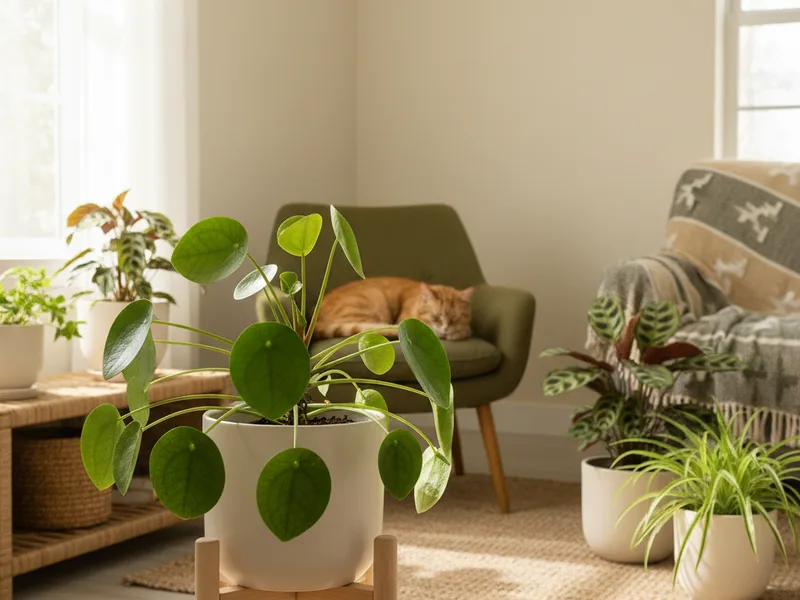
Why you should rotate your pilea
Pilea grows toward the light. Leave it in one position and it will lean hard to one side, with all the leaves facing the window like tiny satellite dishes.
Give the pot a quarter turn every week or so. This keeps the stem straight and the leaf spread even, which is what gives a pilea its full, rounded shape.
Rotating also helps the lower leaves get their share of light, so the plant stays full at the base instead of bald at the bottom.
Soil, pot and feeding
Use a well-draining potting mix. A standard houseplant mix with some perlite mixed in works well. The goal is soil that holds a little moisture but never stays soggy.
Always choose a pot with a drainage hole. Pilea likes to be slightly snug in its pot, so only size up one step when repotting, roughly every one to two years.
Feed with a diluted, balanced houseplant fertilizer once a month in spring and summer. Skip feeding in fall and winter when growth slows down.
How to propagate pilea pups
Wait until the pup is ready
A healthy pilea grows baby plants, called pups, from its base or roots. Wait until a pup is about 2 to 3 inches tall with a few leaves of its own.
Separate the pup
Take the plant out of its pot or gently clear the soil around the pup. Use a clean, sharp knife to cut the pup away from the mother plant, keeping as much of its own root as possible.
Root it in water or soil
Place the pup in a small glass of water until roots grow about an inch long, or plant it directly in moist potting mix. Both methods work. Water rooting lets you watch progress.
Pot it up and share
Once rooted, plant the pup in a small pot with drainage. Keep the soil lightly moist for the first weeks. Then gift it to a friend, which is exactly how the pass-along plant got its name.
Common pilea questions
Is pilea peperomioides safe for cats and dogs?
Yes, it is generally considered non-toxic to both cats and dogs. Eating a lot of leaves can still cause mild stomach upset, so contact your vet if your pet shows symptoms like vomiting or loss of appetite.
Why is my pilea leaning to one side?
It is growing toward the light. Rotate the pot a quarter turn every week so all sides get equal light and the stem grows straight.
Why are my pilea's leaves drooping?
Drooping leaves usually mean the plant is thirsty. Check the soil. If the top inch or two is dry, water thoroughly and the leaves should perk up within hours. If the soil is wet, hold off, because overwatering can also cause drooping.
How often should I water my pilea?
There is no fixed schedule. Water when the top inch or two of soil is dry. In most homes that is about once a week in summer and every ten to fourteen days in winter.
Can pilea grow in low light?
It can survive in lower light, but it will not thrive. Expect leggy stems and small leaves. For a full, rounded plant, give it bright, indirect light.
When can I remove pups from my pilea?
Wait until a pup is about 2 to 3 inches tall with several leaves. Then it is strong enough to root on its own, either in water or directly in soil.