The Easiest Pet-Safe Plants for Absolute Beginners
New plant, new pet, no idea where to start. You are not alone. The good news: there are easy pet safe plants that forgive missed waterings, dim corners, and the occasional curious nibble.
Every plant on this list is generally considered non-toxic to cats and dogs, and each one comes with just one care rule that matters. Master that single rule and the plant will almost certainly survive.
As always, even a non-toxic plant can cause mild stomach upset if your pet eats a lot of it. If you notice vomiting, drooling, or changes in behavior, call your vet.
The short version
- All six plants below are generally considered non-toxic to cats and dogs.
- Each plant has one golden rule. Follow it and you can ignore most other advice.
- Spider plants and parlor palms are the most forgiving picks for total beginners.
- Non-toxic does not mean risk-free. Large amounts of any plant can upset a pet's stomach.
- Skip toxic lookalikes like pothos and philodendron, even though they are famously easy.
Spider plant, parlor palm, and Boston fern
Spider plant (Chlorophytum comosum). The classic beginner plant, and for good reason. It tolerates low light, irregular watering, and drafts. Cats love batting at the dangling baby plants, and that is fine, because the spider plant is non-toxic to both cats and dogs. The one rule that matters: let the top inch of soil dry out before you water. Soggy roots are the only reliable way to kill it.
One honest note: spider plants can have a mild effect on some cats, similar to catnip, which encourages chewing. The plant is still non-toxic, but hang it out of reach if your cat will not leave it alone.
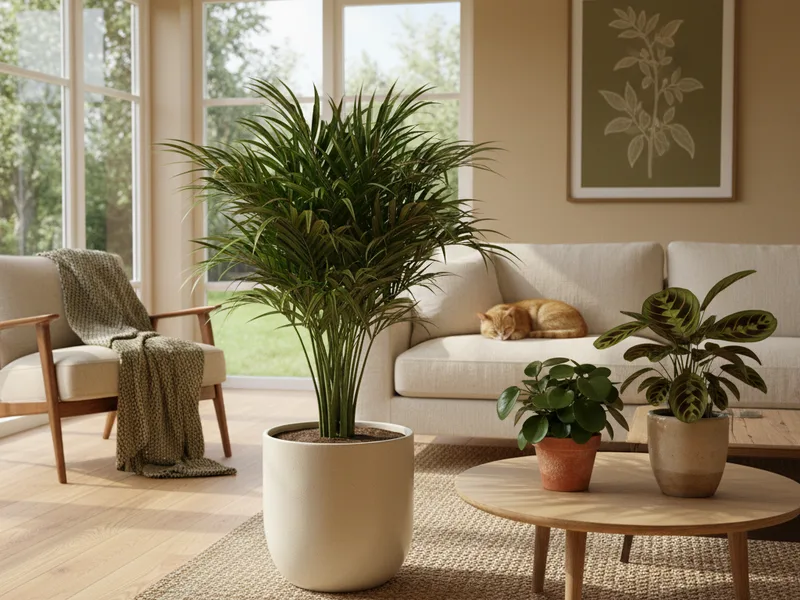
Parlor palm (Chamaedorea elegans). A small, soft-leafed palm that fits on shelves and side tables. It is non-toxic to cats and dogs and grows slowly, so it will not outgrow your apartment. The one rule that matters: keep it out of direct sun. Bright indirect light or even a dim corner is fine, but harsh afternoon sun scorches the leaves.
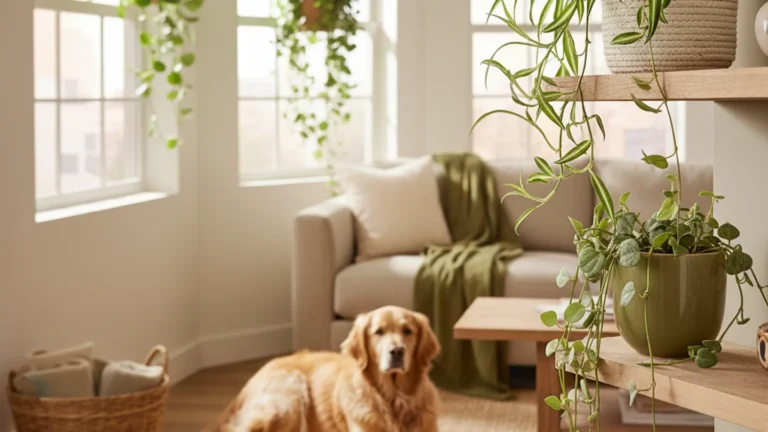
Boston fern (Nephrolepis exaltata). Full, feathery, and completely safe for cats and dogs. It looks great in a hanging basket, which also keeps fronds away from playful paws. The one rule that matters: never let the soil dry out completely. Check it twice a week and water when the surface feels barely dry.
Want a similar lush look with zero worry? The Boston fern is a good replacement for toxic hanging plants. If a shop suggests pothos instead, know that pothos is toxic to cats and dogs.
| Plant | Safe for cats | Safe for dogs | The one rule that matters | Light it likes |
|---|---|---|---|---|
| Spider plant | Yes | Yes | Let the top inch of soil dry out | Low to bright indirect |
| Parlor palm | Yes | Yes | Keep it out of direct sun | Low to medium indirect |
| Boston fern | Yes | Yes | Never let the soil dry out fully | Medium indirect |
| Ponytail palm | Yes | Yes | Water deeply, then wait weeks | Bright light |
| Peperomia | Yes | Yes | Water only when soil is dry | Medium indirect |
| Prayer plant | Yes | Yes | Keep humidity up | Medium indirect |
Ponytail palm, peperomia, and prayer plant
Ponytail palm (Beaucarnea recurvata). Despite the name, it is a succulent, not a palm. Its swollen trunk stores water, which makes it the most forgiving plant on this list. It is non-toxic to cats and dogs. The one rule that matters: water deeply, then do not water again for two to three weeks. Overwatering is the only real danger. Cats may chew the thin leaves, and the plant is safe, but the leaves can get ragged, so a bright spot slightly out of reach keeps it looking its best.
Peperomia (Peperomia obtusifolia and friends). Compact, thick-leafed, and happy in small spaces. All common peperomia varieties are considered non-toxic to cats and dogs. The one rule that matters: treat it like a succulent. Water only when the soil is dry all the way through. In most homes that means every 10 to 14 days.
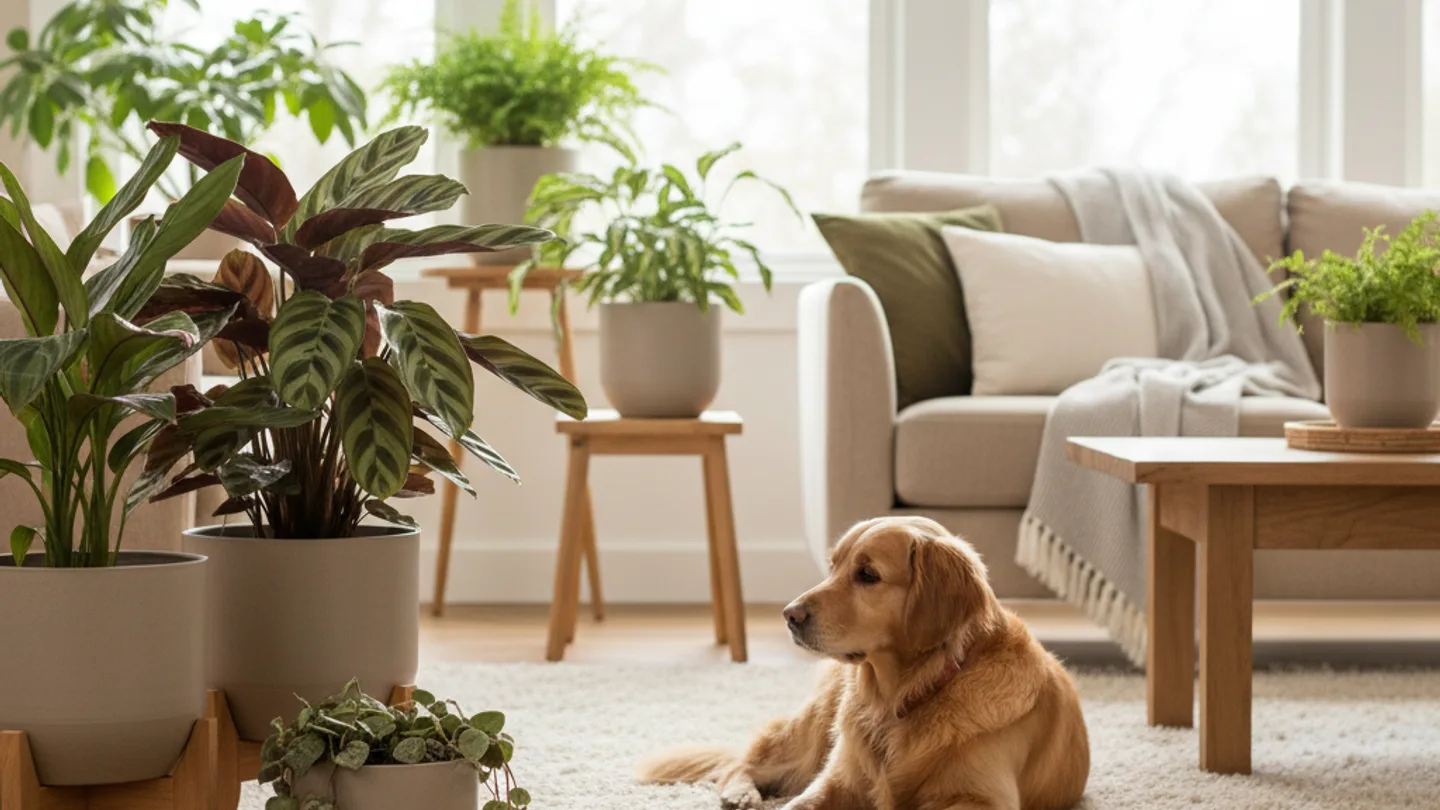
Prayer plant (Maranta leuconeura). The leaves fold up at night, which makes it the most entertaining plant on the list. It is non-toxic to cats and dogs and stays small. The one rule that matters: humidity. Keep it away from heaters and mist it regularly, or group it with other plants. Brown, crispy leaf edges are a humidity problem, not a watering problem.
A quick warning about lookalikes. Some famously easy plants are not safe. Snake plants are toxic to cats and dogs, and philodendron causes mouth irritation too. If you love the philodendron look, read why philodendron is toxic and pick the peperomia or prayer plant instead.
Common questions from new plant and pet parents
Are non-toxic plants completely harmless if my pet eats them?
No plant is completely harmless. Plants generally considered non-toxic can still cause mild vomiting or stomach upset if your pet eats a large amount. Watch your pet and call your vet if symptoms appear.
Which of these plants is best for a dark apartment?
The parlor palm and the spider plant handle low light best. Growth will be slower in dim rooms, but both plants stay healthy.
How do I stop my cat from chewing my plants?
Place plants in hanging baskets or on high shelves, offer cat grass as a decoy, and keep soil covered with large pebbles if your cat digs. Even safe plants last longer when your cat has a better option.
Can I keep these plants in the same room as my new puppy?
Yes, all six are considered non-toxic to dogs. That said, puppies chew everything, and a knocked-over pot means soil everywhere and a stressed plant. Start with sturdy pots on stable surfaces.
Where can I check if a plant I already own is safe?
Start with our guides on common houseplants like pothos, snake plant, philodendron, and monstera. If you cannot find your plant there, the ASPCA toxic plant database is a reliable next step, and your vet can confirm.