Pet-Safe Plants for People Who Forget to Water
The short answer: yes, there are pet-safe plants that can handle a forgotten watering or two. Ponytail palm, cast iron plant, haworthia and hoya are all generally considered non-toxic to cats and dogs, and all four store water or cope well with dry soil.
This guide is for busy owners, frequent travelers and anyone who has killed a fern out of good intentions. For each plant you get the safety verdict, how long it can go without water, and the light it needs.
One honest note before we start: non-toxic means the plant is generally considered safe, not completely harmless. Any plant can cause an upset stomach if your pet eats enough of it, so call your vet if symptoms appear.
The quick version
- All four plants below are generally considered non-toxic to both cats and dogs.
- Ponytail palm can go about 3 to 4 weeks without water. Cast iron plant manages 2 to 3 weeks.
- Haworthia and hoya both do well on a 2 to 3 week gap between waterings.
- The main risk with all four is overwatering, not underwatering.
- If your pet chews any plant and shows symptoms like vomiting or drooling, contact your vet.
| Plant | Safe for cats and dogs? | Can go dry for | Light needed |
|---|---|---|---|
| Ponytail palm | Yes, generally considered non-toxic | 3 to 4 weeks | Bright light, some direct sun |
| Cast iron plant | Yes, generally considered non-toxic | 2 to 3 weeks | Low to medium light |
| Haworthia | Yes, generally considered non-toxic | 2 to 3 weeks | Bright, indirect light |
| Hoya | Yes, generally considered non-toxic | 2 to 3 weeks | Bright, indirect light |
Ponytail palm: the built-in water tank
Ponytail palm is generally considered non-toxic to both cats and dogs. That makes it the easiest yes on this list for pet owners.
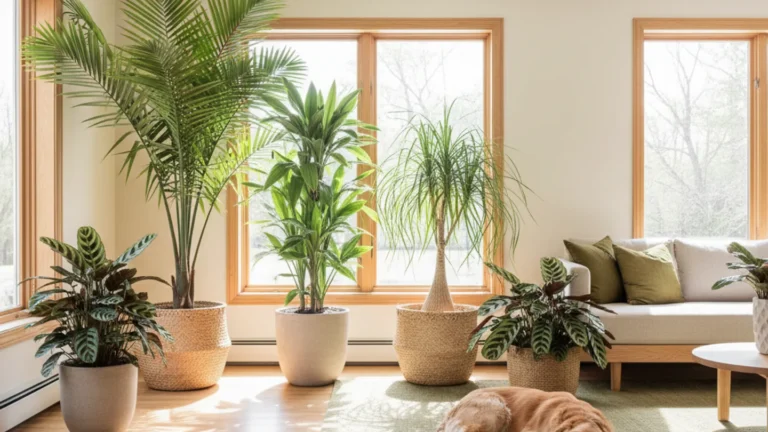
It stores water in its swollen trunk base, which looks a bit like an elephant's foot. That reserve lets it sail through 3 to 4 weeks without water, sometimes longer in winter. In practical terms: you can go on a two-week vacation and come home to a plant that looks exactly the same.
Give it a bright spot with some direct sun and a pot that drains well. Water deeply, then let the soil dry out completely before watering again. Soggy soil is the one thing it cannot forgive.
Fair warning for cat owners: the long, thin leaves dangle like a toy. The plant itself is safe, but a determined cat can shred the foliage. Put it on a sturdy stand if your cat likes to bat at things.
Cast iron plant: for the dark corner you gave up on
Cast iron plant is generally considered non-toxic to cats and dogs, and it earned its name honestly. It tolerates low light, irregular watering and general neglect better than almost any other houseplant.
It can go 2 to 3 weeks without water in average indoor conditions. In a darker corner it needs even less, because it grows slowly and uses water slowly.
Its big, leathery leaves are also less tempting to most pets than grass-like foliage. It sits quietly in a corner and asks for almost nothing.
Care is simple: water when the top few inches of soil are dry, and dust the leaves now and then. That is genuinely the whole job.
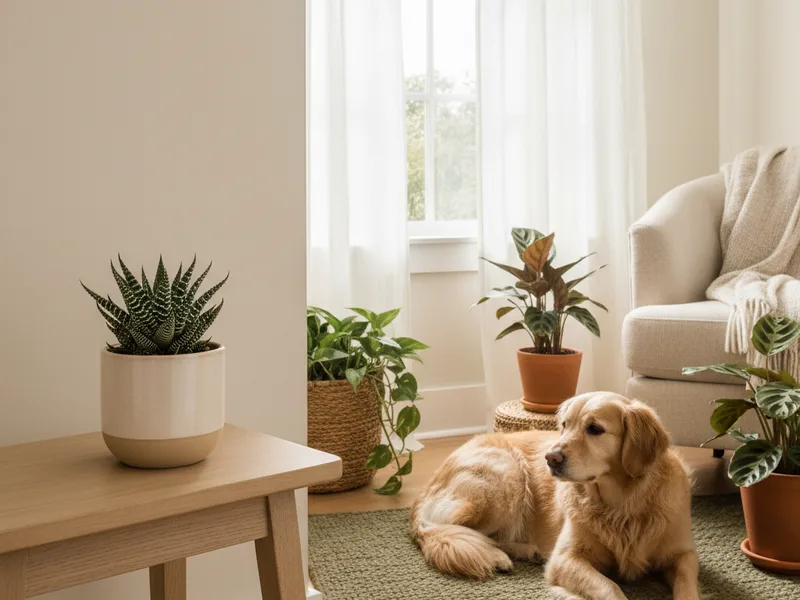
Haworthia: a small succulent that keeps its distance
Haworthia is generally considered non-toxic to cats and dogs. This matters, because many popular succulents are not. Jade plant and aloe, for example, are toxic, so haworthia is the safer way to get that succulent look.
It stores water in its thick leaves and can go 2 to 3 weeks between waterings. In winter, once a month is often enough.
It stays small, which makes it a good fit for desks and shelves, and shelves are useful. A shelf a cat cannot reach is the simplest pet-proofing there is.
Give it bright, indirect light and a gritty, fast-draining soil mix. If the leaves turn soft or translucent, you are watering too much.
Hoya: waxy leaves, forgiving habits
Hoya is generally considered non-toxic to cats and dogs. It is a trailing plant with thick, waxy leaves, and those leaves hold water like a reservoir.
Expect it to cope with 2 to 3 weeks between waterings. The leaves wrinkle slightly when it is truly thirsty, which is a helpful, readable signal for forgetful waterers.
It likes bright, indirect light and actually blooms more when slightly root-bound and slightly dry. This is a plant that rewards a bit of neglect.
Because it trails, it works well in a hanging planter. Hung high, the vines stay out of reach of curious dogs and most cats.
How to water when you are away or forgetful
A few habits make these plants almost unkillable.
First, check the soil, not the calendar. Stick a finger two inches into the pot. If it is dry, water. If it is damp, wait. Every home is different, and light and heating change how fast soil dries.
Second, always use pots with drainage holes. All four of these plants rot in standing water, and that is the most common way they die.
Third, before a trip, water thoroughly, let the pot drain, and move the plant a step back from the window. Slightly lower light slows water use while you are gone.
If you are weighing other common houseplants, check the safety verdict first. Our guides to pothos, snake plants and monstera show why those popular picks need more caution around pets.
Common questions
Are these plants really safe if my pet eats the leaves?
All four are generally considered non-toxic to cats and dogs. That is not the same as completely harmless. Eating any plant material can cause mild stomach upset, so discourage chewing and call your vet if your pet vomits, drools or seems unwell.
What is the longest any of these can go without water?
Ponytail palm is the champion, at roughly 3 to 4 weeks in average indoor conditions. In cooler months it can stretch further, because it grows more slowly and uses less water.
How do I know when a drought-tolerant plant actually needs water?
Check the soil two inches down. Dry means water. For hoya, the leaves also wrinkle slightly when thirsty. With succulents like haworthia, plump firm leaves mean the plant is fine.
Can I leave these plants alone during a two-week vacation?
Yes. Water them well before you leave, let the pots drain, and move them slightly away from the brightest window. All four handle two weeks easily.
What is the biggest mistake with these plants?
Overwatering. Every plant on this list stores water or copes with dryness, and none of them tolerates soggy soil. When in doubt, wait a few more days.