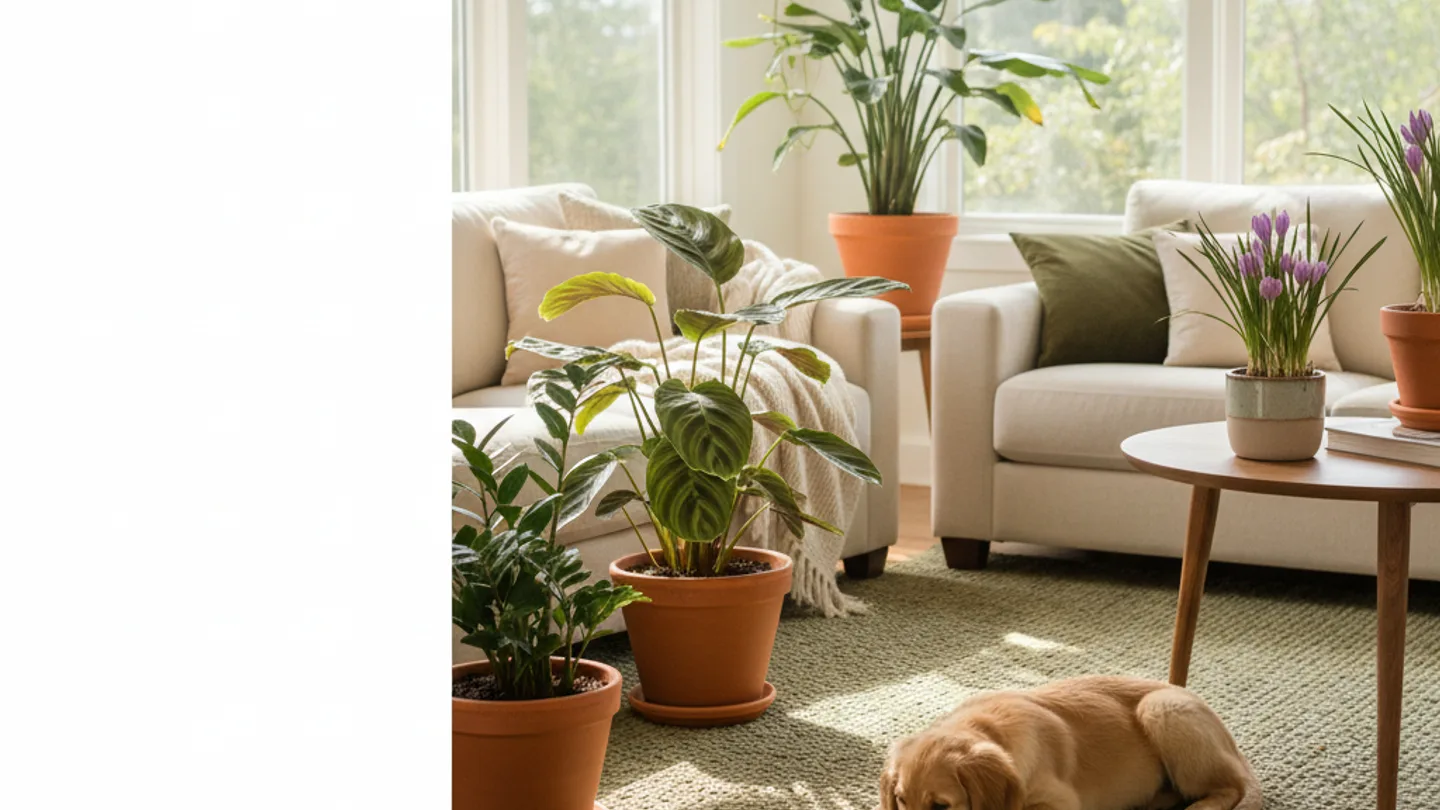
Is Autumn Crocus Toxic to Cats and Dogs?
Yes. Autumn crocus is severely toxic to both cats and dogs. Every part of the plant contains colchicine, a poison that can damage the gut, bone marrow, kidneys, liver and heart. Even a small nibble is a reason to call your vet.
There is a catch that makes this plant extra risky. Symptoms can take one to three days to fully appear. A pet that looks fine right after chewing can still be in real danger.
Below you will find the symptoms to watch for, what to do right away, how autumn crocus differs from the much milder spring crocus, and pet-safe plants that give you a similar look.
Key takeaways
- Autumn crocus (Colchicum autumnale) is severely toxic to cats and dogs. All parts are dangerous, and the bulb-like corms are the most concentrated.
- The toxin is colchicine. It attacks fast-dividing cells and can lead to organ damage.
- Symptoms are often delayed by 24 to 72 hours. A pet that seems fine can still get very sick.
- Spring crocus is a different plant and usually causes only mild stomach upset.
- Do not wait for symptoms. Call your vet or a pet poison hotline as soon as you know your pet chewed autumn crocus.
- Pet-safe picks with a similar feel include African violet, moth orchid and Christmas cactus.
Why autumn crocus is so toxic
Autumn crocus is not a true crocus. Its botanical name is Colchicum autumnale, and it is also sold as meadow saffron or naked ladies. It blooms in late summer and fall with soft pink to purple cup-shaped flowers, which is why it ends up in so many gardens and bouquets.
The whole plant contains colchicine. Colchicine is a natural poison that stops cells from dividing. Tissues that renew quickly, like the lining of the gut and the bone marrow, are hit first. In severe poisoning, the kidneys, liver and heart can also be damaged.
The corms, the bulb-like structures under the soil, hold the highest concentration. Dogs that dig them up are at special risk. But the flowers and leaves are dangerous too, for cats as well as dogs.

Symptoms to watch for
Early signs can show up within a few hours. Think drooling, vomiting, diarrhea that may contain blood, belly pain and refusing food.
The more serious signs often come later, sometimes only after 24 to 72 hours. These include weakness, severe dehydration, a drop in blood cell counts, kidney and liver failure, heart rhythm problems, seizures and shock.
This is one of the few common garden plants where we say it plainly: autumn crocus poisoning can be life-threatening. Fast treatment matters, so take any suspected nibble seriously, even if your pet seems normal at first.
| Feature | Autumn crocus | Spring crocus |
|---|---|---|
| Botanical name | Colchicum autumnale | Crocus species |
| Bloom time | Late summer to fall | Late winter to early spring |
| Leaves at flowering | No, leaves appear in spring | Yes, grass-like leaves with the flowers |
| Toxic to cats | Yes, severely | Mild stomach upset possible |
| Toxic to dogs | Yes, severely | Mild stomach upset possible |
| Main concern | Colchicine, can cause organ damage | No highly dangerous toxin known |
| If your pet eats it | Call a vet right away | Watch for vomiting, call a vet if it continues |
Why delayed symptoms are so dangerous
With most toxic plants, a sick pet shows it quickly. Autumn crocus is different. The worst effects build slowly as colchicine spreads through the body and starts damaging organs.
That delay tricks people. Your dog chews a flower, seems fine all evening, and you decide it was nothing. By the time the real symptoms appear, the poison is already absorbed and the damage is underway.
Early treatment makes a big difference. A vet can start decontamination, fluids and blood monitoring before the crisis hits. Waiting for symptoms is the single biggest mistake owners make with this plant.
Act fast
What to do if your pet eats autumn crocus
1. Move your pet away from the plant
Gently remove any plant material from the mouth. You can rinse the mouth with a little water. Keep your pet calm and within sight.
2. Collect the details
Take a photo of the plant or bring a piece of it. Note what part was eaten, roughly how much, and when it happened. This helps the vet judge the risk.
3. Call for help right away
Call your vet, the ASPCA Animal Poison Control Center at (888) 426-4435, or the Pet Poison Helpline at (855) 764-7661. A consultation fee may apply. Do not wait for symptoms to appear.
4. Do not induce vomiting on your own
Only make your pet vomit if a professional tells you to. Done wrong or at the wrong time, it can cause extra harm.
5. Follow up and monitor
Your vet may want to check blood work over the next few days, because organ damage can be delayed. Keep all follow-up appointments, even if your pet looks healthy.
Pet-safe alternatives with a similar look
Love the soft purple cups of autumn crocus? You can get a similar feel without the risk. These plants are generally considered non-toxic to cats and dogs.
African violet gives you compact purple blooms and thrives in bright, indirect light on a windowsill. Moth orchid brings elegant flowers and does well in typical living rooms. Christmas cactus flowers in fall and winter, right when you miss the garden most.
Generally considered non-toxic still means moderation. Any plant can cause a mild stomach upset if your pet eats a lot of it. If your pet shows symptoms after chewing any plant, contact your vet.
Frequently asked questions
Is autumn crocus toxic to dogs even in small amounts?
Yes. There is no safe amount. The corms are the most concentrated part, but even a flower or leaf can cause serious poisoning. Call your vet or a pet poison hotline whenever you know or suspect your dog chewed this plant.
My cat ate autumn crocus an hour ago and seems fine. Should I still call the vet?
Yes, call now. Severe symptoms can be delayed by 24 to 72 hours while organ damage quietly builds. Early treatment gives your cat the best chance, so do not wait for signs of illness.
Is autumn crocus the same plant as spring crocus?
No. Autumn crocus is Colchicum autumnale and is severely toxic. Spring crocus belongs to the Crocus family and usually causes only mild stomach upset. They share a common name, which causes a lot of confusion in shops and gardens.
Can I keep autumn crocus in my yard with dogs?
The safest option is to remove it, including the corms, or fence the area off completely. Dogs that like to dig are at the highest risk, because the underground corms are the most toxic part.
Which other popular plants should I watch out for?
Quite a few common houseplants are toxic, including [monstera](is-monstera-toxic), pothos and peace lily. True lilies deserve a special warning: they can cause kidney failure in cats, even from a small taste of pollen.
Are there pet-safe flowers that look like autumn crocus?
For indoor color, African violet is the closest match in look and light needs. Moth orchid and Christmas cactus are also generally considered non-toxic and bloom when the garden is quiet.