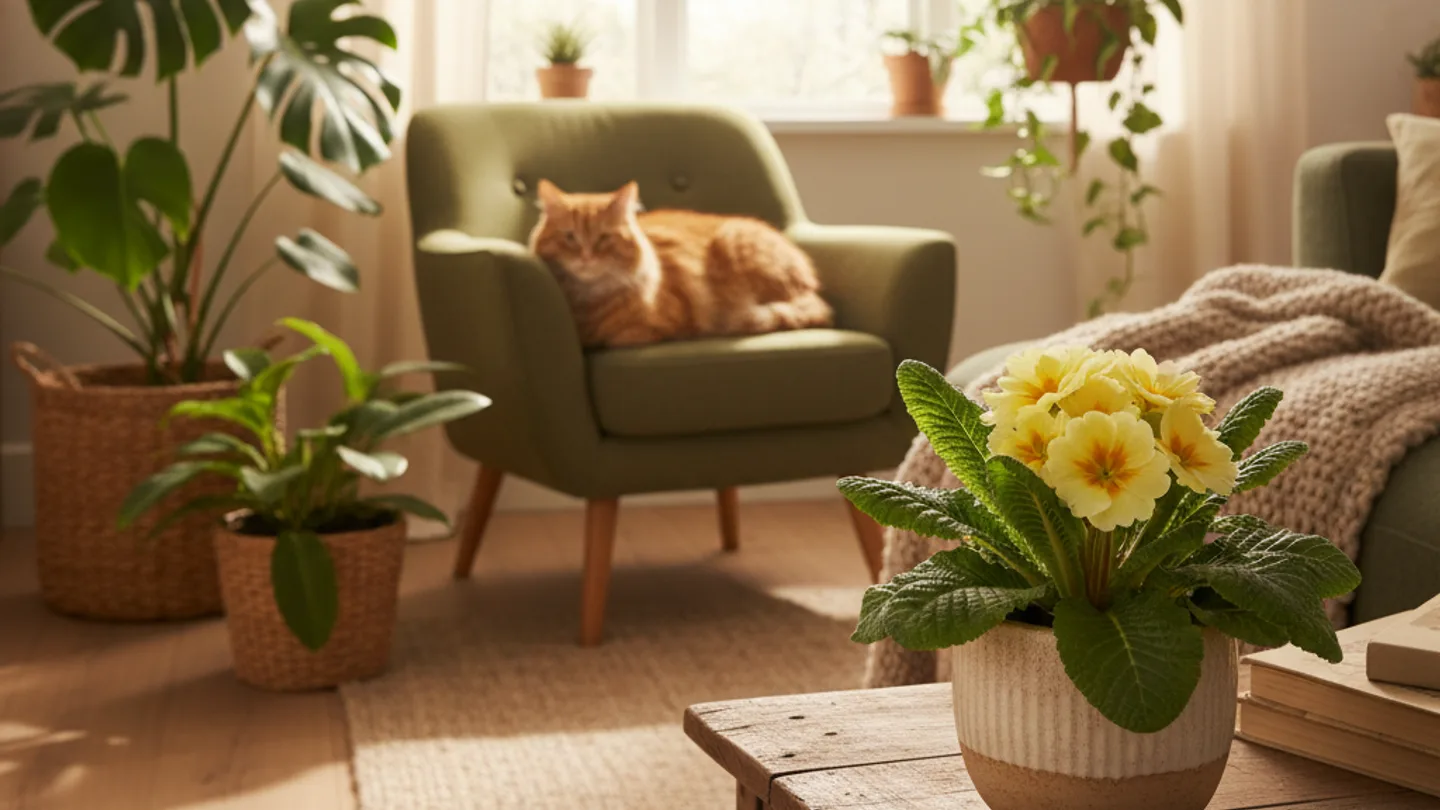
Are Primroses Toxic to Cats and Dogs?
Yes, primroses are mildly toxic to cats and dogs. If your pet nibbles a leaf or flower, the most common reaction is mild vomiting. Most pets recover quickly without treatment.
Primroses show up in US supermarkets, garden centers and hardware stores every late winter and early spring. They are cheap, cheerful and often one of the first flowering plants of the season. Here is what to watch for, what to do if your pet takes a bite, and which pet-safe plants give you the same early spring color.
The short answer
- Primroses are mildly toxic to both cats and dogs.
- The most common reaction is mild vomiting. Drooling and soft stools can also occur.
- The cause is saponins, natural plant compounds that irritate the stomach.
- Most cases pass on their own. Call your vet if vomiting repeats or your pet seems off.
- Pet-safe swaps like African violets and moth orchids give you the same spring color without the worry.
Why primroses are toxic, and what symptoms look like
Primroses (Primula species) contain saponins. Saponins are natural compounds that plants make to protect themselves. They foam when mixed with water, a bit like soap, and they irritate the lining of the mouth, stomach and intestines. That irritation is what triggers vomiting.
The ASPCA lists primrose as toxic to cats and dogs. All parts of the plant contain saponins, with the highest concentrations usually in the roots. Potted supermarket primroses are rarely dug up by pets, so leaves and petals are the usual bite targets.
The classic sign is mild vomiting, typically within a few hours of eating the plant. Some pets also drool or have loose stools. In most cases the symptoms fade on their own.
Some primrose species can also irritate skin on contact. The one often sold as poison primrose (Primula obconica) is known for this. For a pet that likes to rub its face through houseplants, that can mean a mildly itchy chin or nose. Rinsing the area with water usually helps.
Serious poisoning from primrose is rare. The amount a curious cat or dog typically eats is small, and saponins mostly cause short-lived stomach upset. That said, no plant is completely harmless. If your pet vomits more than once, seems lethargic or refuses food, contact your vet.
What to do if your pet eats primrose
Remove what is left
Gently take any plant pieces out of your pet's mouth and move the plant out of reach.
Note the details
Write down roughly how much was eaten and when. A quick photo of the plant helps your vet identify it.
Watch and wait
Offer fresh water. Mild vomiting once or twice within a few hours is the typical pattern, and it usually stops on its own.
Call a professional if needed
Contact your vet if vomiting repeats, your pet seems lethargic, or a puppy, kitten or senior pet is involved. You can also reach the ASPCA Animal Poison Control Center at (888) 426-4435, day or night. A consultation fee may apply.
Skip home remedies
Do not make your pet vomit unless a vet tells you to. It often does more harm than good.
| Pet-safe swap | The look | Light it likes |
|---|---|---|
| African violet | Velvety leaves with clusters of purple, pink or white flowers, similar in size to a potted primrose | Bright, indirect light |
| Moth orchid | Arching stems of waxy blooms that last for weeks | Bright, indirect light, out of harsh sun |
| Polka dot plant | Leaves splashed with pink or white, color without flowers | Bright to medium indirect light |
| Boston fern | Full green fronds for a lush porch or shelf | Medium indirect light and some humidity |
| Pansies and violas | Cheerful spring blooms for outdoor pots and window boxes | Full sun to partial shade outdoors |
Living with primroses when you have pets
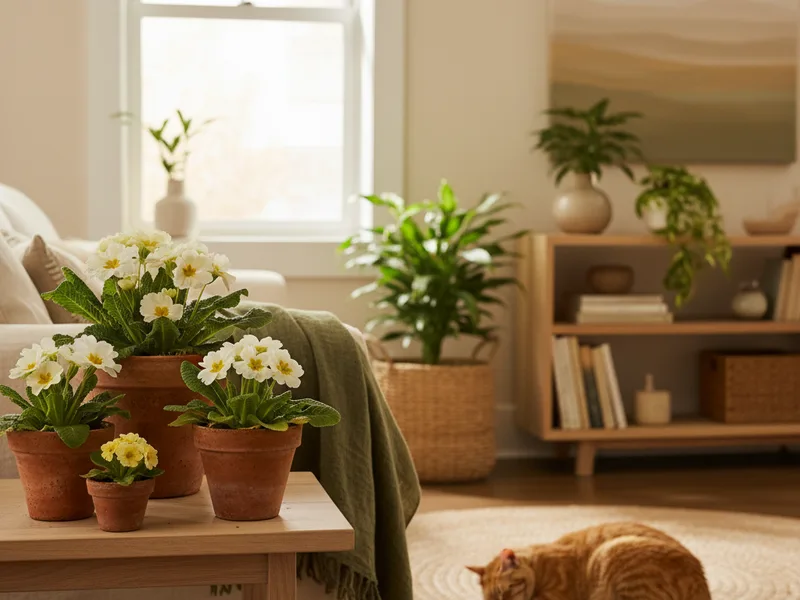
You do not have to skip primroses entirely. Their mild toxicity means placement, not panic, is the answer. A high shelf, a hanging planter or a room your pet cannot enter all work. Just remember that cats climb, so pick a spot your cat genuinely ignores.
If you plant primroses outside, most dogs ignore them. Supervise young dogs who dig or chew everything during their first spring in the garden.
Care-wise, supermarket primroses like cool rooms and bright, indirect light. Keep the soil lightly moist and snip off faded flowers. In most heated US homes they bloom for a few weeks and then fade, so treat them like a seasonal bunch of flowers rather than a long-term houseplant.
If you are choosing between winter and spring bloomers, know that cyclamen is a bigger worry. Its tubers are far more toxic than primrose leaves, so it deserves a pet-free spot or a swap.
Frequently asked questions
Are primroses toxic to cats?
Yes. Primroses are mildly toxic to cats. A nibble usually causes mild vomiting that passes on its own. Call your vet if your cat vomits repeatedly or seems unwell.
Are primroses toxic to dogs?
Yes, mildly. Dogs that chew primrose leaves or flowers may vomit or have soft stools. Most dogs recover quickly, but puppies and small dogs should be watched more closely.
Which part of the primrose is toxic?
All parts contain saponins, with the highest concentrations usually in the roots. Pets most often chew leaves and petals, which leads to milder stomach upset.
Can primroses irritate my pet's skin?
Some species can. Poison primrose (Primula obconica) is known for causing itchy skin on contact. If your pet rubs against the leaves and develops redness, rinse the area with water and call your vet if it persists.
Is evening primrose the same plant?
No. Evening primrose (Oenothera biennis) is a different plant entirely and is generally considered non-toxic to cats and dogs. It is not the primrose sold as a spring houseplant.
What flowers can I buy instead for spring color?
African violets and moth orchids are generally considered non-toxic and give you weeks of color indoors. Outdoors, pansies and violas are pet-safe picks for early spring.