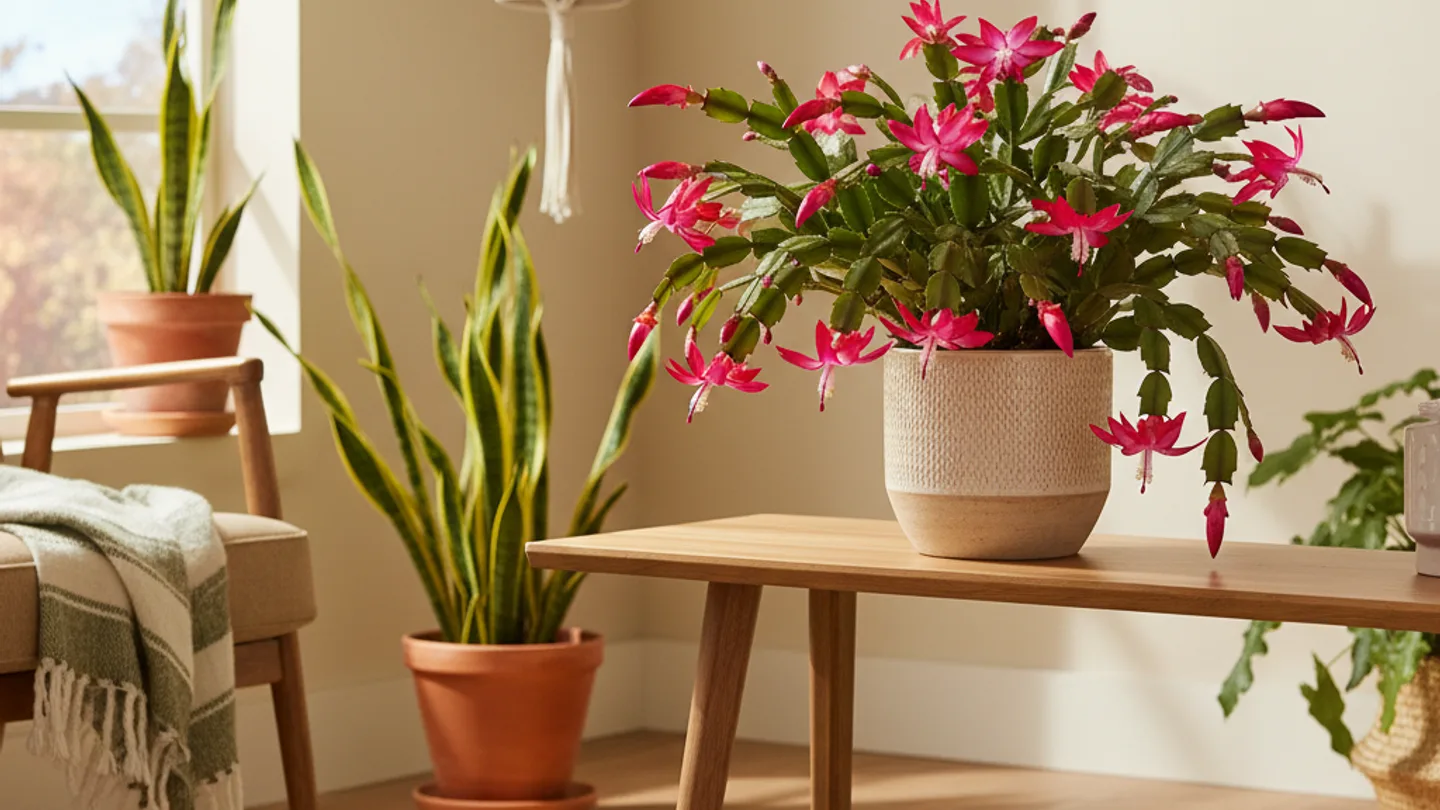
Christmas Cactus Care: A Pet-Safe Holiday Classic
Good news first: Christmas cactus is generally considered non-toxic to both cats and dogs. That makes it one of the safest holiday plants you can bring into a home with pets.
This guide covers everything you need for Christmas cactus care: the right light, a simple watering rhythm, and how to trigger those famous holiday blooms. We also compare it to poinsettia and amaryllis, two seasonal favorites that are not as pet friendly.
Key takeaways
- Christmas cactus is generally considered non-toxic to cats and dogs, so it is a safe holiday choice for pet homes.
- It prefers bright, indirect light and soil that dries out partly between waterings.
- To trigger blooms, give it cooler nights and longer dark periods in the fall.
- Poinsettia is mildly toxic and amaryllis is toxic to pets, so Christmas cactus is the safer pick.
- Even non-toxic plants can cause mild stomach upset if a pet eats a lot, so place plants thoughtfully.
Is Christmas cactus safe for cats and dogs?
Yes. Christmas cactus (Schlumbergera) is generally considered non-toxic to both cats and dogs. It does not contain the irritating crystals or dangerous compounds found in many other houseplants.
That said, non-toxic does not mean risk free. If your cat or dog chews a large amount of any plant, mild vomiting or diarrhea can follow simply because their stomach is not built for it. If your pet shows symptoms after eating plant material, contact your vet.
The good news: a curious nibble on a Christmas cactus is far less worrying than a nibble on most other holiday plants.
| Plant | Toxic to cats | Toxic to dogs | What happens if eaten |
|---|---|---|---|
| Christmas cactus | No | No | Usually nothing; large amounts may cause mild stomach upset |
| Poinsettia | Mildly | Mildly | Mouth irritation, drooling, sometimes vomiting |
| Amaryllis | Yes | Yes | Vomiting, diarrhea, drooling; bulbs are the most dangerous part |
| Holly | Yes | Yes | Vomiting, diarrhea, and irritation from the spiky leaves |
Light: bright but not harsh
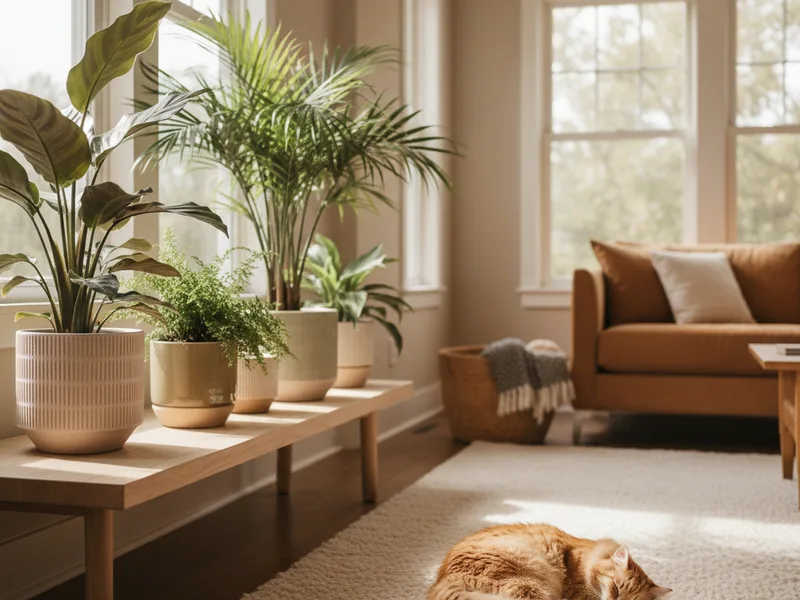
Christmas cactus likes bright, indirect light. Think of a spot near an east or north facing window, or a few feet back from a sunny south facing window.
Direct midday sun can scorch the flat, segmented leaves and turn them reddish or pale. Too little light means few or no blooms.
In a typical apartment, a bright windowsill with a sheer curtain works well. This is not a plant that demands greenhouse conditions.
Watering: less than you think
Despite the name, Christmas cactus is not a desert cactus. It is a jungle plant from Brazil, so it wants a bit more moisture than a typical cactus.
Water when the top inch of soil feels dry. Then water thoroughly and let the excess drain away. Never let the pot sit in standing water, because soggy roots lead to rot.
In winter, when the plant is blooming or resting, it needs less water. In spring and summer, when it is actively growing, it will drink a bit more.
A simple check: stick your finger in the soil. Dry at the top inch means water. Still damp means wait a day or two.
How to trigger holiday blooms
Give it long, dark nights
Starting in early fall, the plant needs about 12 to 14 hours of darkness each night for roughly six weeks. A spare room that stays dark after sunset works well, or cover the plant with a box or cloth each evening.
Keep it cool
Night temperatures around 50 to 55 degrees F encourage buds to form. A cool room or a spot near a window away from radiators is ideal.
Cut back on water
During this rest period, water less. Let the soil dry a bit more between waterings, but never let the plant wilt badly.
Bring it back when buds appear
Once you see buds, move the plant back to its bright spot and return to normal watering. Avoid moving it around too much after this point, because sudden changes can make buds drop.
Enjoy the show
Blooms usually open around late November or December and can last for weeks. Keep the plant away from cold drafts and heat vents while it flowers.
Soil, feeding, and repotting
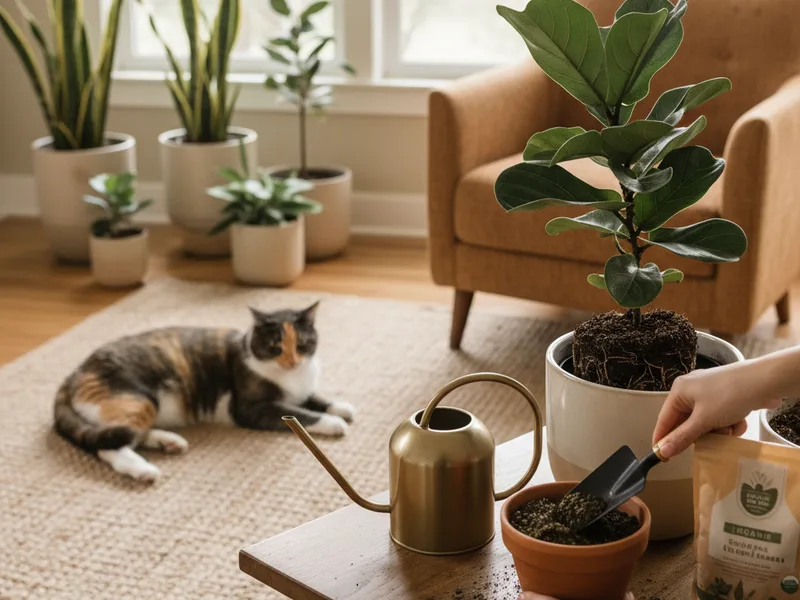
Use a well draining potting mix. A standard houseplant mix with some added perlite or orchid bark works well. The goal is soil that holds some moisture but never stays soggy.
Feed monthly with a diluted houseplant fertilizer from spring through late summer. Stop feeding in the fall when you start the blooming routine.
Christmas cactus actually blooms better when slightly root bound, so repot only every two to three years, and only go up one pot size.
Pet-smart placement tips
Even a non-toxic plant is best kept out of heavy chewing range. A plant stand, a high shelf, or a hanging pot keeps the leaves intact and your pet's stomach calm.
Christmas cactus is easy to propagate from a single leaf segment, so if a curious cat knocks a piece off, you can simply root it in water or soil.
Want to check another plant before you buy it? See our guides on cyclamen, lavender, and monstera.
Frequently asked questions
Is Christmas cactus toxic to cats?
No. Christmas cactus is generally considered non-toxic to cats. Eating a large amount can still cause mild stomach upset, so contact your vet if your cat vomits or seems unwell after chewing it.
Is Christmas cactus toxic to dogs?
No. It is generally considered non-toxic to dogs as well. As with any plant, eating a lot of it may cause mild vomiting or diarrhea. Call your vet if symptoms appear.
Why is my Christmas cactus not blooming?
The most common reasons are too much light at night in the fall, warm room temperatures, or moving the plant after buds form. Give it long, dark, cool nights in October and November, then leave it in one spot once buds appear.
How often should I water a Christmas cactus?
Water when the top inch of soil feels dry, then let the pot drain fully. This is often once every one to two weeks, but it depends on your light and room temperature. Always check the soil rather than following a fixed schedule.
Is Christmas cactus safer than a poinsettia?
Yes. Poinsettia is mildly toxic and can irritate your pet's mouth and stomach, while Christmas cactus is generally considered non-toxic. Amaryllis is more clearly toxic, especially the bulb. For a pet home, Christmas cactus is the safest of the three.
Can my Christmas cactus live all year as a houseplant?
Yes. It is an easy year-round houseplant. Give it bright indirect light, moderate water, and a cool, dark rest period in the fall, and it will reward you with blooms every holiday season for many years.