African Violet Care: Safe for Pets, Blooms All Year
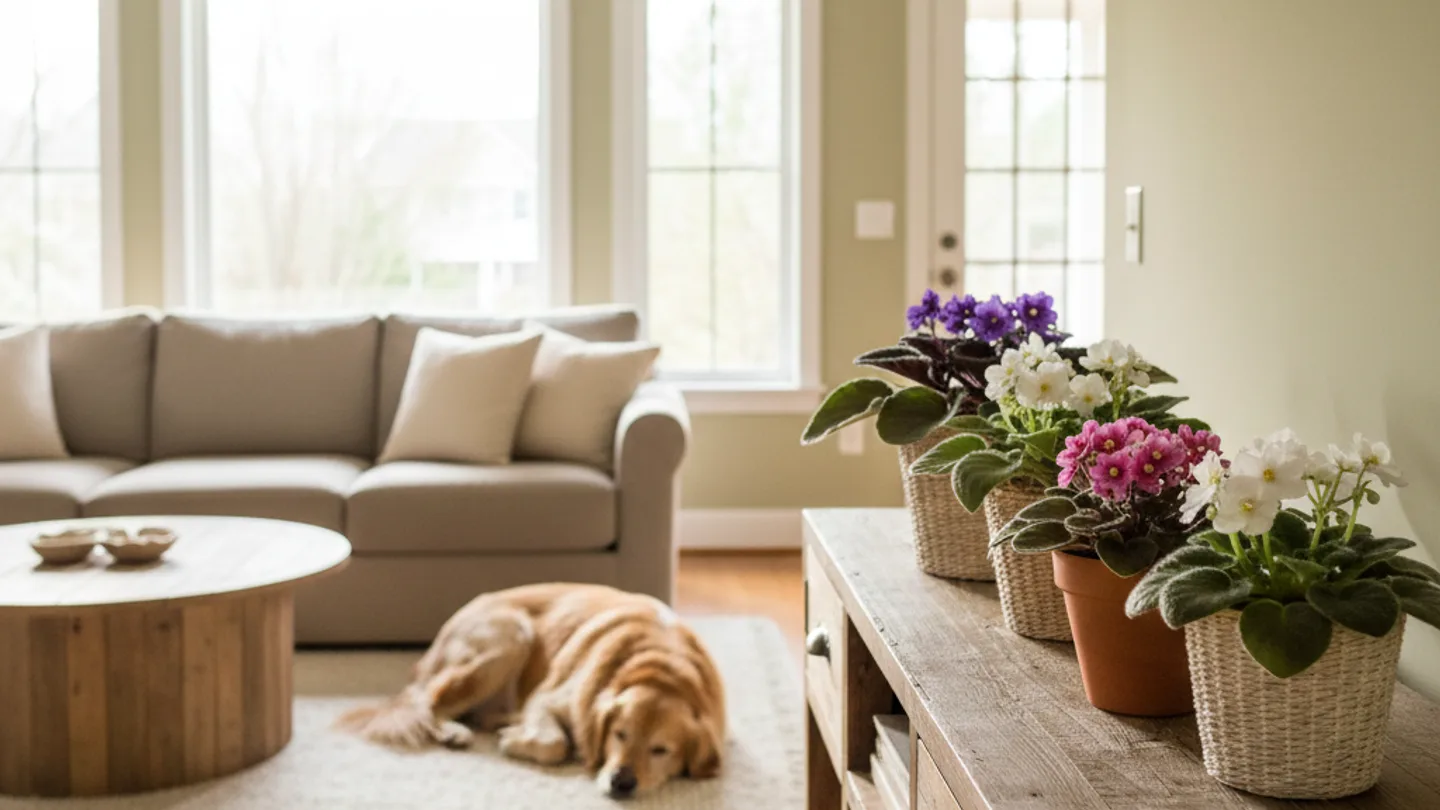
African violets are generally considered non-toxic to both cats and dogs. If you want flowers on your windowsill without worrying about your pet, this is one of the safest picks you can make.
The ASPCA lists African violets as non-toxic to cats and dogs. That does not mean a chewed leaf is a free pass. Any plant material can cause a mild upset stomach if your pet eats enough of it, so call your vet if symptoms appear.
The good news: African violet care is simple once you know a few rules. Here is how to keep yours blooming all year in a real apartment, not a greenhouse.
African violet care at a glance
- African violets are generally considered non-toxic to cats and dogs, according to the ASPCA.
- Bright, indirect light keeps them blooming. An east-facing window is ideal.
- Water from the bottom, not the top. Wet fuzzy leaves can spot and rot.
- Let the top of the soil dry slightly between waterings.
- They bloom nearly all year with steady light and a little fertilizer.
- Mild stomach upset is still possible if a pet eats a lot of plant material, so keep plants out of easy reach when you can.
Are African violets toxic to cats and dogs?
No. African violets are generally considered non-toxic to cats and dogs. The ASPCA lists Saintpaulia, the African violet family, as safe for both.
That makes them rare among flowering houseplants. Many popular bloomers are a problem. Cyclamen, for example, is toxic to pets. If you want the full picture, read our guide on is cyclamen toxic to cats and dogs.
Non-toxic does not mean harmless in large amounts. If your cat chews half a plant, watch for drooling or vomiting and contact your vet if symptoms appear. For most homes, though, an African violet on the windowsill is a low-stress choice.
Light: bright, indirect, and steady
African violets want bright, indirect light. Think of a spot near a window where the sun never hits the leaves directly.
An east-facing window is the classic answer: gentle morning sun, soft light the rest of the day. A north-facing window can work in summer but may be too dim in winter. A few feet back from a south or west window also works if a sheer curtain filters the light.
Not blooming? Light is the first thing to check. Too little light means no flowers. Too much direct sun scorches the fuzzy leaves. If your apartment is dim, a small LED grow light on for 10 to 12 hours a day keeps them happy.
The safest way to water
How to bottom water an African violet
Check the soil first
Stick a finger about half an inch into the soil. If it feels dry, it is time to water. If it still feels moist, wait a day or two.
Fill a saucer or bowl with room-temperature water
Cold water can spot and damage the leaves and roots. Let tap water sit out for a bit, or use lukewarm water.
Set the pot in the water
Place the pot in the saucer so it can soak up water through the drainage holes. Leave it for about 20 to 30 minutes.
Check the top of the soil
When the surface looks evenly moist, the plant has drunk enough.
Pour off the leftover water
Never let the pot sit in standing water. That is the fastest route to root rot. Empty the saucer and put the plant back in its spot.
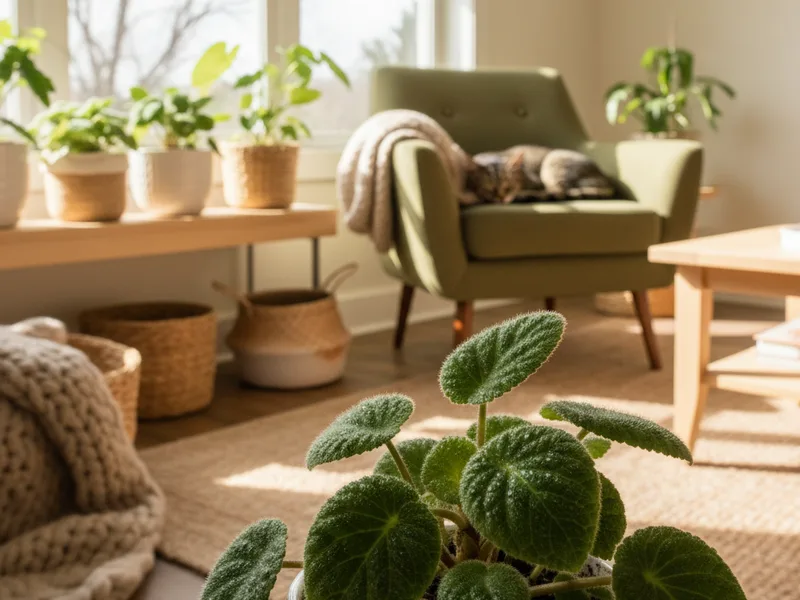
Fuzzy leaf rules: keep them dry
Those soft, fuzzy leaves are the reason for the strictest African violet rule: do not get them wet.
Water sitting on the leaves can cause brown spots, and in cool or humid rooms it invites rot and mildew. This is why bottom watering works so well. The water goes straight to the roots and never touches the foliage.
Skip misting too. Many tropical plants love a spray bottle; African violets do not. If a leaf gets dusty, clean it gently with a soft, dry brush.
If water splashes on a leaf by accident, blot it dry with a paper towel. One splash is not a disaster. A habit of wet leaves is.
Soil, pots, and feeding for year-round blooms
African violets like light, airy soil. A mix sold for African violets, or a peat-based potting mix with extra perlite, keeps roots from sitting in soggy soil.
They also like being slightly snug in their pot. A pot about a third the width of the leaf spread is a good guide. Repot once a year or so, and only move up one pot size.
For steady blooms, feed with a balanced African violet fertilizer at a weak dose every few weeks during the growing season. Remove spent flowers and any yellowing leaves at the base so the plant puts its energy into new buds.
Average home temperatures suit them fine, roughly 65 to 75 degrees Fahrenheit. Keep them away from cold drafts and heating vents.
Why African violets work for pet homes
- Generally considered non-toxic to cats and dogs
- Blooms nearly all year with the right light
- Compact size fits windowsills and small apartments
- Comes in many colors, from purple and pink to white
- Cheap and easy to find in most garden centers
Things to watch
- Fuzzy leaves spot if they get wet
- Will not bloom in low light
- Fussy about cold water and drafts
- Chewed plants can still cause mild stomach upset
- A determined cat can knock the small pot off a sill
Common questions about African violet care
Are African violets safe for cats and dogs?
Yes. African violets are generally considered non-toxic to cats and dogs, and the ASPCA lists them as safe for both. If your pet eats a large amount, mild stomach upset is possible, so call your vet if symptoms appear.
Why is my African violet not blooming?
Light is the most common reason. Move it to a brighter spot with indirect light, like an east-facing window. Old soil, a pot that is too big, or skipped feedings can also slow blooming.
Can I water African violets from the top?
You can, but be careful. Pour room-temperature water directly onto the soil and avoid splashing the leaves. Bottom watering is easier and safer for the fuzzy foliage.
How often should I water?
There is no fixed schedule. Water when the top of the soil feels dry to the touch. In most homes that is roughly once a week, more often in warm, dry rooms and less in winter.
Do African violets need humidity?
Average home humidity is usually fine. Do not mist them, since wet leaves can spot and rot. If your air is very dry, a pebble tray under the pot adds gentle humidity without wetting the plant.
What if my cat keeps chewing the leaves?
The plant itself is low risk, but chewed plants are sad plants and big bites can still upset a stomach. Move the violet to a shelf or hanging spot your cat cannot reach, and offer cat grass as a decoy.