Pet-Safe Plants for the Bedroom
Good news first: there are plenty of pet safe bedroom plants that are generally considered non-toxic to both cats and dogs. You can have greenery by your bed without worrying about a midnight nibble.
This list covers calm-looking plants that handle bedroom light and cooler nights. You also get placement ideas that work even when your cat claims the bed, the dresser and the windowsill.
One note on honesty: we skip air-purifying claims here. The popular studies were done in sealed lab chambers, not real bedrooms, so we focus on what matters: safety, light and survival.
The Short Version
- Spider plants, parlor palms, calatheas, Boston ferns, peperomias, haworthias, orchids and friendship plants are all generally considered non-toxic to cats and dogs.
- Bedrooms usually have lower light and cooler nights. Most plants on this list prefer exactly that.
- Non-toxic does not mean snack-proof. Any plant can cause mild stomach upset if your pet eats a lot of it.
- Popular bedroom plants like snake plants and lavender are actually toxic to pets. Check before you buy.
- Placement beats plant choice when a cat shares your room. Shelves, hangers and closed terrariums do the heavy lifting.
Why the Bedroom Is Its Own Kind of Plant Spot
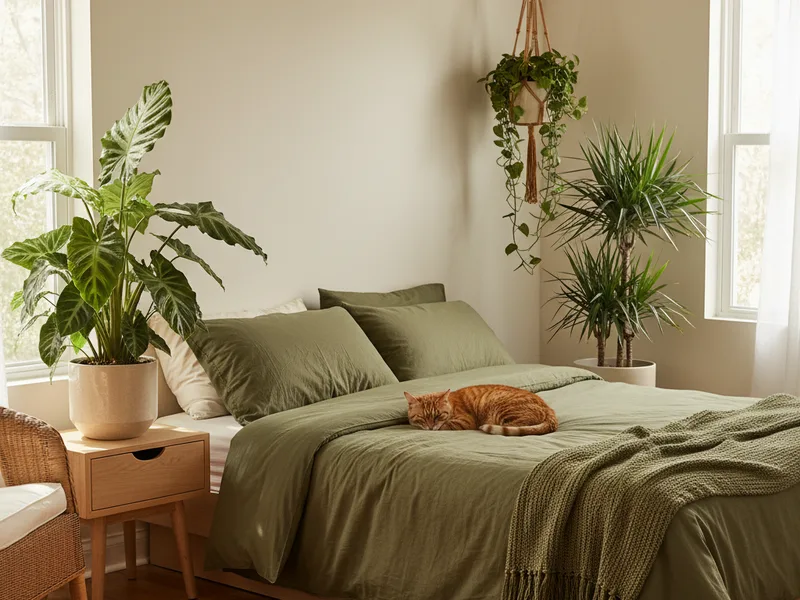
Bedrooms differ from living rooms in two ways that matter for plants. Light is usually softer, often just one window. And nights run cooler, especially in winter when heat drops after bedtime.
That combination rules out sun lovers like succulents from hot deserts. It favors plants from forest floors, where light filters through a canopy and temperatures stay mild.
Add a cat who sleeps sixteen hours a day in your room, and durability matters too. A plant that tolerates an occasional swat or clumsy jump is worth more than a delicate showpiece.
| Plant | Pet safety | Light | Watering | Bedroom fit |
|---|---|---|---|---|
| Spider plant | Non-toxic to cats and dogs | Bright to medium indirect | Weekly, let soil dry a little | Tolerates neglect and cooler nights |
| Parlor palm | Non-toxic to cats and dogs | Low to medium indirect | When top inch of soil is dry | Slow grower, calm full look |
| Calathea | Non-toxic to cats and dogs | Low to medium indirect | Keep lightly moist, not soggy | Leaves fold up at night |
| Boston fern | Non-toxic to cats and dogs | Medium indirect | Keep evenly moist | Great for humid bedrooms |
| Peperomia | Non-toxic to cats and dogs | Low to medium indirect | Every 1 to 2 weeks | Compact, fits small nightstands |
| Haworthia | Non-toxic to cats and dogs | Medium to bright indirect | Every 2 to 3 weeks | Small succulent look without the risk |
| Phalaenopsis orchid | Non-toxic to cats and dogs | Medium indirect | About weekly, bark mix | Elegant on a dresser |
| Friendship plant | Non-toxic to cats and dogs | Low to medium indirect | Keep lightly moist | Soft, textured, terrarium friendly |
The Plants, One by One
Spider plant. The classic for a reason. It handles low light, forgives missed waterings and shrugs off cool nights. Its dangling baby plantlets can tempt cats to bat at it, so a hanging planter is the smart move.
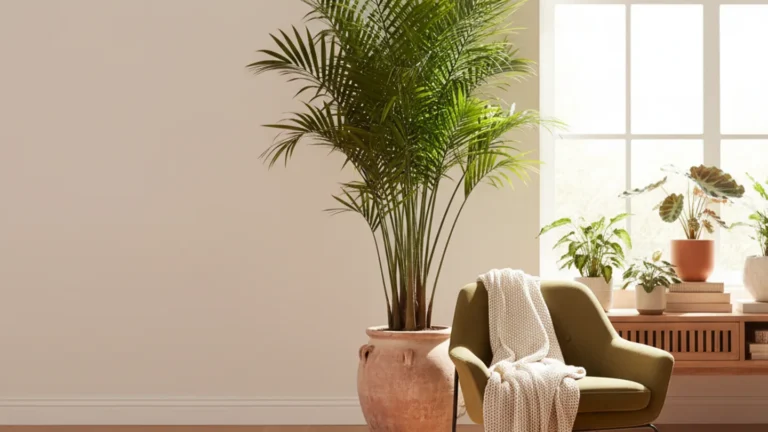
Parlor palm. A Victorian favorite that earned its name by surviving dim parlors. It grows slowly, stays neat and gives you a full, leafy look without demanding a sunny window.
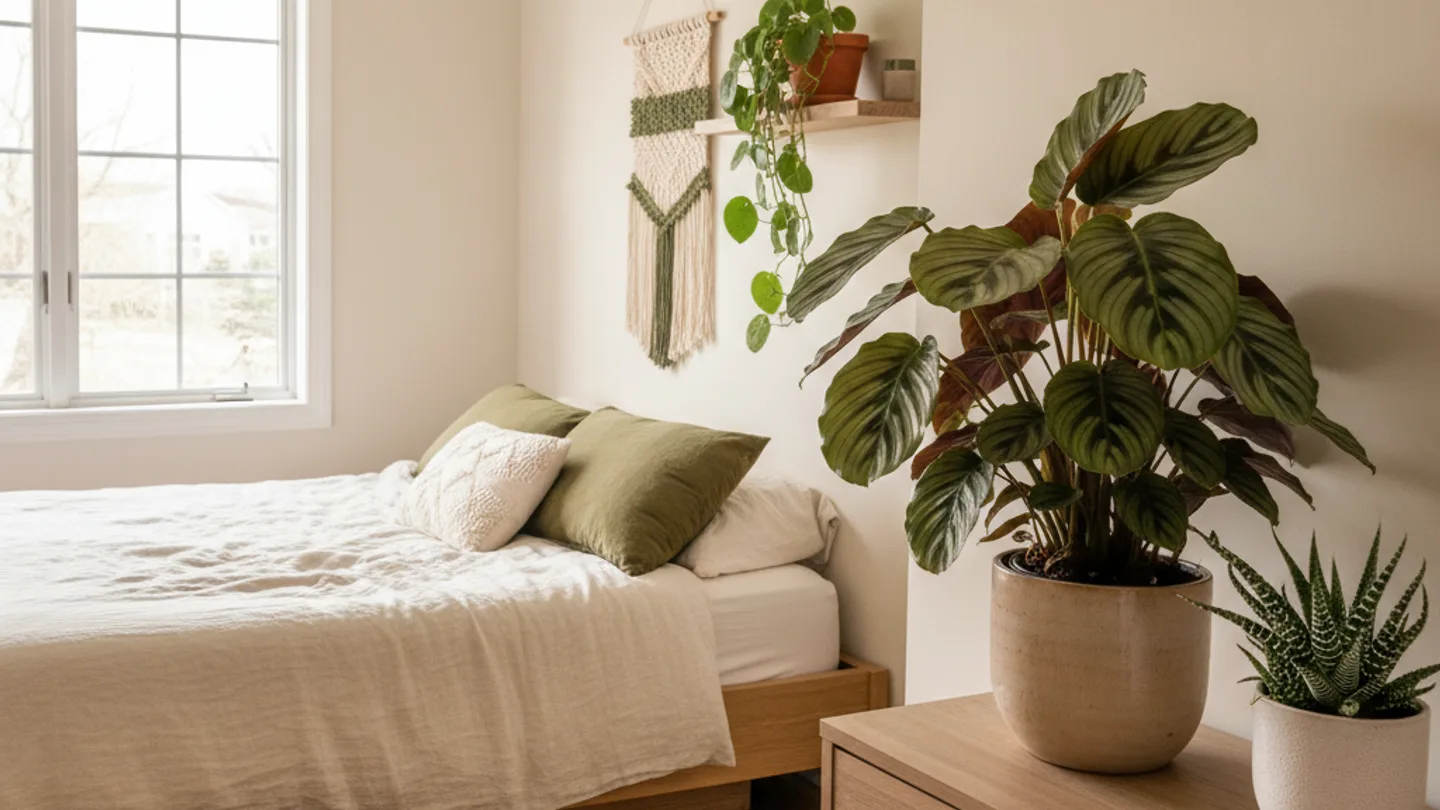
Calathea. The drama-free kind of drama. Its patterned leaves fold upward at night, which is lovely next to a bed. It likes consistent moisture and dislikes drafts, so keep it away from a leaky window.
Boston fern. Soft, arching fronds that suit a calm bedroom. It wants humidity and even moisture, so it thrives on a bathroom-adjacent dresser or near a small humidifier.
Peperomia. Small, sturdy and slow. Perfect for a nightstand where a bigger plant would not fit. Its thick leaves store water, so it forgives you when life gets busy.
Haworthia. Want the succulent look without the risk that comes with some succulents? Haworthia gives you neat striped rosettes and is generally considered non-toxic to pets. It stays small and asks for little.
Phalaenopsis orchid. Yes, the grocery store orchid is pet safe. It blooms for months in medium light and looks elegant on a dresser. Just place it where a curious cat cannot knock the pot off.
Friendship plant. A low, mounding plant with quilted leaves. It loves the soft light and mild temperatures of a bedroom and does well inside a glass terrarium, which also keeps paws out.
Bedroom Plants to Skip or Rethink
Some popular bedroom picks are not pet safe, and it is worth knowing before you shop.
The snake plant is often sold as the perfect bedroom plant, but it is toxic to both cats and dogs. Chewing it can cause nausea, vomiting and diarrhea. We cover the details in our guide on whether snake plants are toxic.
Lavender shows up in bedroom advice because of its scent, but it is also toxic to cats and dogs. If you love the idea, read our piece on whether lavender is toxic first and consider a safer stand-in.
If you like the clean vertical lines of a snake plant, a parlor palm gives you height and structure with a pet-safe profile. Similar mood, safer roommates.
Placement Ideas That Survive a Cat on the Bed
Hanging planters are your best friend. A spider plant or Boston fern in a ceiling hook planter keeps trailing leaves out of paw range and adds greenery at eye level.
High shelves beat nightstands. Cats own every flat surface at bed height, so put plants on a floating shelf above the headboard or a tall bookcase top.
Use a closed terrarium for small plants. A friendship plant or baby peperomia under glass is fully protected from digging and chewing, and it handles the lower light of a bedroom corner.
Anchor pots against knocks. Choose heavier ceramic pots, or nest the nursery pot inside a weighted cachepot. A 3 a.m. parkour session should not end in soil on the carpet.
Skip floor plants in cat bedrooms unless the pot is large and stable. A big parlor palm in a wide, heavy planter can work, but a top-heavy plant in a light pot is an accident waiting to happen.
Watch the windowsill. It is prime cat territory. If your cat sunbathes there, that spot belongs to the cat. Move the plant two feet over.
Common Questions About Bedroom Plants and Pets
Are non-toxic plants completely harmless if my pet eats them?
No plant is completely harmless. Plants generally considered non-toxic can still cause mild stomach upset if your pet eats a lot of leaves. If your pet shows symptoms like vomiting, drooling or lethargy after chewing any plant, call your vet or the ASPCA Animal Poison Control Center.
Do bedroom plants really clean the air while I sleep?
Not in any meaningful way. The famous air-purifying studies used sealed lab chambers. In a real bedroom, you would need an unrealistic number of plants to change air quality. Open a window or use an air purifier instead, and enjoy plants for how they look and feel.
My cat chews every plant. Which one should I start with?
Start with a spider plant in a hanging planter. It is non-toxic, fast-growing and cheap to replace. The hanging position keeps most leaves out of reach. Some cats find spider plant leaves mildly attractive, so hanging placement matters more than the plant choice.
Can bedroom plants handle cold nights in winter?
Most plants on this list tolerate typical bedroom temperatures down to about 60 degrees Fahrenheit. Keep them away from cold drafts against window glass and away from heating vents, which dry out leaves fast.
What low-light pet safe plant looks best on a nightstand?
Peperomia is the top pick. It stays compact, handles low to medium light and only needs water every week or two. A small haworthia works too if your nightstand gets a bit more light.