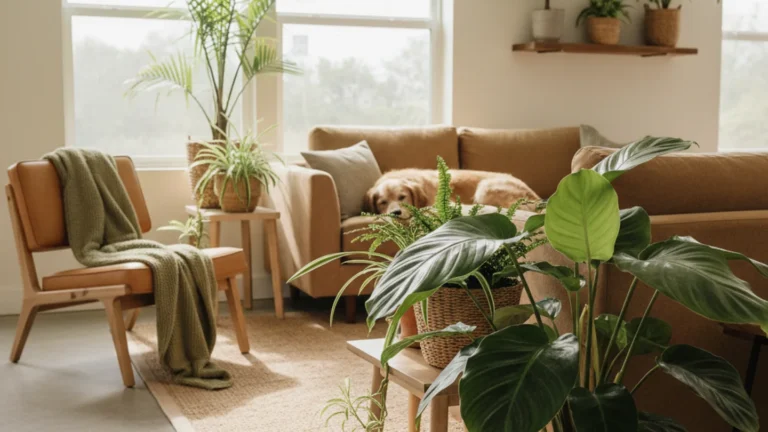
Pet-Safe Hanging and Trailing Plants
Trailing plants look beautiful in a hanging basket or spilling over a shelf. The good news: there are plenty of pet safe hanging plants that are generally considered non-toxic to cats and dogs. The honest news: hanging a plant is styling, not a safety strategy. Strands dangle into reach, and a swishing vine is basically a cat toy with roots.
This list gives you the best safe trailers for baskets and shelves, plus the popular toxic ones to skip. Every entry leads with the verdict, so you can check a plant in seconds while standing in the shop.
One honest point before the list
Many owners hang a toxic plant high and assume the problem is solved. It rarely is. Pothos and philodendron vines grow fast and hang lower every month. Leaves drop onto the floor. Cats are excellent jumpers, and many dogs will investigate anything that swings.
So the safest approach is simple: choose trailing plants that are generally considered non-toxic, and place even those thoughtfully. A non-toxic plant can still cause a mild stomach upset if your pet eats a lot of it, and chewed leaves are a mess either way.
Even with safe plants, watch your pet the first days after you bring one home. If you notice vomiting, drooling, or swelling around the mouth, call your vet.
The best pet safe hanging plants
Spider plant. Generally considered non-toxic to cats and dogs. It grows fast, tolerates a range of light, and produces baby plantlets you can repot. Fair warning: many cats love chewing the grass-like leaves, so hang it where the strands do not taunt them.
Boston fern. Generally considered non-toxic. Soft, full fronds that look lush in a basket. It likes indirect light and slightly moist soil, which makes it a good fit for a bright bathroom.
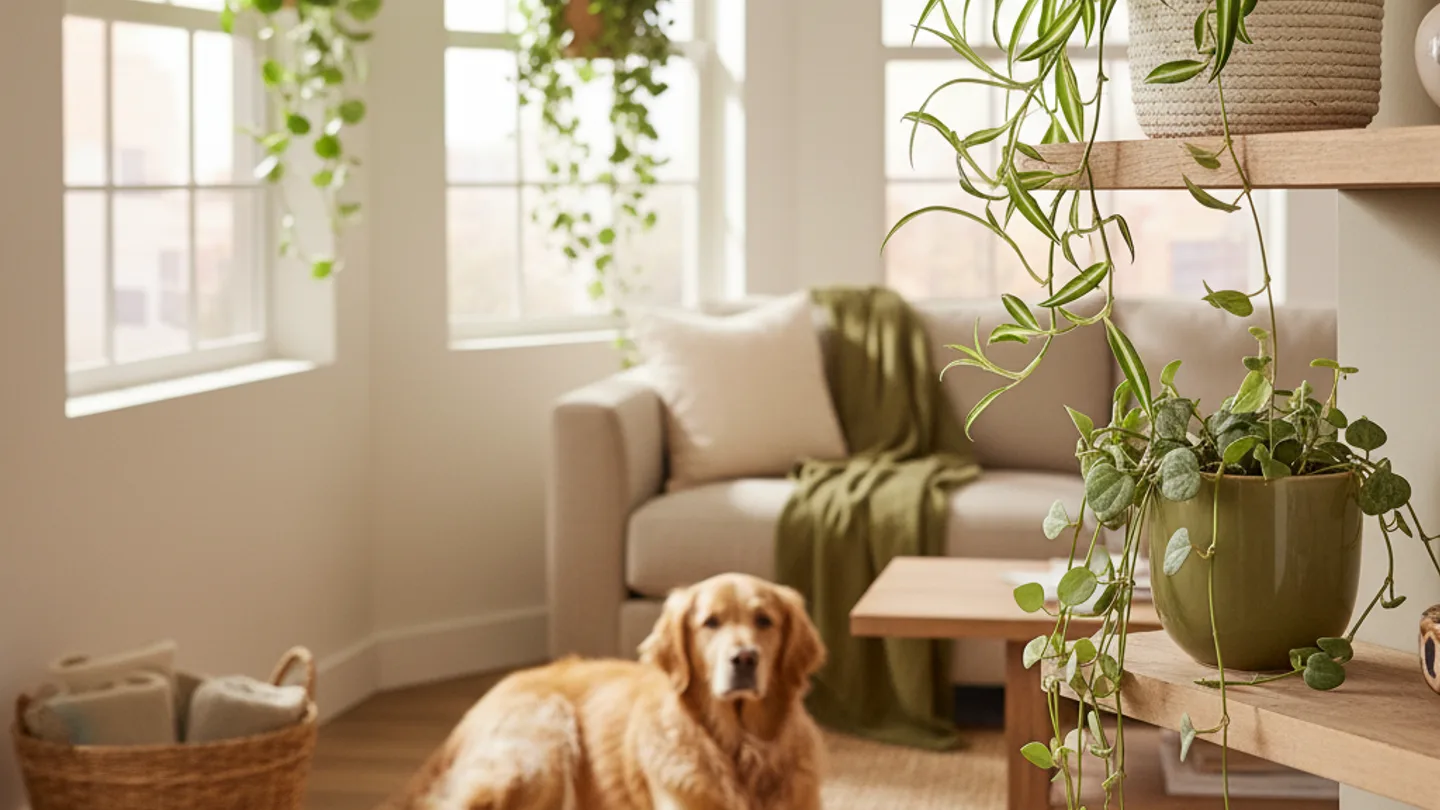
String of hearts (Ceropegia woodii). Generally considered non-toxic. Delicate heart-shaped leaves on long thin strands. It wants bright light and a light hand with water.
Lipstick plant (Aeschynanthus). Generally considered non-toxic. Glossy leaves and red tubular flowers. It trails nicely and does well in bright, indirect light.
Baby's tears (Soleirolia soleirolii). Generally considered non-toxic. A low, dense mat of tiny leaves that spills over the edge of a pot or shelf. It prefers steady moisture.
Peperomia hope and other trailing peperomias. Generally considered non-toxic. Thick, rounded leaves on tidy stems, easy care, and happy in medium light. A solid pick for shelves in real apartments.
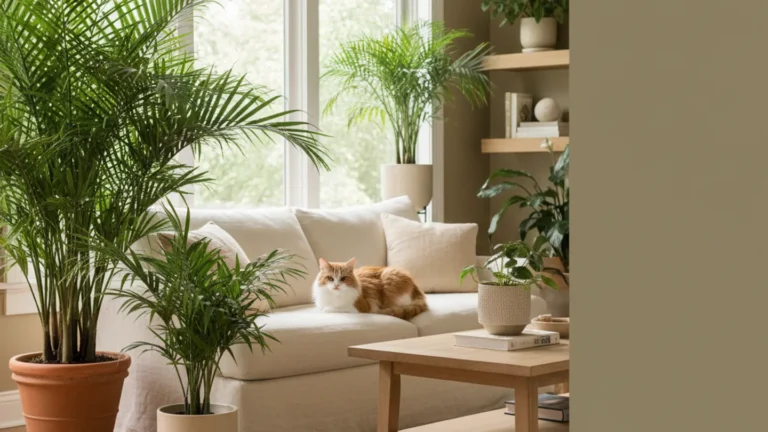
Parlor palm and other true palms can also trail or arch from a high spot and are generally considered non-toxic, though they grow upright rather than hanging.
| Plant | Toxic to cats? | Toxic to dogs? | The short version |
|---|---|---|---|
| Spider plant | No | No | Generally considered non-toxic, but cats love to chew it |
| Boston fern | No | No | Generally considered non-toxic, likes humidity |
| String of hearts | No | No | Generally considered non-toxic, needs bright light |
| Lipstick plant | No | No | Generally considered non-toxic, flowers indoors |
| Baby's tears | No | No | Generally considered non-toxic, keep soil moist |
| Pothos | Yes | Yes | Toxic, skip it or read why below |
| Philodendron | Yes | Yes | Toxic, all common types |
| English ivy | Yes | Yes | Toxic, causes drooling and stomach upset |
| String of pearls | Yes | Yes | Toxic, and the beads tempt pets to play |
Toxic trailers that hang in many homes
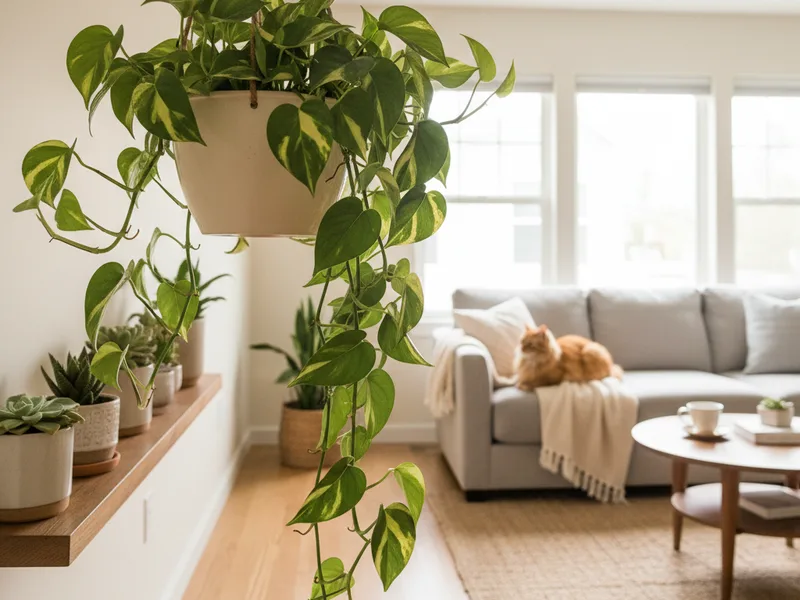
Pothos is the classic hanging plant, and it is toxic to both cats and dogs. It contains insoluble calcium oxalate crystals. Those are tiny sharp crystals that can irritate your pet's mouth and throat, causing drooling, pawing at the mouth, and vomiting. Read the full breakdown in our guide: is pothos toxic.
Philodendron works the same way. Heartleaf philodendron trails beautifully and carries the same calcium oxalate risk. Details here: is philodendron toxic.
English ivy contains saponins and can cause drooling, vomiting, and diarrhea. String of pearls looks like a string of green beads, which is exactly why pets bat at it, and it is toxic when chewed.
If you love the look of any of these, the spider plant or a trailing peperomia gives you a similar shape and light requirement without the risk. That swap is the heart of what we do here.
Where to hang and trail them in a real home
Match the plant to the light you actually have, not the light in the nursery photo. A shelf three feet from a bright window is medium light, not bright light.
Spider plants and peperomias handle medium light and forgive missed waterings. String of hearts needs a genuinely bright spot. Boston ferns and baby's tears like moisture, so they suit kitchens and bathrooms.
Use sturdy hooks and check them after a month. A falling basket is a hazard on its own, and a curious cat will test your installation. Keep strands trimmed so they stay out of easy reach of dogs, and watch whether your cat treats any plant as a snack, even a safe one.
Common questions about hanging plants and pets
Are hanging plants safe for cats if they are out of reach?
Only partly. Vines grow longer, leaves drop, and cats jump. Hanging is styling, not a safety plan. Choose plants that are generally considered non-toxic, then hang them thoughtfully.
What is the easiest pet safe hanging plant?
The spider plant. It tolerates a wide range of light, bounces back from missed waterings, and is generally considered non-toxic to cats and dogs.
My pet chewed a leaf of a safe plant. Should I worry?
A small nibble of a non-toxic plant usually causes at most a mild stomach upset. Watch for vomiting, drooling, or swelling, and call your vet if symptoms appear.
Is there a safe alternative to pothos for a shelf?
Yes. A trailing peperomia or string of hearts gives a similar cascading look and is generally considered non-toxic to cats and dogs.
Are ferns safe for dogs and cats?
True ferns like the Boston fern are generally considered non-toxic. Asparagus fern is an exception: it is not a true fern and is toxic to cats and dogs.