Pet-Safe Plants for the Kitchen
The kitchen is one of the best rooms in the house for plants. Bright windows, warm air and regular watering reminders are all built in. The tricky part is making sure your pet safe kitchen plants actually stay safe, especially if you share your home with a cat that treats counters like a runway or a dog that sniffs everything at nose height.
Good news: several classic kitchen plants and most culinary herbs are generally considered non-toxic to cats and dogs. Below you will find the best options for sills and shelves, how to handle steam and temperature swings near the stove, and which herbs pull double duty as decor and dinner ingredients.
Key takeaways
- Spider plants, Boston ferns, prayer plants and peperomias are generally considered non-toxic to cats and dogs and do well in kitchen conditions.
- Basil, rosemary, thyme, parsley and sage are pet-safe herbs that look great on a sunny sill and end up in your cooking.
- Chives and garlic plants are toxic to cats and dogs, so skip them or grow them well out of reach.
- Counter-surfing pets change the math: even a non-toxic plant can cause an upset stomach, and pots can break. Place plants on high shelves or use hanging planters.
- Keep plants a few feet from the stove and kettle to protect them from steam blasts and temperature swings.
The best pet safe plants for kitchen sills and shelves
These plants handle the bright, slightly humid air of a typical kitchen and are generally considered non-toxic to cats and dogs. Remember that non-toxic does not mean zero risk: any plant eaten in quantity can cause a mild stomach upset, so contact your vet if you notice vomiting, diarrhea or other symptoms.
Spider plant. Arching green and white leaves, happy on a bright sill, and tolerant of occasional neglect. Cats often find the dangling leaves irresistible, which is one more reason to hang it rather than park it at paw level.
Boston fern. Loves the extra humidity kitchens provide. It prefers indirect light, so a shelf near, but not in, a sunny window works well.
Prayer plant (Calathea or Maranta). Folds its leaves up at night and tolerates lower light than most. It enjoys humidity, which makes the kitchen a natural home.
Peperomia. Compact, slow growing and available in many leaf shapes. It fits neatly on a narrow windowsill and does not mind drying out a little between waterings.
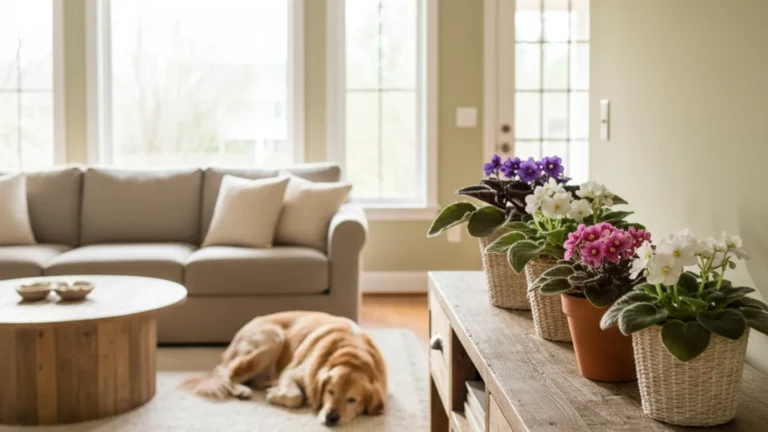
African violet. One of the few flowering plants generally considered non-toxic to both cats and dogs. It likes bright, indirect light and a snug pot.
| Plant | Light | Handles humidity | Pet safety |
|---|---|---|---|
| Spider plant | Bright, indirect | Moderate | Non-toxic to cats and dogs |
| Boston fern | Indirect | High | Non-toxic to cats and dogs |
| Prayer plant | Low to medium | High | Non-toxic to cats and dogs |
| Peperomia | Bright, indirect | Moderate | Non-toxic to cats and dogs |
| African violet | Bright, indirect | Moderate | Non-toxic to cats and dogs |
| Basil | Direct sun | Moderate | Non-toxic to cats and dogs |
| Rosemary | Direct sun | Low | Non-toxic to cats and dogs |
| Parsley | Direct sun | Moderate | Non-toxic in normal amounts; large amounts can be an issue |
Culinary herbs that double as decor
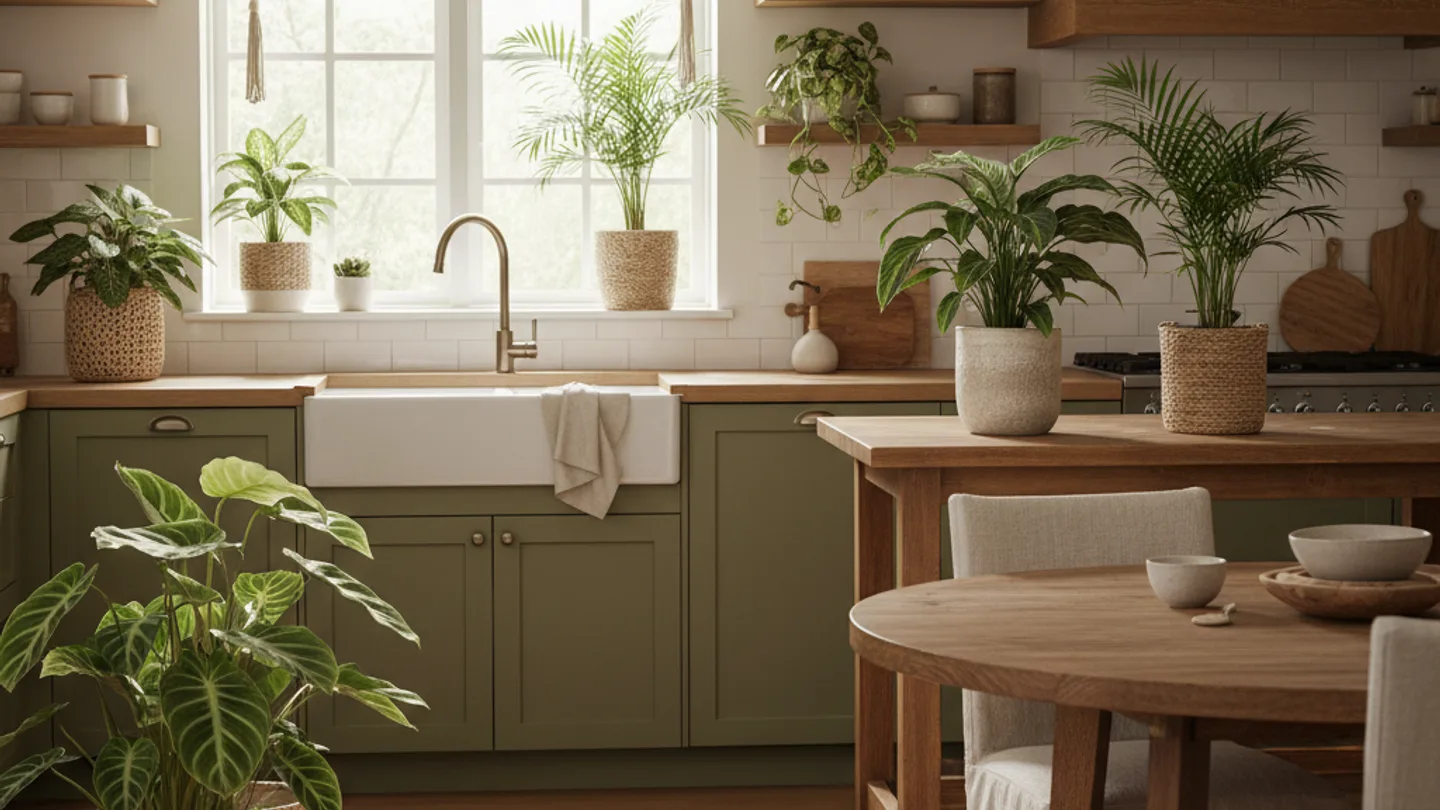
A row of herbs in matching pots is one of the easiest ways to green up a kitchen, and most of the classics are safe around pets.
Basil, rosemary, thyme, sage, oregano and cilantro are all generally considered non-toxic to cats and dogs. They need a sunny sill, ideally six hours of light, and most kitchens with a south or west facing window in the US can deliver that. Mint is also pet-safe, but give it its own pot because it spreads aggressively.
Two common kitchen herbs need a warning label. Chives and garlic plants are toxic to both cats and dogs. They can damage red blood cells if eaten, which is far more serious than a stomach ache. If you grow them, keep them fully out of reach, or choose parsley instead for that fresh green garnish look.
One more note: lavender looks lovely on a sill but is toxic to cats and dogs, so it is better left out of a pet household's kitchen.
Steam, heat and temperature swings
Kitchens are kinder to plants than most rooms, but they come with two quirks: steam and sudden temperature changes.
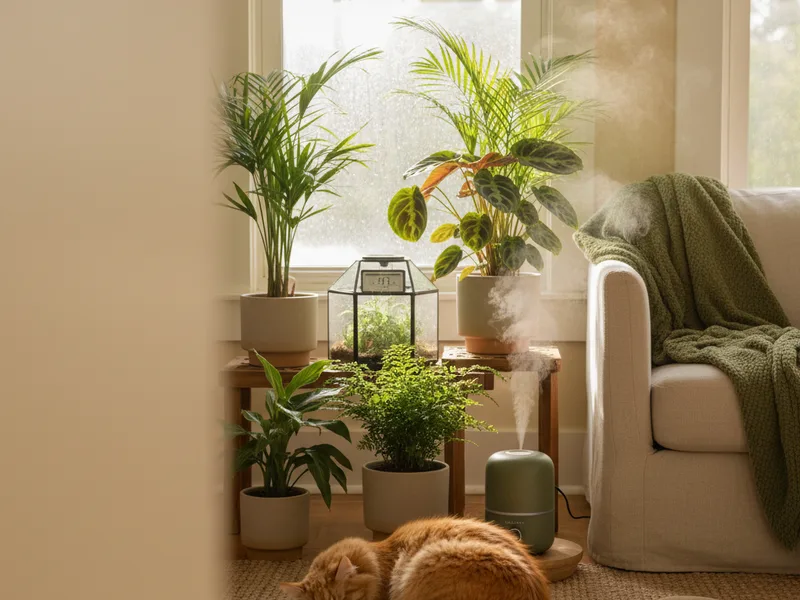
Steam from boiling pots and kettles is a short burst of humidity and heat. Occasional exposure is fine for most of the plants above, and humidity lovers like Boston ferns may even enjoy it. What you want to avoid is a plant sitting directly over or beside the stove or kettle, where repeated blasts can scorch leaves.
Temperature swings matter more in winter. A sill that bakes in afternoon sun can drop fast at night, especially against a cold window. Move plants a few inches back from the glass on freezing nights, and keep them away from the oven vent and the drafty spot above the sink.
The simplest rule: treat two feet around the stove as a no-plant zone, and let the window itself provide the light rather than pressing leaves against cold glass.
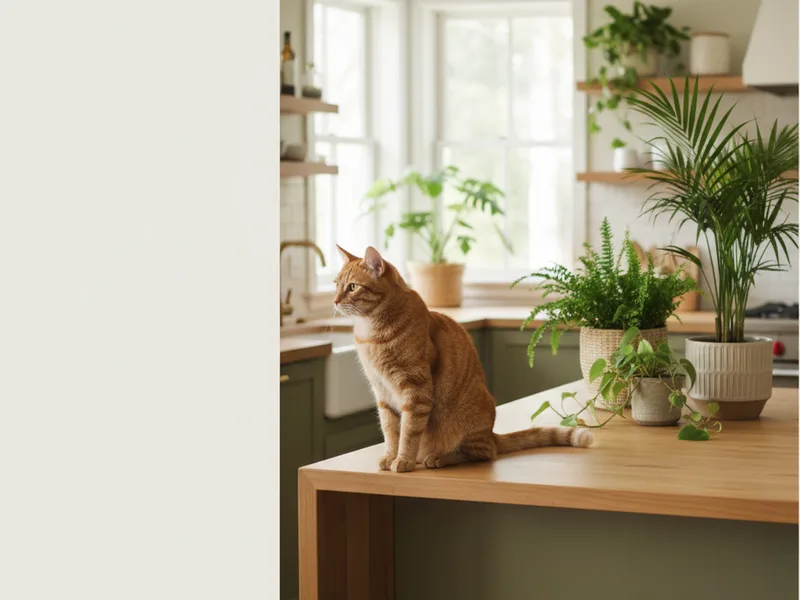
Placement when your pet surfs the counters
If your cat jumps on counters or your dog counter-surfs, placement is your main safety tool. Even a non-toxic plant can cause mild vomiting if a pet eats a lot of it, and a knocked-over pot means broken ceramic, spilled soil and a startled animal.
High shelves above head height work well for trailing plants like spider plants. Wall-mounted planters and macrame hangers keep pots fully out of reach. For herbs that need daily snipping, a hanging rail with small pots near the window keeps them accessible to you but not to paws.
Skip the popular but toxic picks entirely. Many kitchen favorites, including pothos and philodendrons, are toxic to cats and dogs, so the shelf is not enough for those. Stick to the safe list and you remove the guesswork.
If your pet does chew a plant and shows symptoms like drooling, vomiting, diarrhea or lethargy, call your vet or a pet poison hotline right away. Bring a photo or a piece of the plant so they know what they are dealing with.
Pet safe kitchen plants: common questions
Are herbs on the windowsill safe if my cat nibbles them?
Most common herbs like basil, rosemary, thyme and sage are generally considered non-toxic to cats and dogs, and a small nibble is unlikely to cause harm. The exceptions are chives and garlic, which are toxic. If your pet eats a large amount of any plant, watch for stomach upset and call your vet if symptoms appear.
Which pet safe plant handles kitchen humidity best?
Boston ferns and prayer plants love humidity and do well near sinks or in steamy kitchens, as long as they are not directly over the stove. Spider plants and peperomias are more flexible and tolerate average kitchen air.
My cat jumps on the counters. Can I still have kitchen plants?
Yes, but plan for it. Use hanging planters, wall shelves or high rails so pots stay out of reach, and choose only plants generally considered non-toxic. Avoid breakable pots on ledges your cat uses as a route.
Is it safe to keep plants near the stove?
Keep plants at least a couple of feet from burners, the oven vent and the kettle. Direct heat and repeated steam blasts scorch leaves, and a pot near the stove is also easier for a curious pet to knock over.
What should I do if my dog eats a kitchen plant?
Stay calm and check what plant it was. If it was a non-toxic herb or plant, watch for mild stomach upset and call your vet if symptoms develop. If it was a toxic plant like chives or garlic, or if you are not sure, contact your vet or a pet poison hotline promptly and describe the plant.