Air Plant Care: Soil-Free, Stylish and Pet-Safe
Air plants (tillandsia) are generally considered non-toxic to cats and dogs. The ASPCA does not list them as toxic, so a curious nibble is not a poisoning emergency.
That makes them one of the easiest ways to add greenery to a pet household. No soil to dig in, no pot to knock over, and no toxic leaves to worry about.
Below you will find simple air plant care basics: how to water, how much light they need, and how to display them so your cat does not treat them as a toy.
Are air plants safe for cats and dogs?
Yes. Air plants are generally considered non-toxic to both cats and dogs. If your pet chews one, you might see a little drooling or an upset stomach from the plant fiber, the same as with any greenery, but there is no known toxin involved.
The bigger risk is mechanical, not chemical. A tiny air plant can be a choking hazard for a small dog, and loose bits of wire or fishing line from hanging displays are dangerous if swallowed.
If your pet eats a large amount of any plant and shows symptoms like repeated vomiting or not eating, call your vet. When in doubt, the ASPCA Animal Poison Control Center is a good backup.
Curious how other popular plants compare? Read our guides on Monstera, lavender and cyclamen.
Light and air flow: what tillandsia actually needs
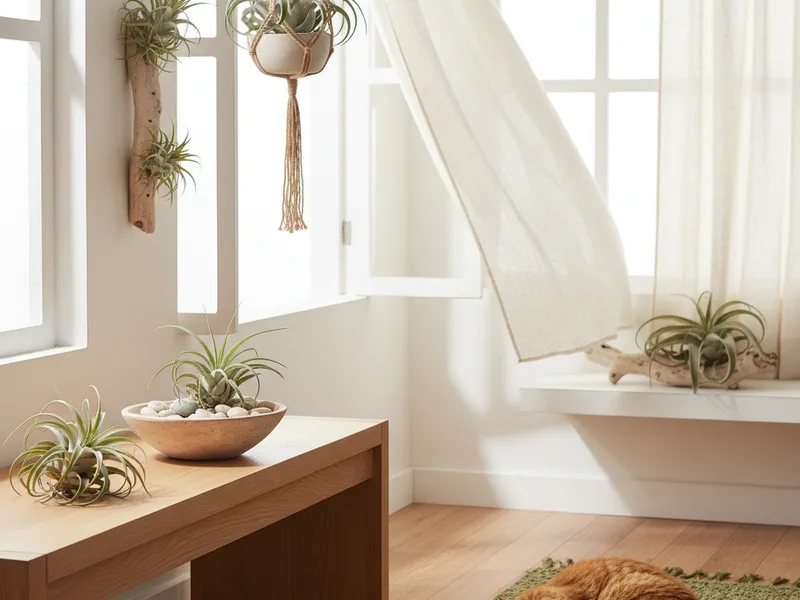
Air plants like bright, indirect light. An east or west-facing windowsill works well in most US apartments and houses. A few hours of gentle morning sun is fine, but harsh afternoon sun through glass can scorch the leaves.
No sunny window? A spot a few feet back from a south-facing window usually works, and air plants also do well under a simple LED grow light.
Air flow matters more than most people expect. These plants absorb water and nutrients through their leaves, and they need moving air to dry off after watering. A sealed glass globe with no opening looks great on Pinterest but slowly suffocates the plant. Choose open terrariums, shelves or mounts instead.
Watering
The weekly soak, step by step
Fill a bowl with room-temperature water
Tap water left out overnight is fine in most homes. Rainwater or filtered water is even better if your tap water is very hard.
Submerge the plants for 20 to 30 minutes
Once a week is a good baseline. In a hot, dry apartment in summer, soak twice a week. In a humid home or in winter, every 10 to 14 days may be enough.
Shake off the excess water
Gently shake each plant so no water sits between the leaves. Trapped water is the main cause of rot.
Dry them upside down
Place the plants upside down on a towel in a bright spot with good air flow. They should be fully dry within about 4 hours.
Put them back on display
Only return them once they are dry. A damp plant in a closed container rots fast.
Misting: useful, but not a full replacement
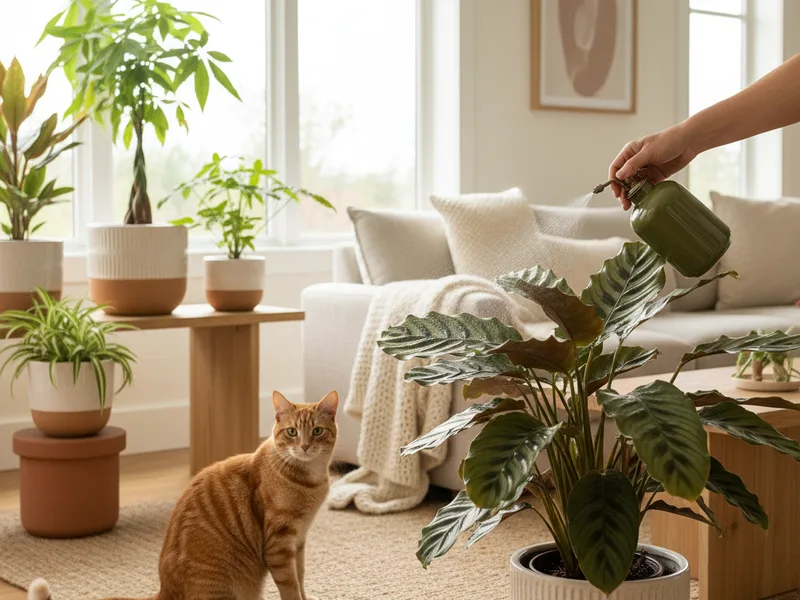
Misting is a good top-up between soaks, especially in winter when heating dries out indoor air. Mist two to three times a week until the leaves look damp but not dripping.
Misting alone rarely gives enough water for most homes. If the leaf tips turn brown and crispy, or the leaves curl more than usual, your plant is thirsty and needs a proper soak.
Signs of overwatering look different: a soft, dark or mushy base, and leaves falling away from the center. That is rot, and it is hard to reverse.
Display ideas that work with pets
Here is the honest catch: a dangling air plant on a string looks exactly like a cat toy. To a cat, that gentle swaying is an invitation. A swat sends the plant flying, and swallowed fishing line or wire can mean a vet visit.
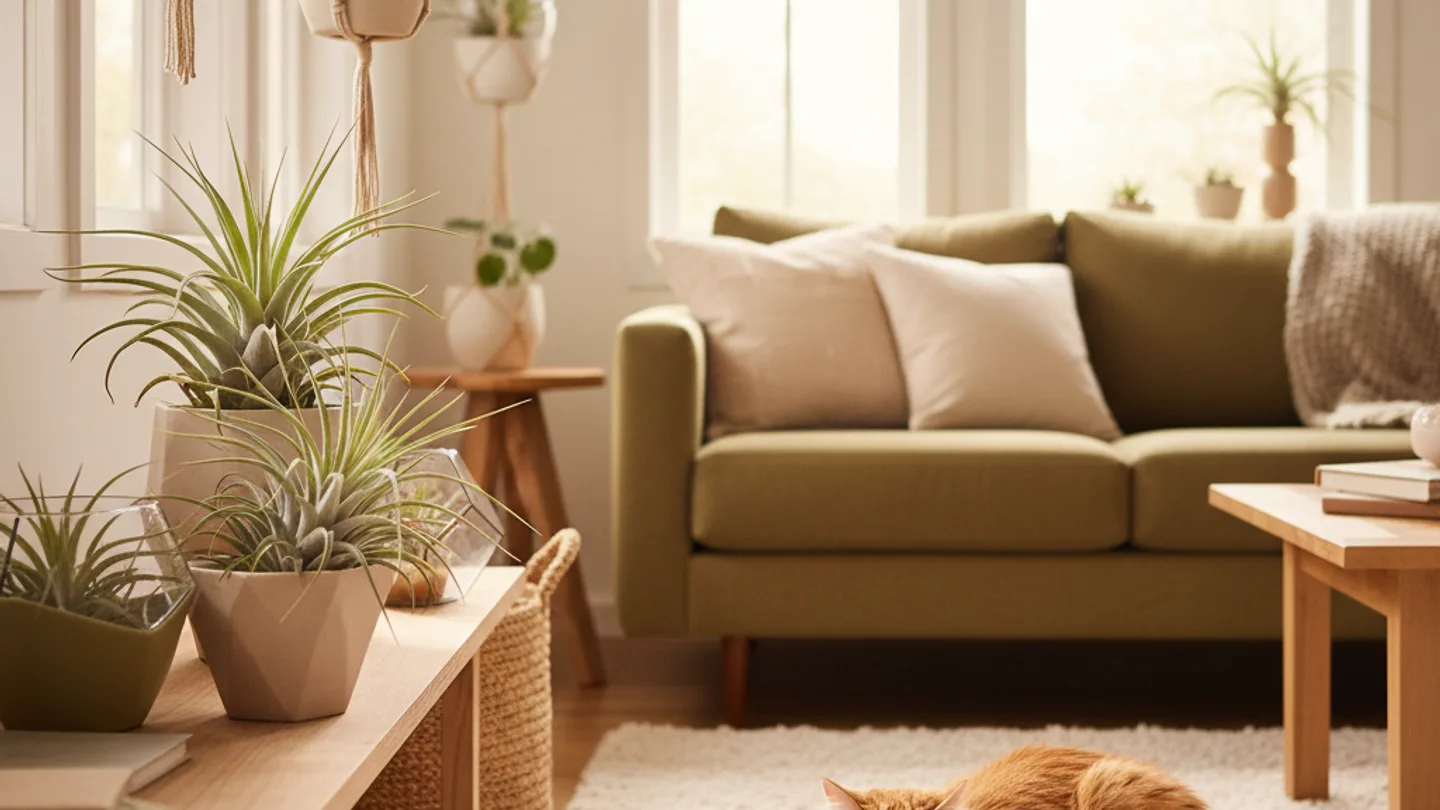
Safer placements that still look good: on a high shelf your cat cannot jump to, mounted on a piece of driftwood or cork on a wall, or tucked into an open terrarium on a bookcase.
Avoid low coffee tables and the edges of desks if you have a chewer at home. Dogs are less acrobatic than cats, but a small plant at nose height is an easy snack.
If you love the hanging look, use a sturdy macrame holder with the plant seated deep inside, hung well out of leaping range. Skip thin wire and long loose cords.
Common questions about air plants and pets
Are air plants toxic to cats?
No. Air plants are generally considered non-toxic to cats. A nibble may cause mild stomach upset, like any plant material, but there is no known toxin. The real risk is the display: strings, wire and small plants can be swallowed.
Are air plants toxic to dogs?
No, they are generally considered non-toxic to dogs as well. Very small plants can be a choking hazard for small dogs, so keep them out of reach of chewers.
How often should I water an air plant?
A 20 to 30 minute soak once a week suits most homes. Soak more often in hot, dry conditions and less often in humid or cool ones. Mist between soaks if your air is dry.
Why is my air plant turning brown?
Brown, crispy leaf tips usually mean the plant is too dry or getting scorched by direct sun. A soft, dark, mushy base means the opposite: rot from sitting in water. Adjust watering and light to match the symptom.
Can air plants live in a closed terrarium?
Not well. They need moving air to dry after watering. Choose an open terrarium or a container with large openings, and always let the plant dry fully before putting it back.
Do air plants need fertilizer?
They can grow without it, but a diluted bromeliad or air plant fertilizer added to the soak water once a month in spring and summer supports growth and blooming. Keep it weak: about a quarter of the label strength.
The short version
- Air plants are generally considered non-toxic to cats and dogs.
- Soak them 20 to 30 minutes once a week and dry them fully upside down.
- They need bright, indirect light and moving air, not sealed glass globes.
- Dangling displays read as cat toys. Choose high shelves, wall mounts or deep macrame holders instead.
- Watch for swallowed string or wire, and call your vet if your pet shows symptoms after eating any plant.