Air-Purifying Plants That Are Also Pet-Safe
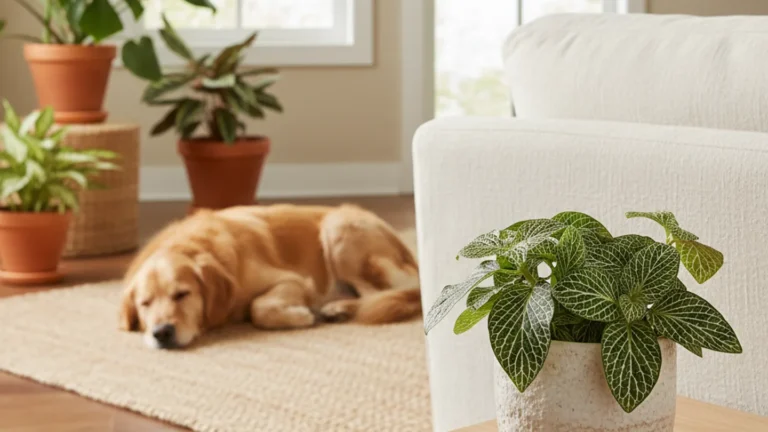
Good news: pet safe air purifying plants are real. Several plants from the famous clean-air lists are generally considered non-toxic to cats and dogs, so you do not have to choose between a green home and a safe pet.
Here is the honest part first. The air-cleaning effect of houseplants in a real home is modest. The well-known studies were done in small sealed chambers, not in your living room. So pick these plants because you love how they look, and treat any air benefit as a nice extra.
Below you will find the safe picks, the popular air-purifiers you should skip with pets, and quick care notes matched to real apartments and houses.
The short version
- Spider plants, Boston ferns, parlor palms, areca palms, calatheas and money plants are generally considered non-toxic to cats and dogs.
- Peace lilies, snake plants and pothos appear on many clean-air lists but are toxic to pets. Skip them.
- The air-purifying effect of houseplants in a normal home is small. Choose plants for looks and light first.
- Even non-toxic plants can cause a mild stomach upset if your pet eats a lot of leaves. Call your vet if symptoms appear.
- Match the plant to your light level before you buy. That matters more than any air claim.
First, an honest word about air-purifying plants
You have probably seen lists of plants that clean the air. They go back to research where plants were placed in small sealed chambers and removed certain chemicals from the air around them.
Your home is not a sealed chamber. Air moves, windows open, and rooms are far bigger than a test box. In real homes, the cleaning effect of a few houseplants is modest. You would need a very large number of plants to match what fresh air from an open window does in minutes.
So here is our advice: buy plants because they make you happy and fit your space. If they help the air a little, great. Just never let an air-purifying claim talk you into a plant that is toxic to your cat or dog.
| Plant | Cats | Dogs | Light | Care level | Good for |
|---|---|---|---|---|---|
| Spider plant | Non-toxic | Non-toxic | Bright indirect, tolerates lower light | Very easy | Beginners, hanging baskets out of reach of playful cats |
| Boston fern | Non-toxic | Non-toxic | Indirect light, likes humidity | Moderate | Bathrooms and kitchens with some natural light |
| Parlor palm | Non-toxic | Non-toxic | Low to medium indirect light | Easy | Dim corners in apartments |
| Areca palm | Non-toxic | Non-toxic | Bright indirect light | Moderate | Larger rooms that need a floor plant |
| Calathea (prayer plant family) | Non-toxic | Non-toxic | Medium indirect light, no harsh sun | Moderate | Patterned leaves for style-conscious plant parents |
| Money plant (Pachira aquatica) | Non-toxic | Non-toxic | Bright indirect light | Easy | A statement plant for a bright living room |
| Baby rubber plant (Peperomia) | Non-toxic | Non-toxic | Medium to bright indirect light | Easy | Shelves and desks in small spaces |
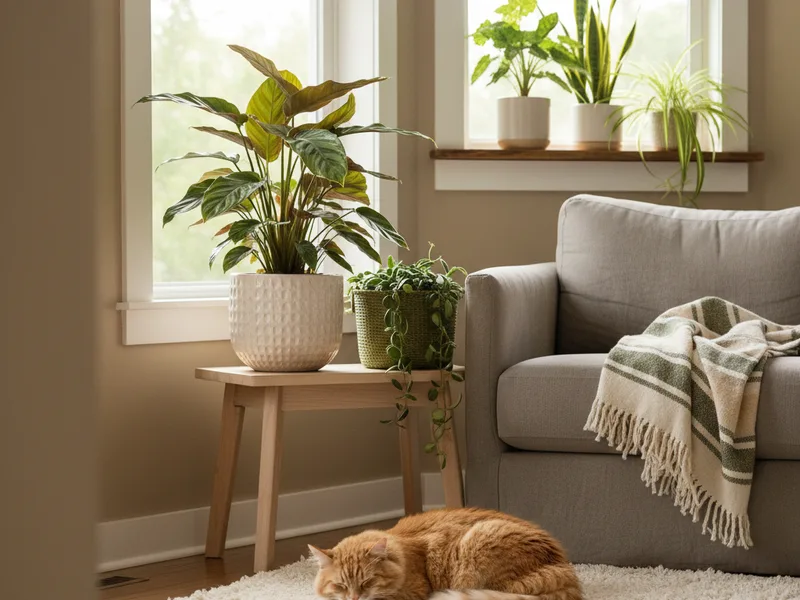
A closer look at the safe picks
Spider plant. The classic clean-air plant, and luckily one of the safest. It is generally considered non-toxic to cats and dogs. It grows fast, bounces back from neglect and produces baby plants you can pot up for free. One note: many cats love to chew the dangling leaves. It will not poison them, but a lot of nibbling can still cause a mild upset stomach, so a hanging pot is a smart spot.
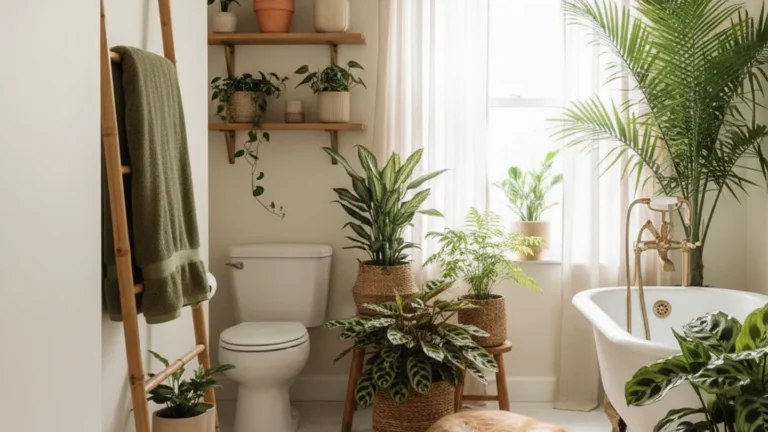
Boston fern. Lush, feathery and non-toxic to both cats and dogs. It likes humidity, which makes it a good fit for a bathroom with a window. Keep the soil lightly moist and it will stay full and green.
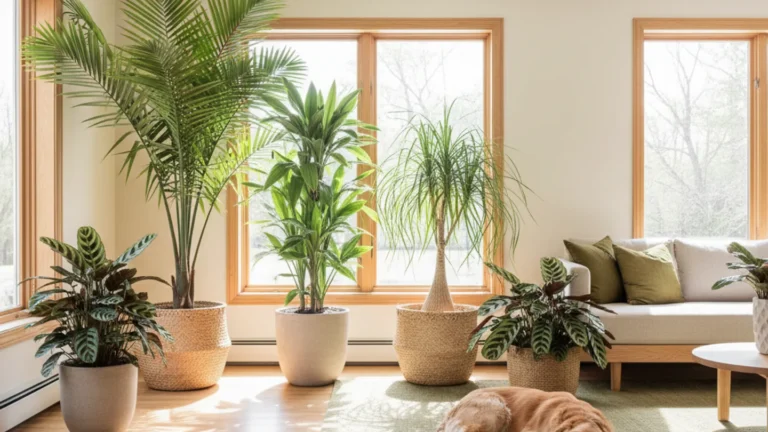
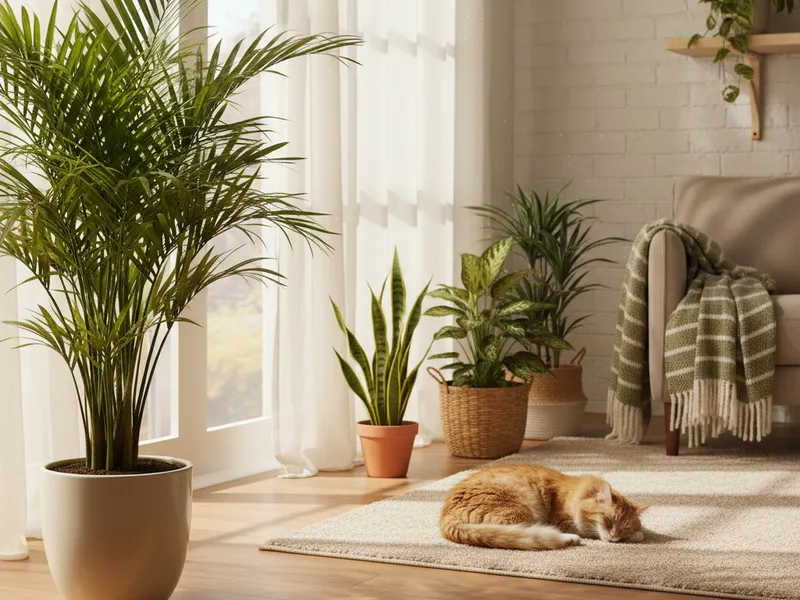
Parlor palm. One of the best palms for lower light. It is slow growing, compact and generally considered non-toxic. Ideal if your apartment does not get much sun.
Areca palm. Often named on air-purifying lists, and safe for pets. It needs brighter indirect light than the parlor palm and grows into a real floor plant over time.
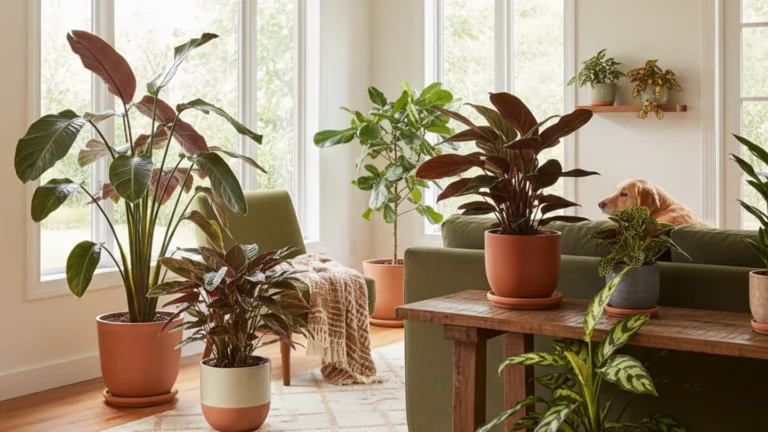
Calathea. The patterned leaves make it a favorite on Instagram, and the whole prayer plant family is generally considered non-toxic to cats and dogs. It prefers indirect light and even moisture. Great looks, slightly fussier care.
Money plant and peperomia. Both compact, both easy, both safe. The money plant works as a taller statement piece, while peperomias fit on a shelf next to your books.
Clean-air favorites to skip when you have pets
Several famous air-purifying plants are toxic to cats, dogs or both. These come up in almost every clean-air list, so it is worth knowing them by name.
Peace lily. Toxic to cats and dogs. It contains calcium oxalate crystals, tiny sharp crystals that can irritate your pet's mouth and throat and cause drooling and vomiting. Read more in our guide: is peace lily toxic to cats and dogs.
Snake plant. Toxic to cats and dogs. Chewing the leaves can cause nausea, vomiting and diarrhea. Details here: is snake plant toxic.
Pothos. Toxic to cats and dogs, for the same calcium oxalate reason as the peace lily. It is one of the most common houseplants in the US, so check before you accept a cutting from a friend: is pothos toxic.
The good news: for each of these, one of the safe plants above gives you a similar look. A parlor palm or spider plant fills the easy-care slot of a snake plant or pothos without the risk.
Common questions about pet-safe air-purifying plants
Do air-purifying plants really clean the air in my home?
Only a little. The research behind the clean-air lists used small sealed chambers. In a real home with normal airflow, the effect of a few plants is modest. Enjoy plants for how they look and feel, and open a window if you want fresher air.
Which air-purifying plant is safest for cats?
Spider plants, Boston ferns, parlor palms and calatheas are all generally considered non-toxic to cats. Non-toxic does not mean risk-free though. Eating a large amount of any plant can cause a mild stomach upset, so call your vet if your cat seems unwell after chewing.
Is a peace lily safe if I put it on a high shelf?
We do not recommend it. Peace lilies are toxic to cats and dogs, and cats in particular are skilled climbers. A fallen leaf or a drip of water from the plant can still cause irritation. A pet-safe alternative like a spathiphyllum look-alike from the calathea family is the calmer choice.
What happens if my dog eats a non-toxic plant?
Most likely nothing serious. Plants that are generally considered non-toxic can still cause mild vomiting or diarrhea if your dog eats a lot of leaves. Watch your dog, offer water, and call your vet if symptoms appear or do not pass quickly.
How many plants would I need to purify a room?
Far more than fits on a windowsill. Estimates based on the chamber studies suggest you would need a very dense collection of plants to noticeably change the air in a normal room. That is another reason to choose plants you love rather than plants bought for air claims.
Are these safe plants easy for beginners?
Yes. Spider plants, parlor palms and peperomias are some of the most forgiving houseplants you can buy. Match them to your light, water when the top of the soil feels dry, and they will do well in a typical apartment.