Fast-Growing Pet-Safe Plants for an Instant Jungle
You want a jungle, not a waiting room. The good news: you do not have to choose between fast growth and pet safety. Every plant on this list is generally considered non-toxic to cats and dogs, and each one can show visible new growth within a single season.
That matters, because many of the fastest tropical plants, like pothos and monstera, are toxic to pets. If you are curious about those, read our guides on is pothos toxic and is monstera toxic. Here, we focus on the safe speedsters, with realistic growth expectations and simple feeding tips for each.
The short version
- All four plants in this list are generally considered non-toxic to cats and dogs.
- Spider plant: fastest propagator, babies appear within weeks in good light.
- Banana plant: the most dramatic grower, new leaves can unroll weekly in summer.
- Baby tears: the quickest ground cover, spreading visibly in a month.
- Pilea: steady grower that also gives you free baby plants to share.
- Feed lightly and only during the growing season. More fertilizer does not mean faster plants.
Spider plant: the fastest free plants you will ever get
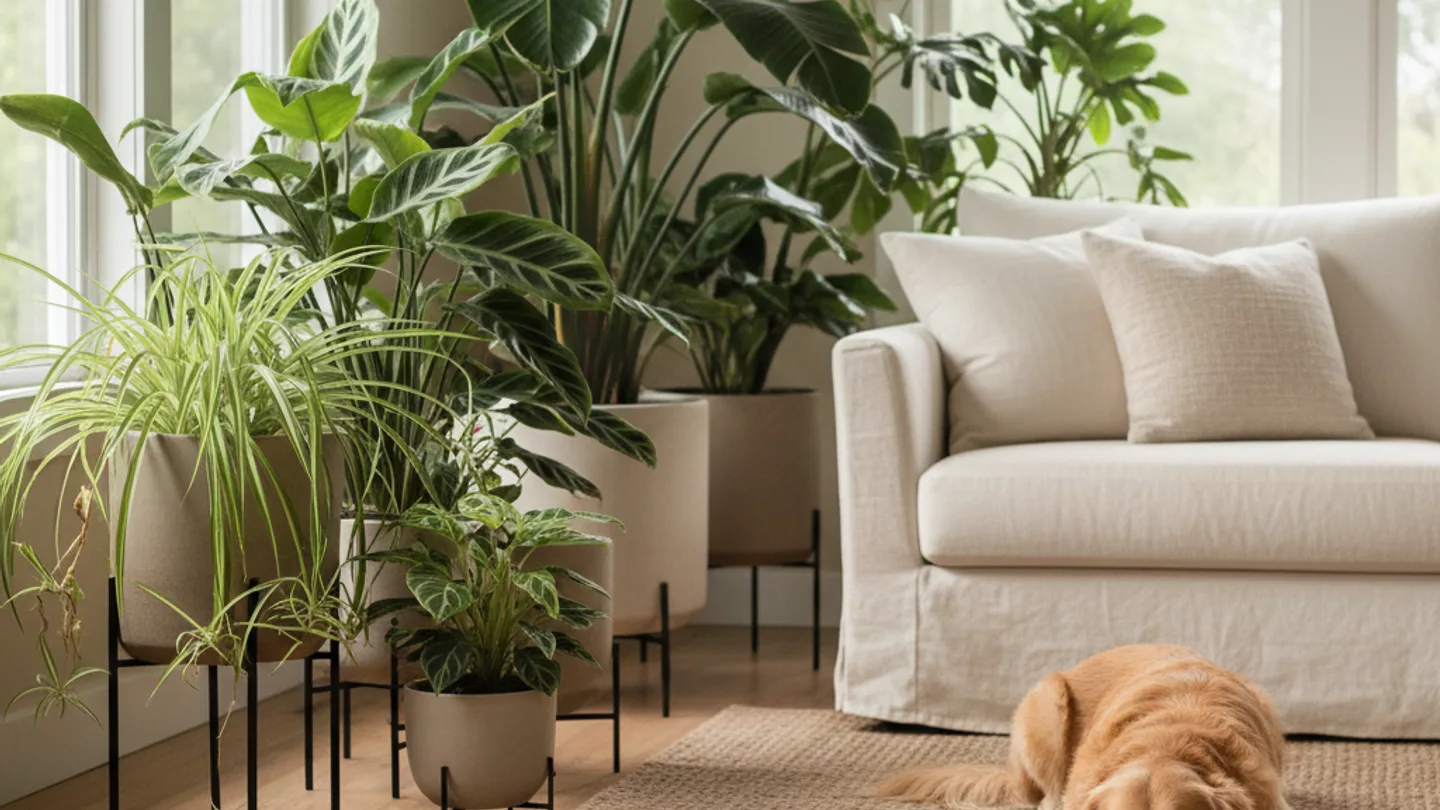
The spider plant (Chlorophytum comosum) is the classic starter plant for impatient people, and it earns that reputation. In bright, indirect light it pushes out long arching leaves quickly, and within a season a healthy plant sends out runners with baby plantlets on the ends. Those babies root in water or soil within a few weeks, so one plant becomes three before summer is over.
Expect visible new leaves every couple of weeks in spring and summer. In lower light it still grows, just more slowly, and it may hold off on making babies.
Care is forgiving. Water when the top inch of soil dries out, and do not panic if the leaf tips brown slightly. That is usually a reaction to fluoride in tap water, and it is cosmetic, not dangerous. Spider plants are generally considered non-toxic to cats and dogs. Be aware that cats love to chew the dangling leaves, and eating a lot of any plant can still cause mild stomach upset.
Feeding tip: a diluted all-purpose houseplant fertilizer once a month from spring through early fall is plenty. Overfeeding leads to floppy, pale growth instead of strong leaves.
Banana plant: the drama king of fast growth
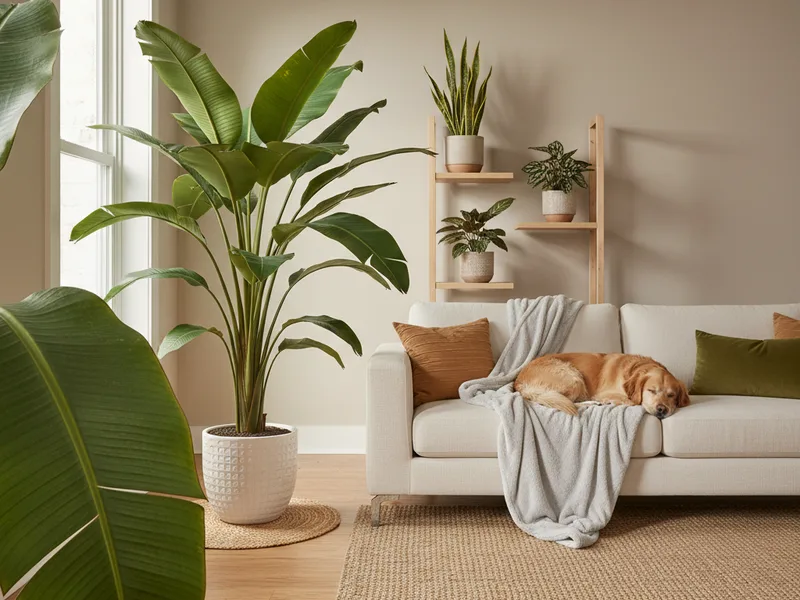
If you want the biggest change in the shortest time, the dwarf banana plant (Musa species sold for indoor growing) is your plant. In a warm, bright spot it can unroll a new leaf every week or two in summer, and each leaf is larger than the last. Nothing else on this list fills vertical space faster.
The trade-off is appetite and light. Banana plants want as much bright light as you can give them, ideally some direct sun, plus consistent moisture. They are thirsty in the growing season. Let the top of the soil dry slightly between waterings, but never let the whole pot dry out in summer.
Banana plants are generally considered non-toxic to cats and dogs, which makes them a great stand-in for the trendy but toxic fiddle leaf fig look. Leaves will tear along the veins as they grow. That is normal for the species, not a sign of trouble.
Feeding tip: bananas are heavy feeders. Use a balanced liquid fertilizer every two weeks from spring to late summer, at half the strength on the label. Stop feeding in fall and winter when growth naturally slows.
Baby tears: instant lushness at ground level
Baby tears (Soleirolia soleirolii) is the plant that turns a bare pot into a mossy green cushion in weeks. Its tiny rounded leaves grow on dense, creeping stems, and in the right conditions it spreads visibly within a month. Use it as a ground cover under bigger plants, in a hanging pot, or in a terrarium.
The catch is water. Baby tears likes consistently moist soil and higher humidity, so it suits bathrooms and kitchens better than a dry, sunny windowsill. If it dries out completely it collapses fast, but it usually bounces back after a good soak.
Baby tears is generally considered non-toxic to cats and dogs, so it is a safe pick for low shelves and floor-level pots where curious pets roam. Its delicate stems will not survive repeated trampling, though, so give it a spot that is visible but out of the main traffic lane.
Feeding tip: it needs very little. A quarter-strength liquid feed once a month in spring and summer keeps the color fresh. More than that and the growth gets leggy.
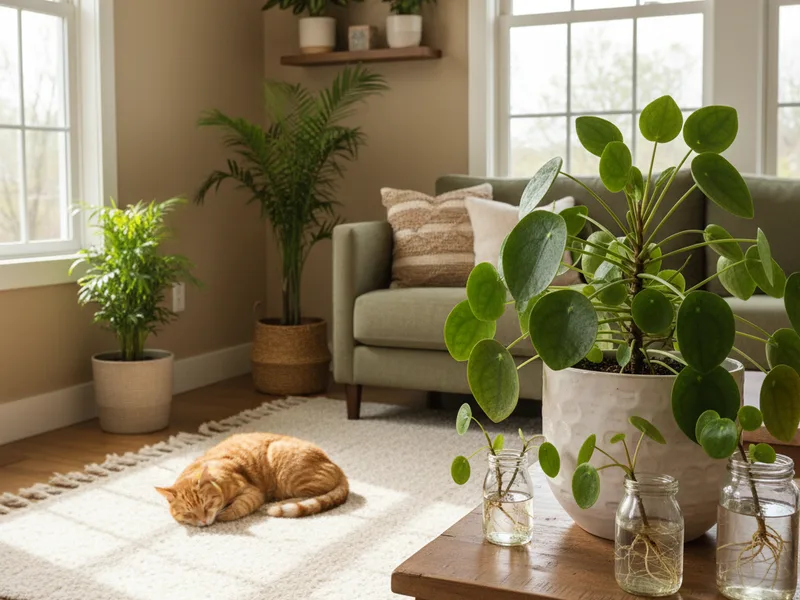
Pilea: steady growth plus free plants to share
The Chinese money plant (Pilea peperomioides) grows at a moderate pace rather than a sprint, but it makes this list for two reasons. In bright, indirect light it produces new round leaves continuously through the growing season, and it pushes up baby plants from its roots that you can snip off and pot up. One pilea often becomes a whole windowsill within a year.
Rotate the pot a quarter turn each week so the plant grows evenly instead of leaning toward the window. Water when the top inch or two of soil is dry, and make sure the pot drains well. Pilea dislikes wet feet.
Pilea is generally considered non-toxic to cats and dogs, which is a big reason it has become the go-to swap for trendier but toxic statement plants. It fits the same sculptural look as a philodendron without the calcium oxalate crystals. Those are tiny sharp crystals found in many aroids that can irritate your pet's mouth and throat.
Feeding tip: a half-strength balanced fertilizer once a month from spring through summer is enough. Pale, downward-curling leaves often mean it wants a little more light, not more food.
| Plant | Growth speed in one season | Light | Feeding |
|---|---|---|---|
| Spider plant | New leaves every couple of weeks, plus baby plantlets | Bright, indirect; tolerates lower light | Monthly, diluted, spring to early fall |
| Banana plant | A new large leaf every 1 to 2 weeks in summer | Very bright, some direct sun | Every 2 weeks at half strength in growing season |
| Baby tears | Visible spread within a month | Medium, indirect; avoid hot sun | Monthly at quarter strength, spring and summer |
| Pilea | Steady new leaves plus root babies | Bright, indirect | Monthly at half strength, spring and summer |
How to help any of these plants grow faster
Speed comes down to four things: light, water, warmth and food, in that order. Light does most of the work. A spider plant in a dim corner will survive, but the same plant near a bright window will double its output.
Water on the plant's schedule, not yours. Check the soil with a finger before watering, and always use pots with drainage holes. Roots sitting in water rot, and a plant with damaged roots stops growing entirely.
Warmth matters more than most people expect. All four plants grow fastest between roughly 65 and 80 degrees Fahrenheit, which is normal room temperature. Cold drafts near winter windows slow everything down.
Finally, repot when roots circle the bottom of the pot or push out of the drainage holes. A rootbound plant cannot take up water and nutrients well, no matter how much you feed it. Move up only one pot size at a time.
Common questions
Are fast-growing plants more likely to be toxic to pets?
Not as a rule, but it happens that many popular fast growers, like pothos, philodendron and monstera, are toxic to cats and dogs. That is why we built this list around plants that are generally considered non-toxic. Always check a specific plant before buying, and call your vet if your pet eats a plant and shows symptoms.
Which of these grows fastest overall?
The banana plant wins on sheer speed and size in bright light. The spider plant wins on multiplying, since its babies root so easily. Baby tears wins on covering surface area. Pick based on the kind of jungle you want: tall, trailing or carpeted.
Can I make these plants grow faster with extra fertilizer?
No. Extra fertilizer does not speed up growth and can burn roots, leaving brown leaf edges and stalled plants. Feeding lightly during the growing season, matched to good light and water, gives you the fastest healthy growth.
What if my cat keeps chewing the spider plant?
Spider plants are generally considered non-toxic, but cats are drawn to the dangly leaves and eating a lot of any plant can cause vomiting or an upset stomach. Try hanging the plant out of reach or offering cat grass as a decoy. If your cat vomits repeatedly or seems unwell, contact your vet.
Do these plants still grow in winter?
All four slow down noticeably in fall and winter because days are shorter. That is normal. Reduce watering, stop feeding, and expect the pace to pick back up in spring.