Bromeliad Care: Bold Color Without the Worry
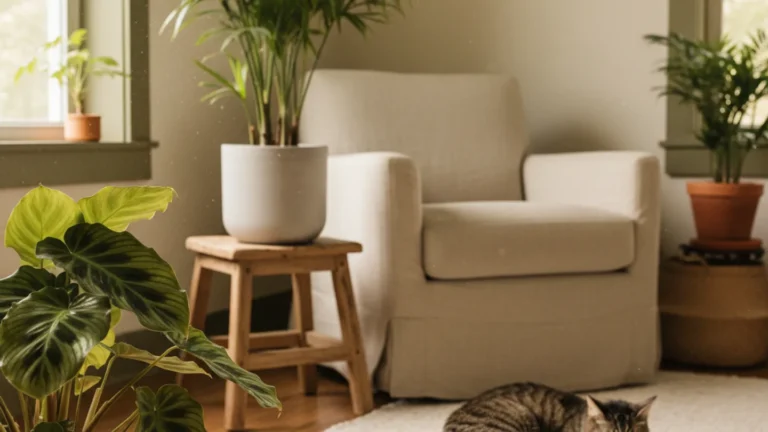
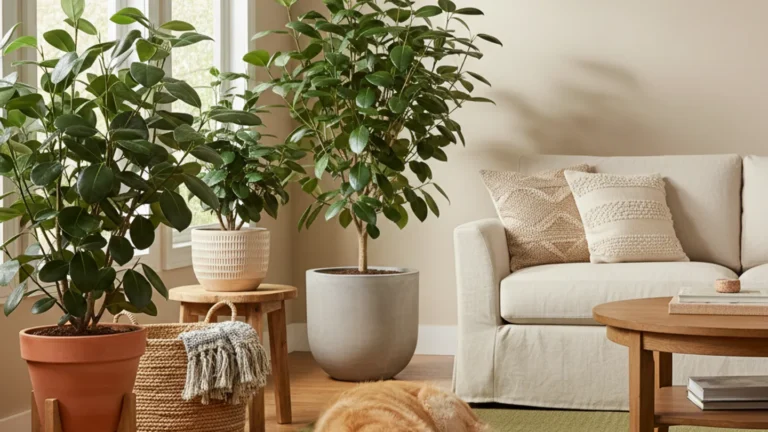
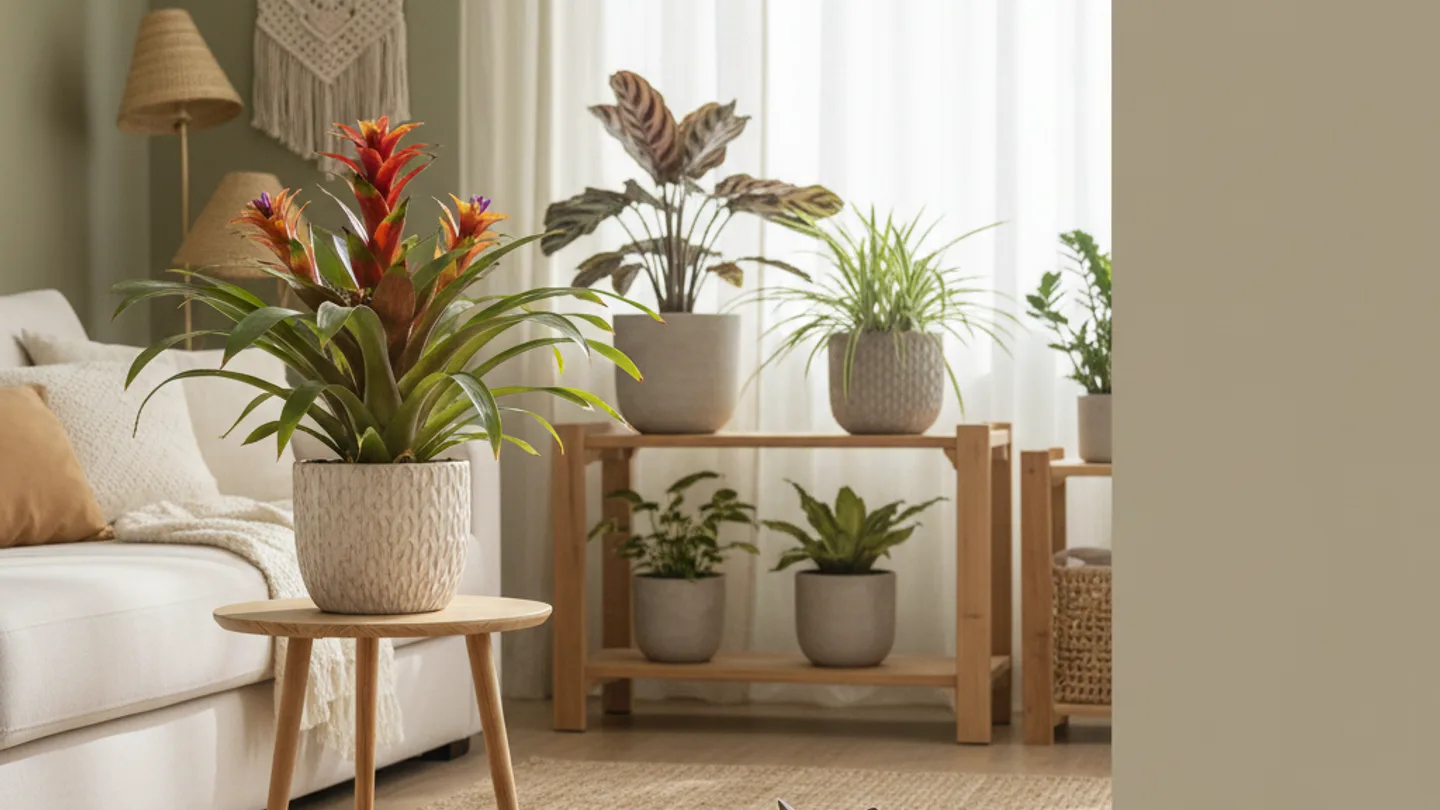
Bromeliads are generally considered non-toxic to cats and dogs. If your pet takes a curious bite, you can stay calm.
That makes them one of the few houseplants that give you bold, tropical color without the worry. No trading style for safety.
Here is everything you need for easy bromeliad care: the famous central water cup, the right light, and what to do after the bloom fades.
Bromeliad care at a glance
- Bromeliads are generally considered non-toxic to cats and dogs, according to common pet poison references such as the ASPCA plant list.
- Water the central cup, not just the soil. Keep it about one-quarter to one-half full.
- Give bright, indirect light. A few feet from an east or south window works well.
- The mother plant blooms once, then slowly fades while growing pups.
- Pups can be separated and potted to start a brand-new plant.
- Contact your vet if your pet shows unusual symptoms after chewing any plant.
Are bromeliads safe for cats and dogs?
Yes. Bromeliads are generally considered non-toxic to both cats and dogs. This covers the popular types you see in stores, like Guzmania, Aechmea and Vriesea.
Non-toxic does not mean zero risk. If your cat or dog eats a large amount of any plant, it can still get an upset stomach. Leaves can also be a choking or blockage concern in rare cases.
So place your bromeliad somewhere sensible, keep an eye on chewers, and call your vet if you notice vomiting, drooling or anything unusual. Better safe than sorry.
Compare that with a plant like Monstera, which contains calcium oxalate crystals, tiny sharp crystals that can irritate your pet's mouth and throat. With bromeliads, you skip that worry completely.
The central water cup: bromeliad watering made simple
Bromeliads water differently than most houseplants. In the wild, many of them collect rain in the central cup formed by their leaves.
Your job is to keep that cup lightly filled. Use plain tap water left out overnight, or rainwater if you have it. Fill the cup about one-quarter to one-half full.
Empty and rinse the cup about once a week. Stagnant water can lead to rot and bacteria, and nobody wants that smell in the living room.
The soil matters less. Keep it barely moist, almost on the dry side. Bromeliad roots mostly anchor the plant rather than drink for it. Soggy soil is the fastest way to kill one.
In a dry, heated apartment, a light misting now and then keeps the leaf tips from browning. It is optional, not essential.
Light: bright, but not blazing
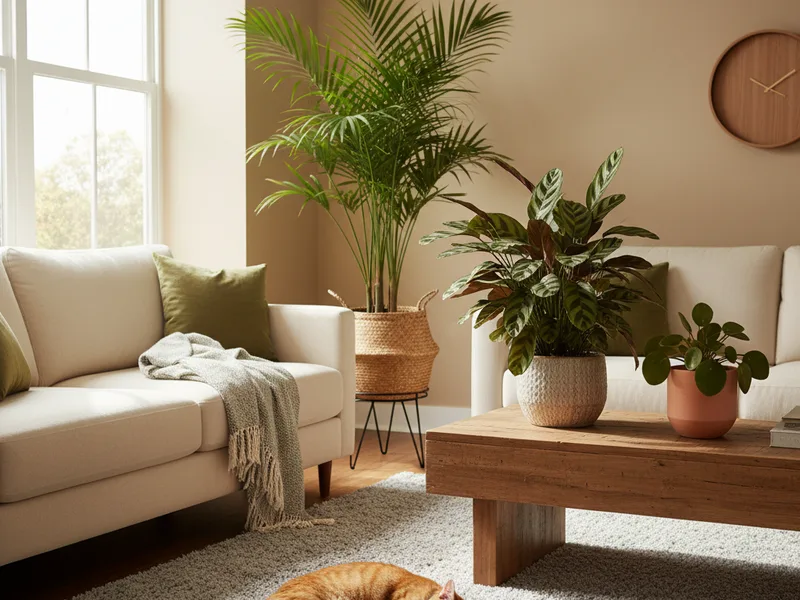
Most bromeliads want bright, indirect light. Think of a spot a few feet from an east or south-facing window, or right by a window with a sheer curtain.
Signs of too little light: the colorful center fades to plain green, and the plant refuses to bloom. Signs of too much direct sun: scorched, bleached patches on the leaves.
The good news for real apartments: bromeliads are forgiving. A medium-light room will not kill them, it will just slow them down. Move the plant closer to the window for a few weeks and you will usually see the color come back.
Guzmania, the most common store-bought bromeliad, tolerates lower light better than most. That makes it a good pick for north-facing rooms and offices.
Soil, pot and feeding
Bromeliads like an airy, fast-draining mix. An orchid mix or a regular potting soil loosened with perlite works well.
Keep the pot small. Bromeliads have modest root systems and prefer to be slightly snug.
Feeding is light work. During spring and summer, you can add a very diluted liquid fertilizer to the cup or soil about once a month. Use roughly a quarter of the strength on the label. Skip feeding in fall and winter.
After the bloom: what happens to the mother plant?
A bromeliad blooms once in its life. The colorful flower, actually a rosette of bracts, can last three to six months, which is why stores love selling them.
After the bloom fades, the mother plant slowly declines over months. This is normal, not a care failure on your part.
While fading, she puts her energy into pups: small baby plants that grow from her base. Those pups are your next bromeliad, for free.
New plants for free
How to separate and pot bromeliad pups
Wait until the pup is big enough
Let the pup grow until it is about one-third to one-half the size of the mother plant. Bigger pups root more easily.
Cut the pup off at the base
Use a clean, sharp knife. Cut as close to the mother plant as you can, keeping any roots on the pup.
Let the cut dry for a day
Set the pup somewhere dry and shady for 24 hours. This helps the wound seal and lowers the risk of rot.
Pot it in an airy mix
Plant the pup shallowly in orchid mix or loose potting soil, in a small pot. Keep it upright with a stake if it wobbles.
Care for it like an adult
Bright, indirect light and a lightly filled cup once the pup forms one. Expect your new plant to bloom in one to three years.
Common questions about bromeliads and pets
Are bromeliads toxic to cats?
No. Bromeliads are generally considered non-toxic to cats. Large amounts of any plant material can still cause an upset stomach, so call your vet if your cat vomits or seems off after chewing one.
Are bromeliads toxic to dogs?
No, they are generally considered non-toxic to dogs too. They are one of the safer choices if your dog likes to investigate plants with its mouth.
Why is my bromeliad turning brown in the middle?
If the bloom has faded and the center is browning, that is the natural end of the mother plant. Look for pups at the base and let them grow. If the center is rotting while the plant is young, the cup water may have gone stagnant or the soil is too wet.
How often should I water a bromeliad?
Keep the central cup about one-quarter to one-half full and refresh it weekly. Let the soil stay just barely moist. In most homes that means a small top-up once or twice a week.
My bromeliad never blooms. What can I do?
Usually it needs more light. Move it closer to a bright window. If it is a healthy pup, patience also helps: young bromeliads can take one to three years to bloom.