Pet-Safe Indoor Trees: Safe Ways to Get the Tree Look
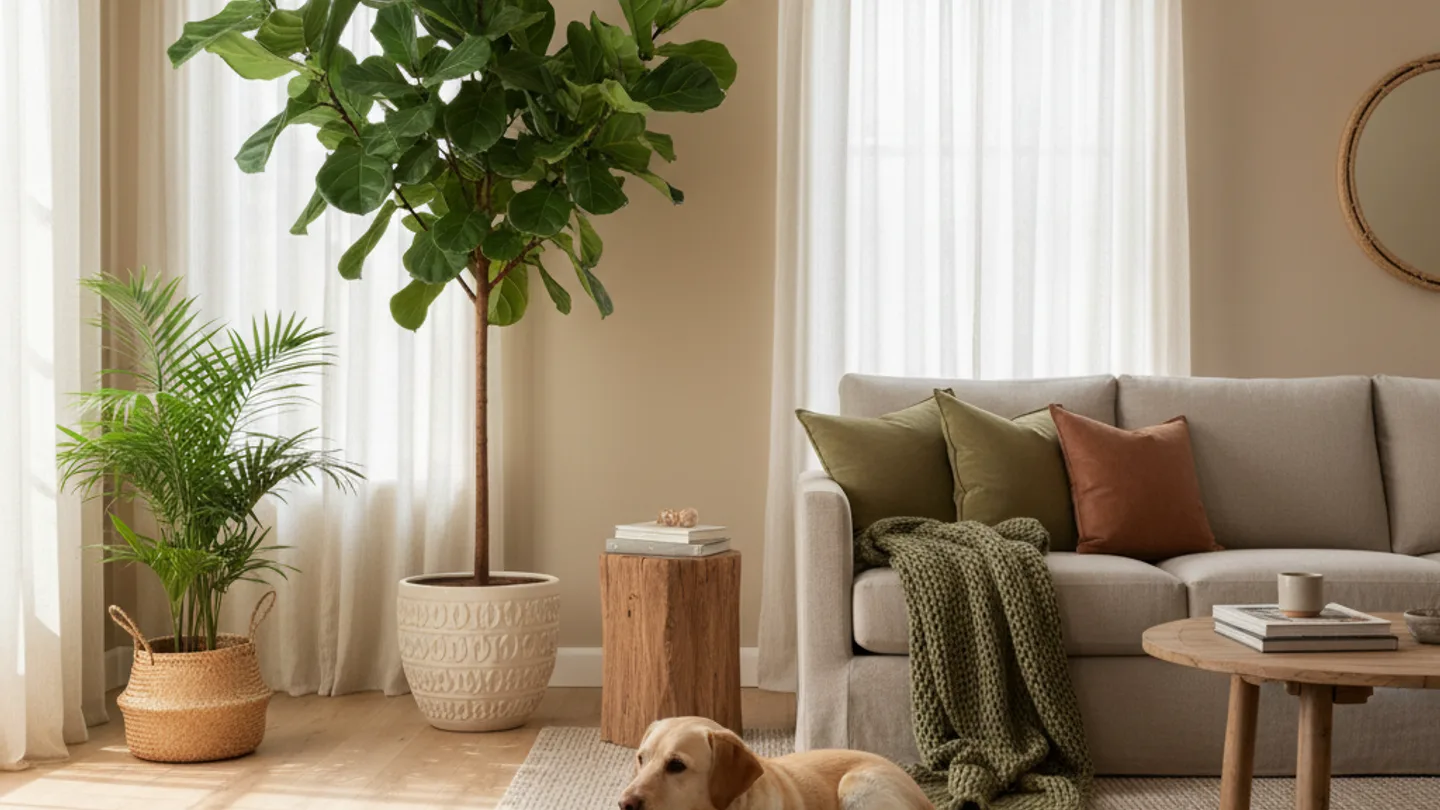
Good news: you can have the indoor tree look without putting your cat or dog at risk. Several tall, tree-shaped houseplants are generally considered non-toxic to cats and dogs.
This matters because many popular indoor trees, like weeping fig and other ficus varieties, are toxic. Their milky sap contains irritating compounds that can cause drooling, vomiting and skin irritation if your pet chews or brushes against a broken leaf.
Below you will find the best pet safe indoor trees for US homes, with their mature height, light needs and one or two honest caveats. Verdict first, details after.
Pet-safe indoor trees at a glance
- Money tree, banana plant and kentia palm are generally considered non-toxic to cats and dogs.
- Olive trees are generally considered non-toxic too, but come with a few practical caveats.
- Ficus trees are toxic to cats and dogs, so swap the look, not just the pot.
- Even with non-toxic plants, chewing a lot of leaves can cause an upset stomach.
- If your pet shows symptoms after eating any plant, contact your vet or the ASPCA Animal Poison Control Center.
Why the classic indoor tree is a risk
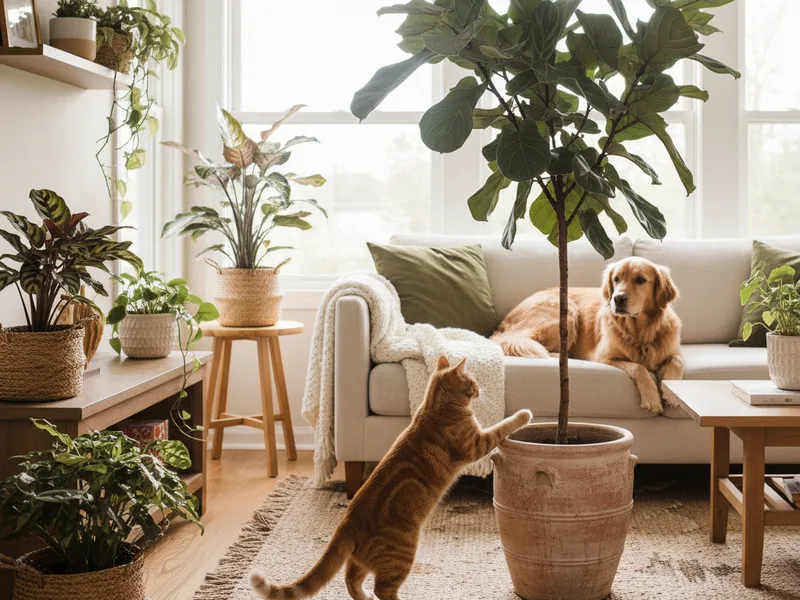
Ficus trees are toxic to both cats and dogs. That includes the popular weeping fig, fiddle leaf fig and rubber plant.
The issue is the milky white sap inside the leaves and stems. It contains irritating compounds that can inflame your pet's mouth and digestive tract. Typical signs are drooling, pawing at the mouth, vomiting and diarrhea.
The sap can also irritate skin. A cat that brushes against a broken leaf, then grooms itself, can end up with a sore mouth without ever taking a bite.
If you love that tall, leafy silhouette, you do not have to give it up. You just need a safer tree that plays the same role in your room.
Pick 1
Money tree (Pachira aquatica): the braided classic
Money trees are generally considered non-toxic to cats and dogs. This is the closest safe swap for the classic braided ficus look.
Height indoors: usually 3 to 6 feet, and it can reach 8 feet in a bright room over several years. It responds well to pruning, so you control the size.
Light: bright, indirect light is ideal. It tolerates medium light, which makes it one of the most forgiving indoor trees for apartments.
Water: let the top inch or two of soil dry out between waterings. The braided trunk stores some moisture, so overwatering is the most common mistake.
One honest note: cats who love to chew may still shred the leaves. The plant is safe, but your tree may look worse for it. A sturdy pot and a spot away from the couch helps.
Pick 2
Banana plant (Musa): big leaves, jungle feel
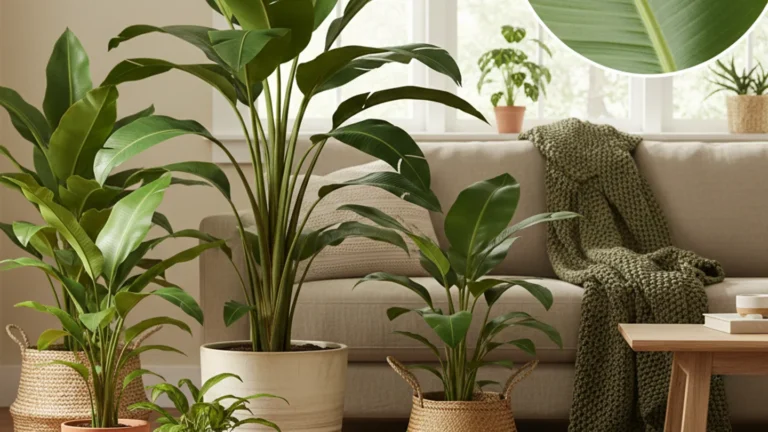
Banana plants are generally considered non-toxic to cats and dogs. If you want drama, this is your tree.
Height indoors: 4 to 6 feet is realistic in a pot, and dwarf varieties stay smaller. The leaves are enormous, so it reads as a tree even at modest heights.
Light: this one is hungry for sun. Give it the brightest spot you have, ideally with several hours of direct light. A dim corner will leave it leggy and sad.
Water: banana plants drink a lot in bright light. Keep the soil lightly moist in summer, less so in winter.
Caveat: the leaves tear easily and grow fast. Expect to trim ragged edges now and then. That is normal, not a sign of failure.
Pick 3
Kentia palm (Howea forsteriana): the slow, elegant option
Kentia palms are generally considered non-toxic to cats and dogs. They are the gentle giants of pet-safe indoor trees.
Height indoors: 5 to 10 feet over time, but they grow slowly. You buy presence that lasts, not a plant that outgrows your room in a year.
Light: they tolerate low to medium light better than almost any other indoor tree. Bright indirect light speeds growth, but a north-facing room will not kill them.
Water: let the top half of the soil dry out. Kentias dislike wet feet, and root rot is the main way people lose them.
Caveat: slow growth means slow recovery. If a cat shreds a frond, that frond is gone for good, so consider a floor spot with some distance from pet traffic.
Pick 4
Olive tree (Olea europaea): the Mediterranean look, with caveats
Olive trees are generally considered non-toxic to cats and dogs. The silvery leaves and slim trunk give you a modern, airy version of the indoor tree look.
Height indoors: 4 to 6 feet in a pot with regular pruning. Left alone in a bright spot, they will try to become an actual tree.
Light: this is the big caveat. Olive trees need full sun, think a south-facing window or a very bright sunroom. In low light they drop leaves and decline.
Water: let the soil dry out well between waterings. Olives are drought-tolerant Mediterranean plants, and soggy soil kills them faster than neglect.
Two more caveats. First, the small leaves are tempting to bats and swats, and a tipped olive tree makes a mess. Use a heavy pot. Second, they prefer cool, bright winters, so a hot, dim corner in January is their least favorite place.
| Tree | Safe for cats and dogs? | Indoor height | Light needs | Good to know |
|---|---|---|---|---|
| Money tree | Generally considered non-toxic | 3 to 6 ft, up to 8 ft | Bright indirect, tolerates medium | Easygoing, best all-round ficus swap |
| Banana plant | Generally considered non-toxic | 4 to 6 ft in a pot | Very bright, some direct sun | Fast grower, leaves tear easily |
| Kentia palm | Generally considered non-toxic | 5 to 10 ft over time | Low to bright indirect | Slow and steady, dislikes wet soil |
| Olive tree | Generally considered non-toxic | 4 to 6 ft with pruning | Full sun, south-facing window | Needs a heavy pot and bright winters |
| Ficus (for comparison) | Toxic to cats and dogs | 3 to 10 ft | Bright indirect | Irritating sap, avoid in pet homes |
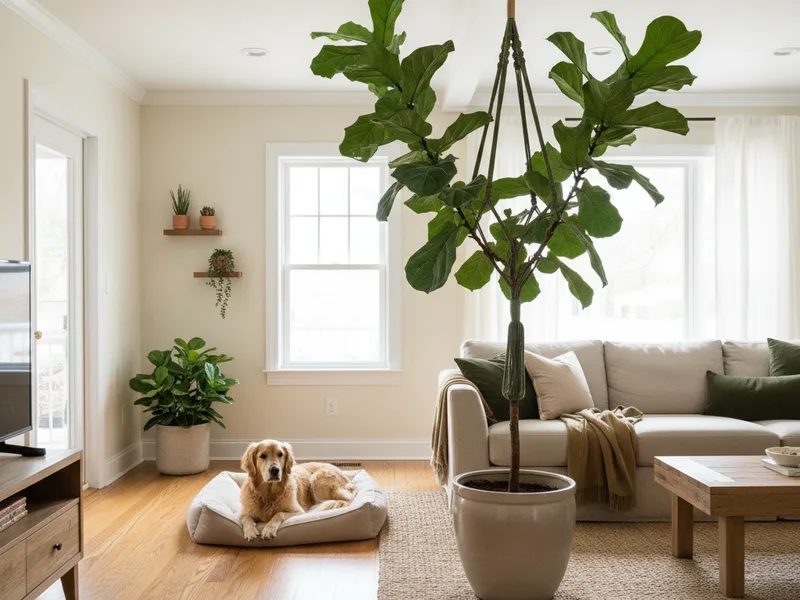
How to keep a big plant standing in a pet home
Choose a heavy, wide-based pot. A toppled tree is a mess even when the plant itself is safe.
Place the tree where your pet does not sprint past it. Corners near furniture work better than hallway pinch points.
If your cat chews leaves out of boredom, offer cat grass as a legal target. It redirects the habit without risking your tree or your pet.
Remember that non-toxic does not mean an all-you-can-eat buffet. Large amounts of any plant material can cause vomiting or an upset stomach. If symptoms appear, call your vet.
Common questions about pet-safe indoor trees
Are pet-safe indoor trees really safe if my cat chews them?
The trees in this list are generally considered non-toxic, meaning they do not contain the compounds that cause poisoning. That said, eating a lot of any leaf can cause vomiting or diarrhea. If your pet shows symptoms, contact your vet.
What happens if my dog eats a ficus leaf?
Ficus sap can irritate the mouth and digestive tract. Expect drooling, pawing at the mouth, vomiting or diarrhea. Contact your vet, and mention the plant by name so they know what they are dealing with.
Which pet-safe indoor tree is best for low light?
The kentia palm. It tolerates low to medium light better than any other tree on this list. The money tree is the second-best choice for dimmer rooms.
Which safe tree looks most like a fiddle leaf fig?
The banana plant comes closest for big-leaf drama. If you want the upright trunk-and-canopy shape instead, go for a money tree and prune it into a tree form.
Can I keep my ficus if I put it out of reach?
It is risky. Fallen leaves land on the floor, and sap can transfer to fur. In a home with curious cats or dogs, a safe swap is the calmer choice.
Are there other popular plants I should double-check?
Yes. Several common houseplants are toxic, including monstera, pothos, philodendron and snake plants. Check our plant-by-plant guides before you buy anything new.