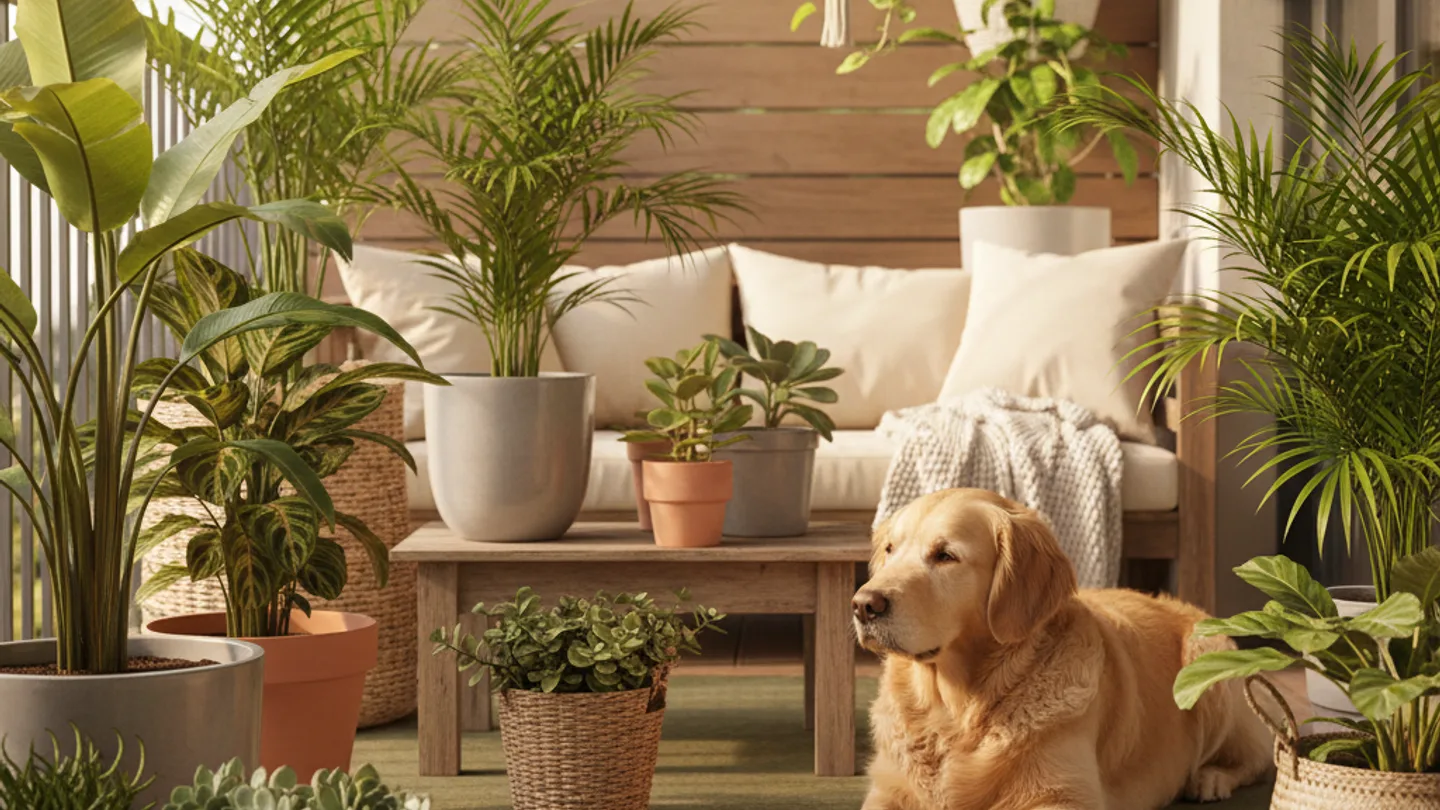
Pet-Safe Balcony and Patio Plants
Good news: plenty of balcony and patio plants are generally considered non-toxic to cats and dogs. The trick is knowing which ones, because some of the most popular balcony classics, like geraniums, are toxic to pets.
This guide lists pet-safe container plants that handle real balcony conditions: sun, wind, and the occasional forgotten watering. For each one you get light and wind notes, plus a look at the toxic favorites worth swapping out.
One rule before you plant: 'generally considered non-toxic' never means harmless. Any plant can cause an upset stomach if your pet eats enough of it. If your pet chews on a plant and shows symptoms like drooling, vomiting, or diarrhea, call your vet or the ASPCA Animal Poison Control Center.
The short version
- Pet safe balcony plants include spider plants, Boston ferns, calathea, ponytail palm, herbs like basil and thyme, and many edible flowers.
- Geraniums are toxic to cats and dogs. Swap them for petunias or marigold-free alternatives like snapdragons.
- Lavender, lantana, oleander, and sago palm are common outdoor plants that are risky around pets.
- Wind matters as much as light on a balcony. Pick sturdy, flexible plants for exposed spots.
- Even non-toxic plants can cause a mild upset stomach. Keep an eye on chewers and call a vet if symptoms appear.
What makes a balcony plant pet-safe and balcony-proof
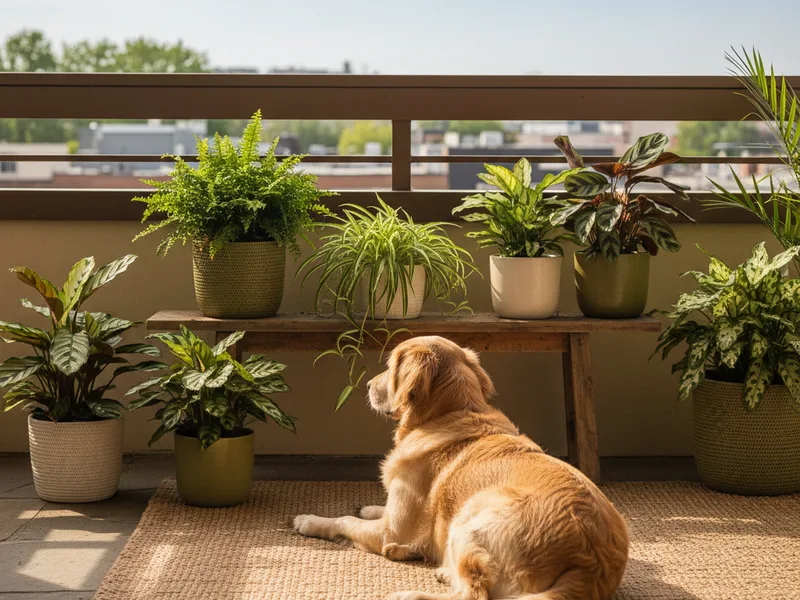
A pet-safe plant is one that major veterinary resources, like the ASPCA toxic plant database, list as non-toxic to cats and dogs. That means no known toxins that cause serious poisoning. It does not mean your pet can snack on it freely. Any greenery can irritate a sensitive stomach.
Balcony-proof is the other half of the puzzle. Balconies are harsher than living rooms. Sun is stronger, pots dry out fast, and wind whips leaves around. A plant that thrives indoors may crisp up outside in a week.
So every pick below is judged on three things: pet safety, sun tolerance, and wind tolerance. That way your balcony works for you, your plants, and your pets.
Pet-safe balcony plants for full sun
Full sun means six or more hours of direct light. South- and west-facing balconies usually qualify. These plants can take the heat and are generally considered non-toxic to cats and dogs.
Basil, thyme, rosemary, and sage: culinary herbs are some of the easiest pet-safe balcony plants. They love sun, shrug off moderate wind, and a curious nibble is not a poisoning risk. Keep the pots watered, because sun bakes containers quickly.
Snapdragons: colorful, vertical, and non-toxic to cats and dogs. They tolerate wind better than most flowering annuals and bloom for months in cooler seasons.
Sunflowers: generally considered non-toxic and cheerful in a large pot. They are tough in sun and wind, though tall varieties may need a stake on exposed balconies.
Petunias: a balcony staple that is non-toxic to cats and dogs. They trail beautifully from railing boxes and handle sun well. In strong wind, give them a sheltered corner so the flowers do not shred.
Pet-safe balcony plants for shade and partial light
North-facing balconies and patios under cover get little direct sun. These plants are happy there and safe around pets.
Boston fern: a classic hanging plant that is generally considered non-toxic to cats and dogs. It likes shade, humidity, and shelter from harsh wind. Perfect for a covered corner.
Spider plant: non-toxic and famously forgiving. It handles partial shade, breezes, and irregular watering. Cats love to bat the dangling baby plants, which is fine, just expect some chewed tips.
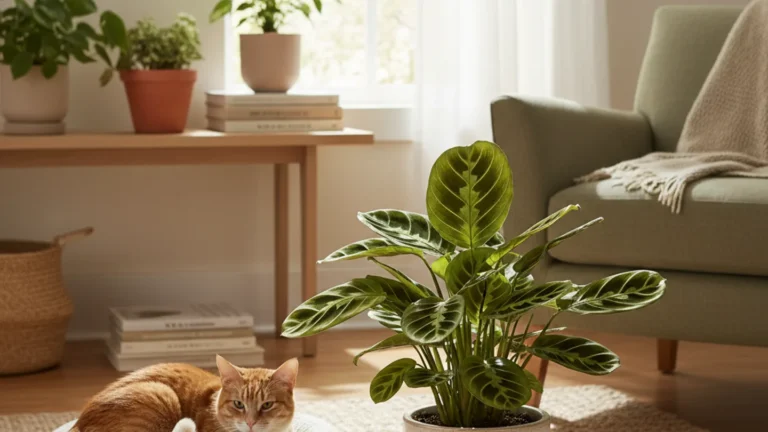
Calathea and prayer plants: non-toxic to cats and dogs, with striking patterned leaves. They need shade and protection from wind, so they suit covered patios rather than exposed railings.
Ponytail palm: despite the name, it is not a true palm, and it is non-toxic to pets. It tolerates bright shade to sun, stores water in its trunk, and copes well with dry, windy spots.
Cast iron plant: lives up to its name. Non-toxic, shade-loving, and nearly indestructible in a container. A good anchor plant for a dark balcony corner.
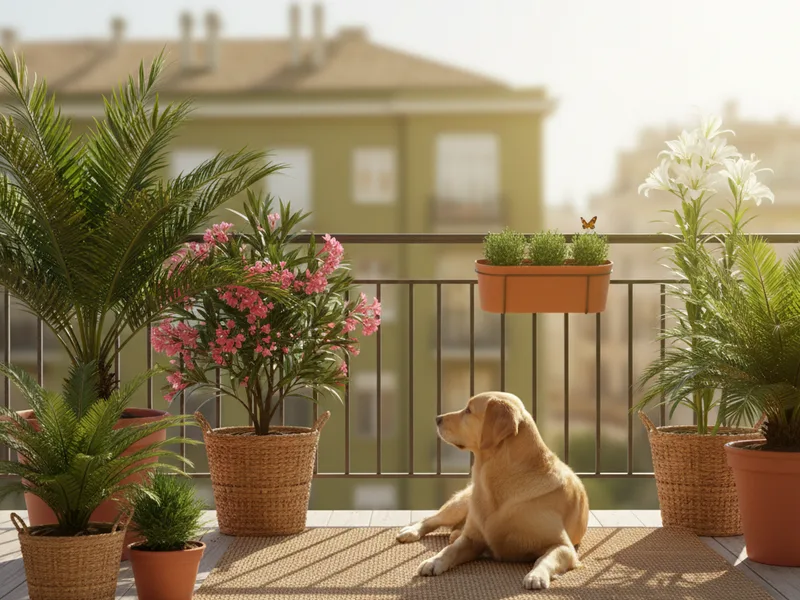
Balcony classics that are toxic to pets
Here is the uncomfortable part. Some of the most common balcony plants are toxic to cats, dogs, or both. If your pet shares the space, these are worth replacing.
Geraniums (pelargoniums) are toxic to cats and dogs. They contain compounds called geraniol and linalool, which are natural oils that can irritate your pet. Eating them can cause vomiting, loss of appetite, depression, and skin irritation. The good news: symptoms are usually mild, and there are safe swaps below.
Lantana is toxic to cats and dogs and can affect the liver in larger amounts. Oleander is highly toxic to both and can be dangerous even in small quantities, so avoid it entirely around pets. Sago palm, often sold as a patio accent, is extremely toxic, especially the seeds.
Lavender is another favorite with a catch. It is toxic to cats and dogs in larger amounts because of linalool, the same type of compound found in geraniums. And if you bring plants indoors in winter, check guides like our look at whether pothos is toxic before they land within reach.
| Toxic balcony classic | Why it is risky | Pet-safe swap | Light match |
|---|---|---|---|
| Geranium (pelargonium) | Toxic to cats and dogs, can cause vomiting and skin irritation | Petunia | Full sun, like geraniums |
| Lantana | Toxic to cats and dogs, can affect the liver | Snapdragon | Full sun |
| Oleander | Highly toxic to cats and dogs, dangerous in small amounts | Hibiscus (generally considered non-toxic) | Full sun, sheltered spot |
| Sago palm | Extremely toxic, especially the seeds | Ponytail palm | Bright light, tolerates wind |
| Lavender | Toxic in larger amounts due to linalool | Rosemary | Full sun, drought-tolerant |
| English ivy | Toxic to cats and dogs | Spider plant in a hanging basket | Partial shade |
Sun and wind: matching plants to your balcony
Before you buy, spend one day watching your balcony. Note how many hours of direct sun it gets and where the wind hits hardest. That one observation saves you money and dead plants.
Windy, high-floor balconies: choose low, sturdy plants with flexible stems or small leaves. Herbs, ponytail palm, and cast iron plant cope well. Avoid big, thin leaves that tear, like calathea, in exposed spots.
Hot, sunny balconies: terracotta pots breathe but dry out fast. Plastic or glazed pots hold moisture longer. Water in the morning so roots do not bake.
Shady or covered balconies: focus on ferns, spider plants, and prayer plants. Wind is usually less of an issue under cover, so delicate leaves are fine here.
One more practical note: secure your pots. A heavy planter tipped off a railing is a danger to pets and people below. Use railing brackets or keep large pots on the floor.
Common questions about pet safe balcony plants
Are geraniums really toxic to cats and dogs?
Yes. Geraniums (pelargoniums) are toxic to both cats and dogs. Eating them can cause vomiting, loss of appetite, and skin irritation. Symptoms are usually mild, but it is smart to swap them for a safe lookalike like petunias if your pet can reach the plants.
What is the easiest pet-safe plant for a windy balcony?
Herbs like rosemary and thyme are hard to beat. They tolerate wind, sun, and some neglect, and they are generally considered non-toxic to cats and dogs. Ponytail palm is another tough, safe option for exposed spots.
My cat chews everything. Which balcony plants should I avoid completely?
Skip oleander, sago palm, and lantana entirely. These are seriously toxic and not worth the risk around a determined chewer. Stick to clearly non-toxic plants and place even those where your cat cannot graze constantly.
Can non-toxic plants still make my pet sick?
Yes. Non-toxic means the plant contains no known serious toxins, but eating any plant material can cause mild stomach upset, like vomiting or diarrhea. If your pet shows symptoms after chewing a plant, call your vet.
Are marigolds safe for dogs on a patio?
Marigolds are listed as mildly toxic to cats and dogs and can cause stomach upset and skin irritation. They are not in the danger zone like oleander, but for a fully worry-free pot, snapdragons or petunias are the safer pick.
Do pet-safe balcony plants need different soil or fertilizer?
The soil needs are the same as for any container plant. What matters for pets is what you add: choose pet-conscious fertilizers, avoid slug pellets and cocoa mulch, and never use pesticides that are unsafe around animals on plants your pet might lick.
Green balcony, safe pets
Start with one or two pet-safe containers and build from there. Every plant guide on Pawproof Plants leads with the same clear answer: is it toxic to cats, dogs, or both.