Peperomia Care: Small, Tough and Safe for Pets
Peperomias are non-toxic to cats and dogs. That is the short answer, and it is a good one.
If you want a plant that looks interesting, stays small and does not put your pet at risk, peperomia is one of the easiest choices you can make. It also forgives the occasional missed watering, which makes it a strong pick for busy homes.
This guide covers peperomia care in real apartments and houses: light, watering, popular varieties and where these compact plants fit best.
Peperomia care at a glance
- Peperomias, including the baby rubber plant, are generally considered non-toxic to cats and dogs.
- Bright, indirect light is ideal, but most peperomias tolerate medium light.
- Peperomias are semi-succulent: let the top of the soil dry out before watering again.
- They stay compact, usually under 12 inches, so they suit shelves, desks and windowsills.
- Even with a non-toxic plant, a big chew can cause a mild stomach upset. Call your vet if symptoms appear.
Safety first
Are peperomias safe for cats and dogs?
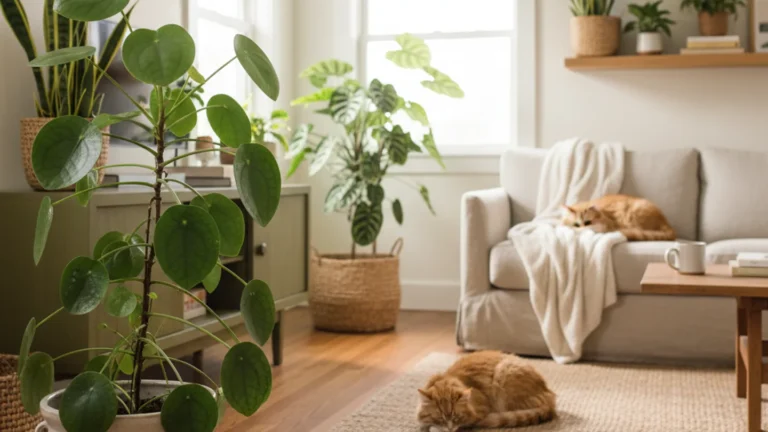
Yes. Peperomias are generally considered non-toxic to both cats and dogs. That includes the popular baby rubber plant (Peperomia obtusifolia), which often gets confused with the rubber tree.
That confusion matters. The rubber tree (Ficus elastica) is a different plant entirely and is not pet-safe. If a shop label just says 'rubber plant', check the botanical name before you buy. Peperomia obtusifolia is the safe one.
Non-toxic does not mean risk-free. Any plant material can irritate a pet's stomach if they eat enough of it. You might see mild drooling or vomiting after a big chew session. That usually passes on its own, but contact your vet if symptoms last more than a few hours or your pet seems unwell.
If you are weighing up other common houseplants, it is worth knowing that Monstera is toxic to both cats and dogs. Peperomia gives you a similar leafy look without that worry.
Care basics
Light: bright but not harsh
Peperomias do best in bright, indirect light. A spot a few feet from an east- or west-facing window works well in most US homes.
They also cope with medium light. Growth slows down, but the plant stays healthy. This makes peperomia one of the few pet-safe plants that can live on a shelf away from the window.
Avoid strong, direct afternoon sun. It can scorch the leaves, especially on thicker-leaved varieties. If a south-facing window is your only option, hang a sheer curtain or move the plant a few feet back.
A quick sign check: pale, stretched stems mean too little light. Faded or crispy patches mean too much direct sun.
Watering: think semi-succulent
Peperomias store water in their thick leaves and stems. That is what 'semi-succulent' means in practice: they want a drink, then a pause.
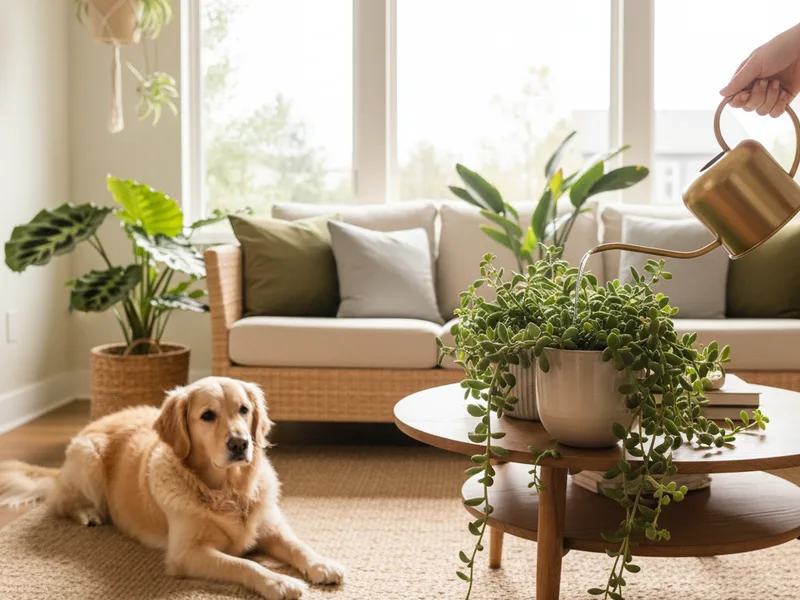
Water when the top 1 to 2 inches of soil feel dry. In most homes that works out to roughly once every 7 to 10 days in summer and less often in winter. Always check the soil rather than following a fixed schedule.
Overwatering is the most common way to kill a peperomia. Soggy soil leads to root rot, which shows up as mushy stems and dropping leaves. Use a pot with a drainage hole and empty the saucer after watering.
If you tend to forget watering, peperomia is on your side. A thirsty peperomia with slightly limp leaves perks up fast. A drowned one is much harder to save.
| Variety | Look | Light needs | Size |
|---|---|---|---|
| Baby rubber plant (P. obtusifolia) | Glossy, rounded green leaves | Low to bright indirect | Up to 12 inches |
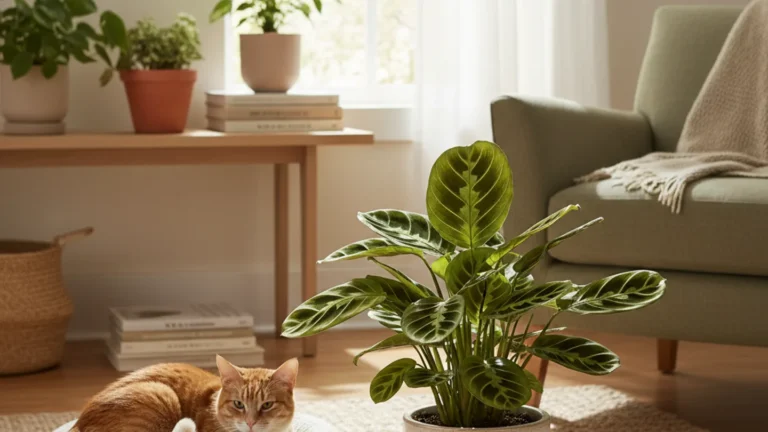
| Watermelon peperomia (P. argyreia) | Silver-striped leaves like a watermelon rind | Medium to bright indirect | Up to 8 inches |
| Ripple peperomia (P. caperata) | Deeply textured, heart-shaped leaves | Medium to bright indirect | Up to 8 inches |
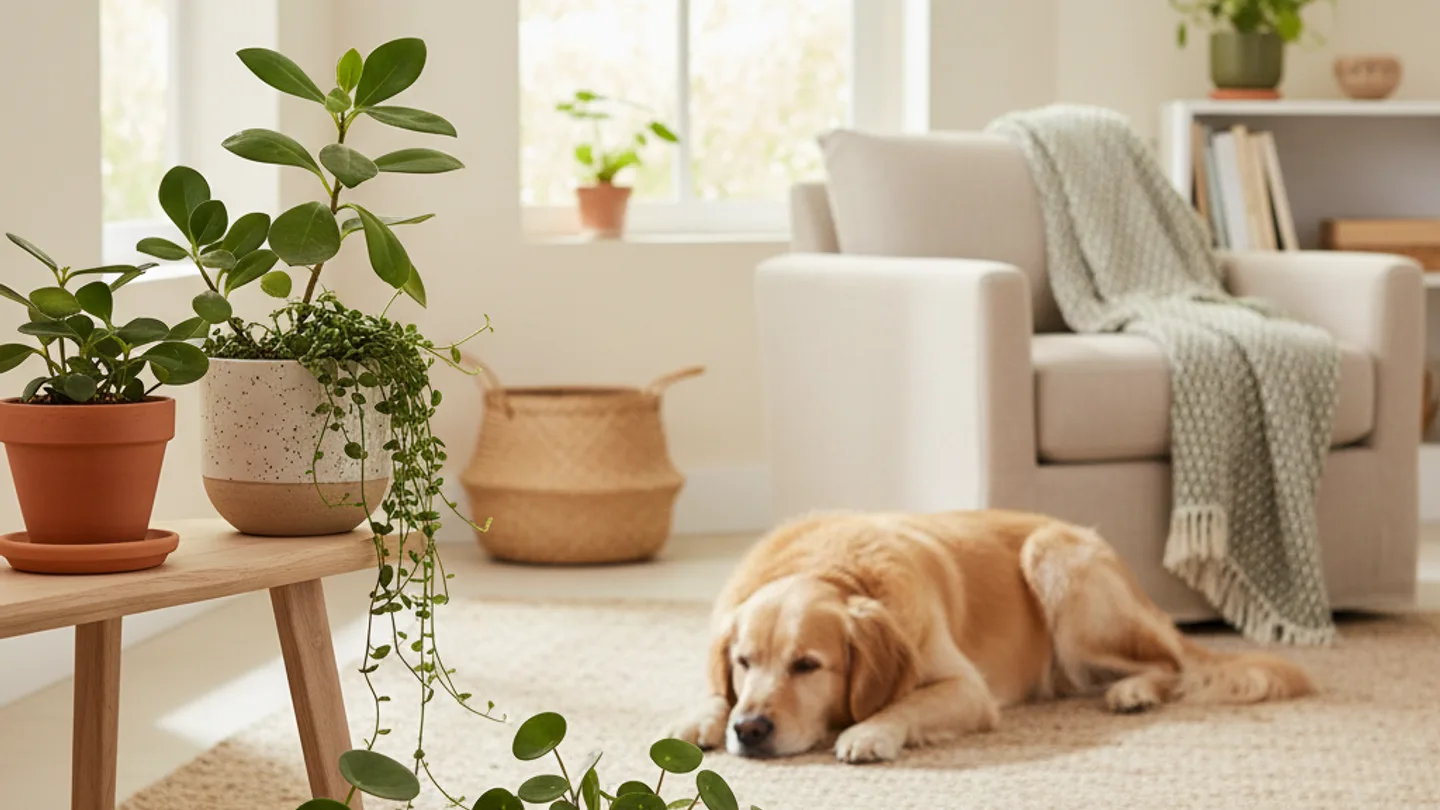
| Trailing peperomia (P. prostrata) | Tiny patterned leaves on trailing stems | Bright indirect | Trails up to 12 inches |
Small spaces
Why peperomias suit shelves and small homes
Most peperomias stay under 12 inches tall and grow slowly. They will not outgrow a bookshelf, a desk corner or a bathroom windowsill within a season.
Their compact size has a practical bonus for pet owners. A small plant is easy to place out of reach if your cat likes to dig in soil or your dog chews anything new. Even though peperomias are safe, keeping plants on a high shelf protects the plant as much as the pet.
They also handle average household humidity and typical indoor temperatures between 65 and 80 degrees Fahrenheit. No greenhouse conditions needed. Keep them away from drafty windows in winter and away from heating vents, and they will be content.
Common questions about peperomia care
Is the baby rubber plant toxic to cats?
No. The baby rubber plant (Peperomia obtusifolia) is generally considered non-toxic to cats and dogs. Do not confuse it with the rubber tree (Ficus elastica), which is a different plant and not pet-safe.
How often should I water my peperomia?
Water when the top 1 to 2 inches of soil are dry, roughly every 7 to 10 days in summer and less in winter. Peperomias are semi-succulent, so they prefer slightly too dry over too wet.
Can a peperomia live in low light?
Most peperomias tolerate medium light, though they grow more slowly. Very dark corners are a stretch. If the stems stretch and the leaves lose color, move the plant closer to a window.
What happens if my dog eats a peperomia leaf?
Peperomias are non-toxic, so a nibble is unlikely to cause harm. Eating a large amount of any plant can cause mild vomiting or an upset stomach. If symptoms persist or your dog seems unwell, call your vet.
Why are my peperomia's leaves dropping?
Leaf drop is usually a watering issue. Mushy stems and wet soil point to overwatering. Dry, limp leaves point to thirst. Check the soil first, then adjust.
Do peperomias need fertilizer?
A light feed once a month in spring and summer with a diluted houseplant fertilizer is plenty. Skip feeding in fall and winter when growth slows.