Hoya Care: The Pet-Safe Trailing Plant That Blooms
Hoyas are generally considered non-toxic to cats and dogs. That makes them one of the best trailing plants for a pet household.
If you have been looking for a hanging-basket plant that is safe around curious paws, the hoya is your answer. It trails beautifully, tolerates some neglect, and rewards patience with clusters of star-shaped wax flowers.
This guide covers hoya care for real homes: light, watering, soil, and how to get those famous blooms.
Hoya care at a glance
- Hoyas are generally considered non-toxic to cats and dogs, so they are a safe hanging-basket choice.
- Give your hoya bright, indirect light. A spot near an east or south window works well.
- Let the soil dry out between waterings. Hoyas store water in their thick leaves.
- Blooms take patience. A happy, slightly root-bound hoya in bright light is most likely to flower.
- Even with a non-toxic plant, call your vet if your pet eats a large amount or shows symptoms.
Are hoyas toxic to cats or dogs?
No. Hoyas, including popular types like Hoya carnosa, Hoya kerrii, and Hoya pubicalyx, are generally considered non-toxic to both cats and dogs.
That is a big deal if you love trailing plants. Many popular trailing and vining houseplants, like pothos and philodendron, contain calcium oxalate crystals. These are tiny sharp crystals that can irritate your pet's mouth and throat. Hoyas do not carry that risk.
Non-toxic does not mean a free snack. Eating a lot of any plant can still cause an upset stomach. If your cat or dog chews your hoya and then vomits, drools, or seems off, call your vet.
Why hoyas are the safe hanging-basket upgrade
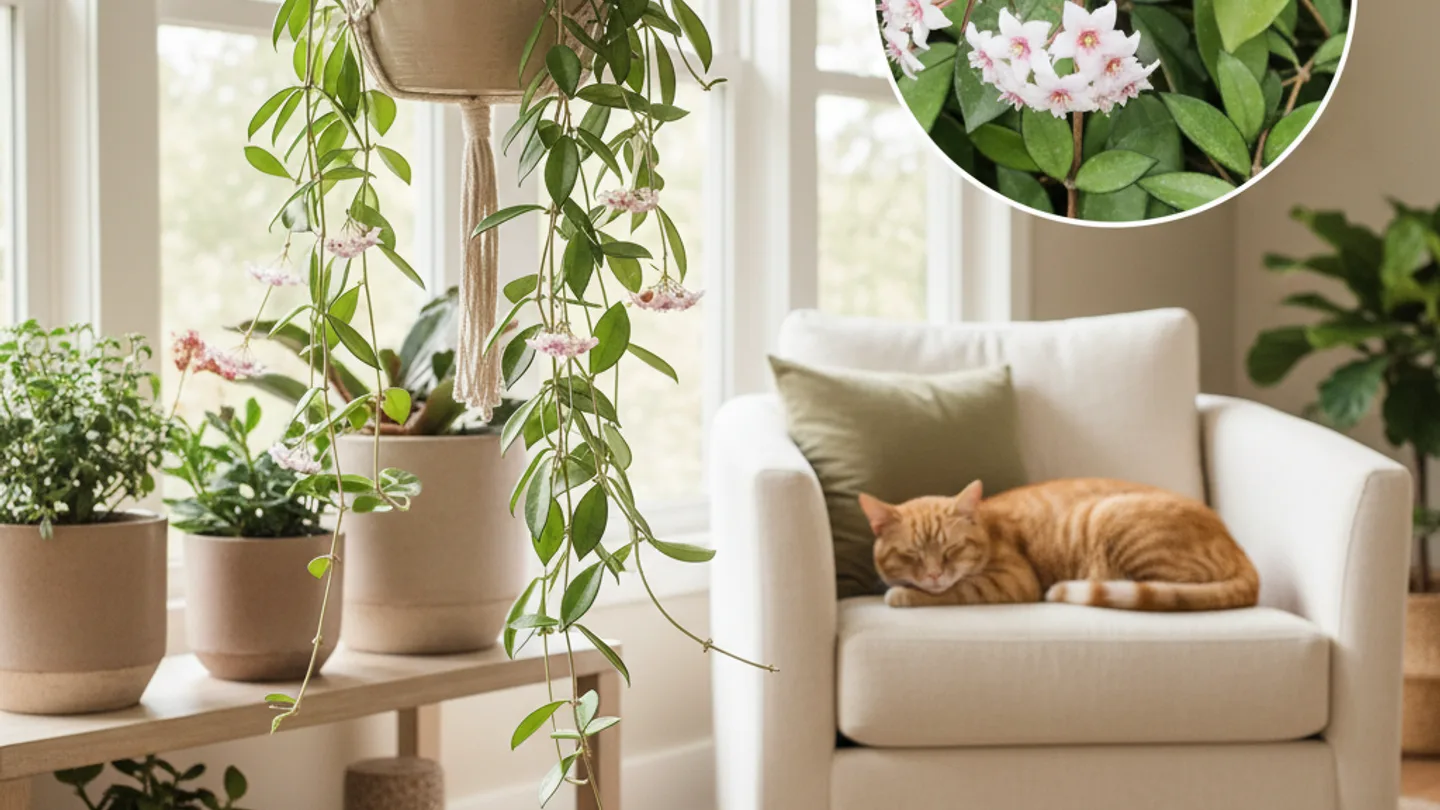
Hanging baskets keep foliage away from floors and paws, and hoyas look stunning in them. Their vines spill over the edge, and some types have variegated or silver-splashed leaves.
They are also forgiving. Hoyas have thick, waxy leaves that hold water, so a missed watering is not a crisis. That suits busy households and beginners.
If you have been hesitating over a trendier plant like monstera, it helps to know that monsteras are toxic to cats and dogs. A hoya gives you a lush, full look without that worry.
Light: bright and indirect
Hoyas want bright, indirect light. Think of a spot a few feet from a south or west window, or right in an east window.
They can survive in medium light, but they will grow slowly and rarely bloom. If your hoya has been alive for years without a single flower, light is usually the reason.
Avoid harsh midday sun directly on the leaves, which can scorch them. A sheer curtain solves that in a bright apartment.
Watering: let it dry out
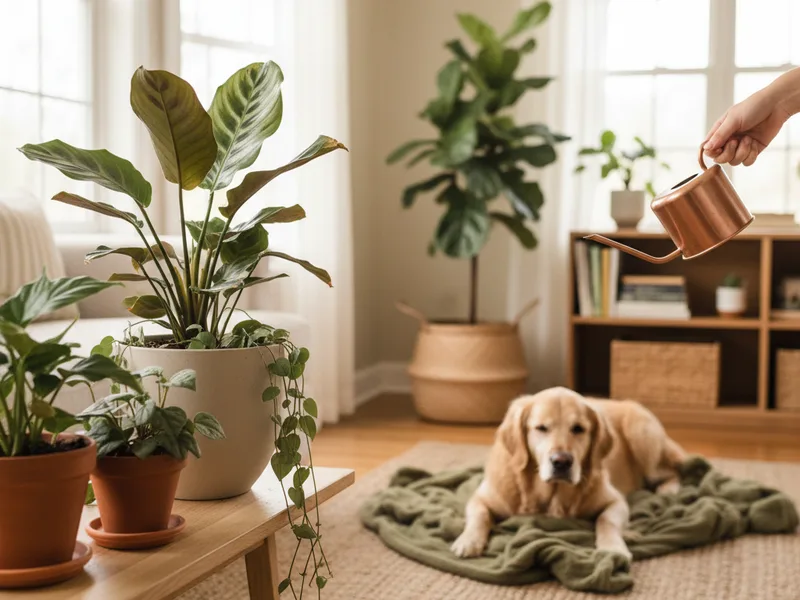
This is where most hoya care goes wrong. Hoyas dislike constantly wet soil. Their thick leaves store water, so they prefer to dry out between waterings.
Check the soil with your finger. When the top two inches feel dry, it is time to water. In many homes that means every one to two weeks, less often in winter.
When you water, water thoroughly and let the excess drain. Never let the pot sit in standing water. Wrinkled, soft leaves usually mean thirst. Yellowing, mushy leaves usually mean too much water.
Soil, pot, and feeding
Use a light, airy mix that drains fast. A standard potting mix with added perlite or orchid bark works well.
Hoyas like being slightly root-bound, so do not rush to repot. Every two to three years is plenty, and only go one pot size up.
Feed with a diluted houseplant fertilizer once a month in spring and summer. Skip feeding in fall and winter when growth slows.
Getting your hoya to bloom
Hoya flowers are worth the wait. They form rounded clusters of small, star-shaped blooms with a waxy look and often a sweet scent.
Three things encourage blooming: bright light, a snug pot, and a mature plant. Young hoyas often need a couple of years before they flower.
One important tip: do not cut off the little stems where flowers appeared. Hoyas bloom again from the same spots, called peduncles. Trimming them delays the next round of flowers.
Common hoya questions
Are hoyas safe for cats and dogs?
Yes, hoyas are generally considered non-toxic to cats and dogs. Eating a large amount of any plant can still cause an upset stomach, so contact your vet if your pet chews the plant and shows symptoms.
How often should I water my hoya?
Water when the top two inches of soil feel dry. In most homes that is every one to two weeks, and less in winter. Hoyas store water in their leaves, so they handle a missed watering well.
Why is my hoya not blooming?
The most common reason is not enough light. Move your hoya to a brighter spot with indirect sun. Age matters too, since young plants often need a couple of years before they flower.
Can I hang my hoya in a low-light room?
A hoya will survive in medium light but will grow slowly and rarely bloom. For healthy growth and flowers, choose a bright spot near an east or south window.
Should I mist my hoya?
It is not required. Average home humidity suits most hoyas. If your air is very dry, an occasional mist or a nearby humidifier can help, but good light and correct watering matter far more.
Is a hoya a good plant for beginners with pets?
Yes. It is non-toxic, tolerates some neglect, and lives happily in a hanging basket out of reach. It is one of the easiest pet-safe statement plants to start with.
Not sure about a plant you already own?
Check our guides before your pet does the taste test. We lead every plant guide with one clear answer: safe or not, for cats and dogs.