Pet-Safe Terrarium Plants for Closed and Open Setups
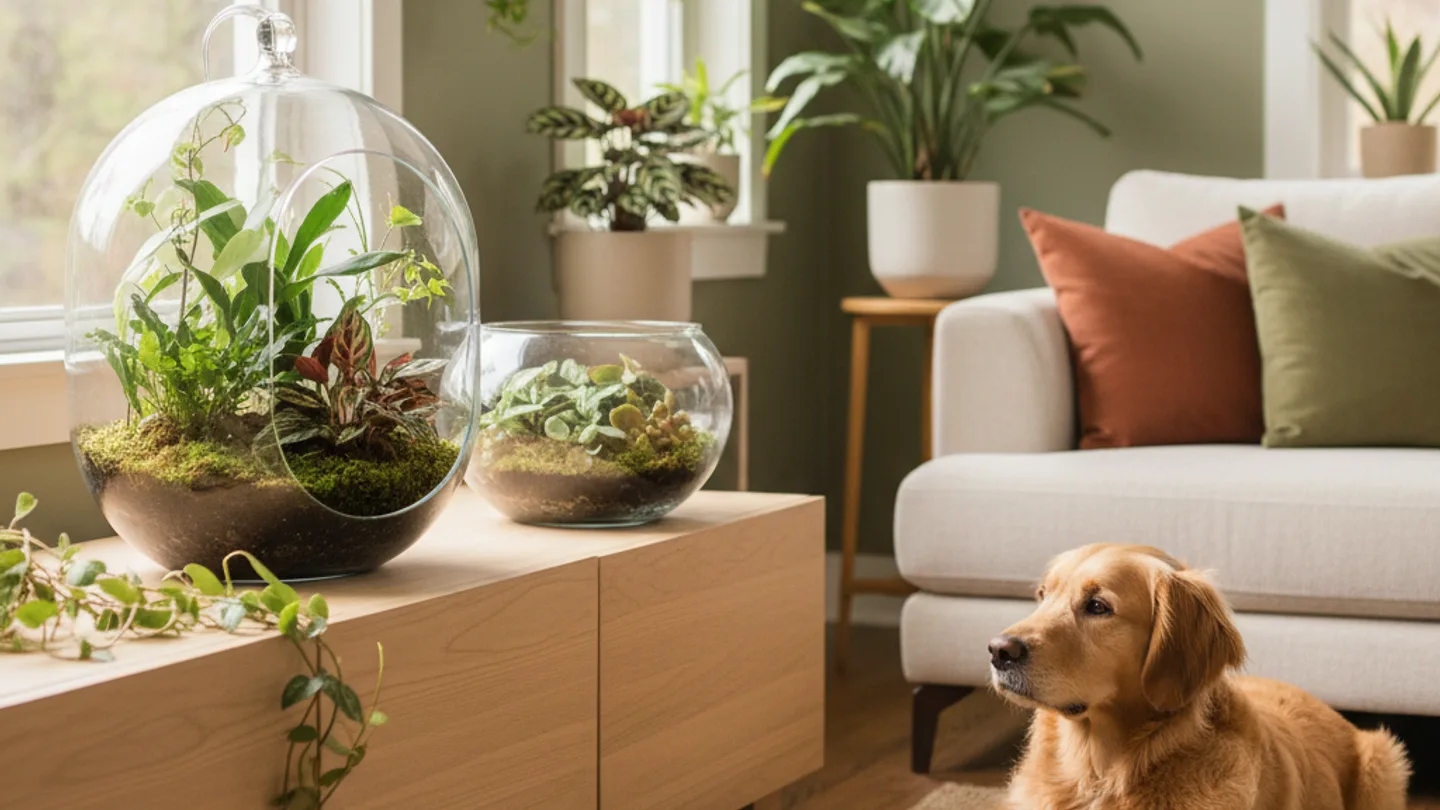
Good news: several popular terrarium plants are generally considered non-toxic to both cats and dogs. Nerve plants, baby tears and small peperomias are safe choices for a closed or open setup, as long as you stick to verified non-toxic species.
A lidded terrarium adds a layer of protection, because your pet cannot easily reach the plants inside. But a lid is a backup, not a plan. Cats knock things over, dogs are curious, and glass breaks. The real safety comes from choosing pet safe terrarium plants in the first place.
Below you will find the best mini plants for a terrarium in a home with pets, how to match them to closed or open setups, and the simple rules that keep the whole display safe.
The short answer
- Nerve plant, baby tears and small peperomias are generally considered non-toxic to cats and dogs.
- A closed terrarium lid keeps paws out, but it is never a substitute for choosing safe species.
- Skip common terrarium favorites that are toxic, such as pothos cuttings and many ferns lookalikes that get mislabeled.
- Place any terrarium out of reach, because broken glass is a risk all on its own.
- If your pet eats any plant and shows symptoms like vomiting or drooling, call your vet or a pet poison hotline.
Why a lid helps, but is not enough
A closed terrarium looks like the perfect fix for pet owners. The plants sit behind glass, the humidity stays high, and curious noses stay outside.
That works, most of the time. But lids get left off during watering. Glass containers tip off shelves. A determined cat treats a terrarium like a puzzle box.
If the plant inside is toxic, one escaped leaf on the floor becomes a problem. If every plant inside is generally considered non-toxic, a tipped or opened terrarium is a mess, not an emergency. That is the mindset behind every guide on this site: the verdict on toxicity comes first, and the container comes second.
Nerve plant (Fittonia): the classic safe pick
Nerve plants are generally considered non-toxic to cats and dogs. That makes them the top choice for a pet household terrarium.
Fittonia stays small, loves humidity and comes in leaf patterns with white, pink or red veins. It is the plant closed terrariums seem designed for.
Care is simple. Give it bright, indirect light and keep the soil lightly moist. In a closed setup it will tell you when it is thirsty by dramatically flopping over, then perk back up after watering.
One practical note: even with a non-toxic plant, eating a large amount of any greenery can cause mild stomach upset. Contact your vet if symptoms appear.
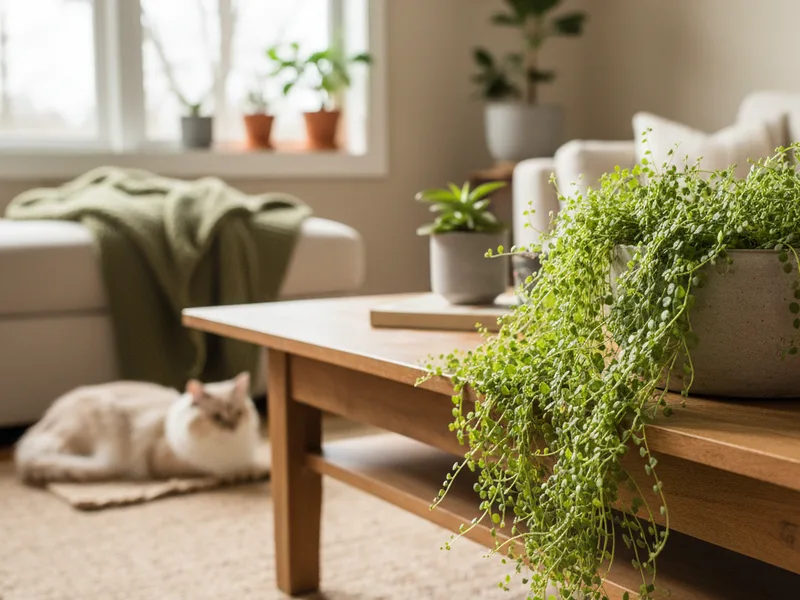
Baby tears (Soleirolia soleirolii): a soft green carpet
Baby tears is generally considered non-toxic to cats and dogs. It forms a dense mat of tiny round leaves and works as ground cover in open or closed terrariums.
It likes consistent moisture and medium, indirect light. In a closed terrarium it can spread fast, so trim it now and then to keep smaller plants visible.
Because it sits low, baby tears is often the first plant a pet would reach if the container opens. Its non-toxic status is exactly why it earns a place on this list.
Small peperomias: variety without the risk
Peperomias are generally considered non-toxic to cats and dogs, and the compact types are made for terrarium life. Look for Peperomia prostrata (string of turtles) for trailing texture, or small ripple and watermelon types for bold leaves.
Peperomias prefer a bit more airflow than fittonia, so they shine in open terrariums or closed containers that you vent regularly. Let the top of the soil dry slightly between waterings.
Their thick leaves handle the occasional missed watering better than most terrarium plants, which makes them a good match for real apartments and busy weeks, not greenhouse conditions.
| Plant | Pet safety | Best setup | Light | Water |
|---|---|---|---|---|
| Nerve plant (Fittonia) | Generally considered non-toxic to cats and dogs | Closed | Bright, indirect | Keep lightly moist |
| Baby tears | Generally considered non-toxic to cats and dogs | Closed or open | Medium, indirect | Consistent moisture |
| Small peperomias | Generally considered non-toxic to cats and dogs | Open or vented closed | Medium to bright, indirect | Let top soil dry slightly |
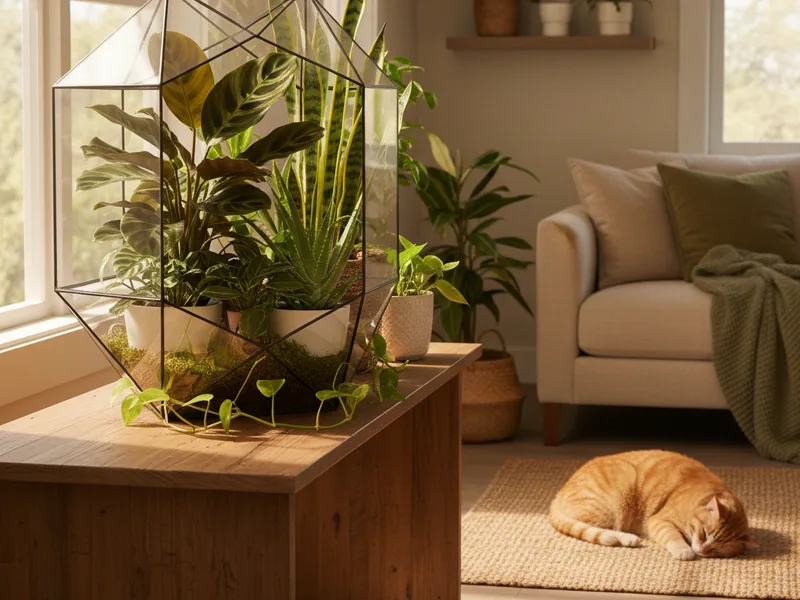
Plants to keep out of a pet household terrarium
Some terrarium staples are toxic to pets, and a lid does not change that. Pothos, for example, is often sold as an easy terrarium plant, but it is toxic to cats and dogs. You can read the details in our guide on whether pothos is toxic.
The same caution applies to philodendron, another plant that shows up in terrarium builds. Our article on philodendron and pets explains why it is best avoided in homes with cats and dogs.
Also watch for mislabeled plants in shops. When in doubt, check the botanical name before you buy, not just the tag on the pot.
Simple safety rules for any terrarium
First, build only with verified non-toxic species. That single choice removes almost all the risk.
Second, place the terrarium somewhere stable and out of reach. A heavy glass container on a low table is a broken-glass hazard waiting for a tail swipe.
Third, know what to do if something goes wrong. If your pet eats plant material and shows symptoms such as drooling, vomiting or loss of appetite, contact your vet or the ASPCA Animal Poison Control Center. Bring a photo or a piece of the plant if you can.
Common questions
Are terrarium plants safe for cats and dogs?
Some are, some are not. Nerve plant, baby tears and small peperomias are generally considered non-toxic to both cats and dogs. Many popular terrarium plants, like pothos and philodendron, are toxic. Always check the species before planting.
Does a closed terrarium make a toxic plant safe?
No. A lid reduces access, but containers get opened, tipped or broken. The safe approach is to use only non-toxic species and treat the lid as extra protection, not the main one.
What happens if my cat eats a nerve plant?
Nerve plants are generally considered non-toxic, so serious poisoning is not expected. Eating any plant can still cause mild stomach upset. If your cat vomits, drools or seems unwell, call your vet.
Can I use moss in a pet-safe terrarium?
Cushion moss and sheet moss sold for terrariums are generally considered safe. Buy moss intended for indoor planting rather than collecting it outside, where it can carry pests or chemicals.
Where should I put a terrarium in a home with pets?
On a stable surface out of reach, such as a high shelf. Avoid table edges and spots your cat jumps onto. This protects your pet and keeps the glass container in one piece.