The Complete List of Pet-Safe Houseplants (Vetted for Cats and Dogs)
Yes, plenty of stylish houseplants are safe for cats and dogs. You do not have to choose between a green home and a safe pet.
This is our master list of pet safe houseplants, grouped by type, with one line on look and care level for each. Every plant here is generally considered non-toxic to both cats and dogs.
One honest note before the list: non-toxic does not mean consequence-free. Eating any plant can cause mild stomach upset. If your pet shows symptoms after chewing a plant, contact your vet.
The short version
- Many popular houseplants are safe for both cats and dogs, so you have real options.
- All plants on this list are generally considered non-toxic to cats and dogs.
- Even safe plants can cause mild stomach upset if eaten in large amounts.
- Keep plants out of reach of heavy chewers, and call your vet if symptoms appear.
- Popular plants like monstera, pothos and snake plants are toxic. Check our guides before you buy.
How we chose these plants
Every plant on this list is generally considered non-toxic to cats and dogs, based on the widely used toxicity classifications vets and poison control centers rely on.
We also picked plants that work in real homes. That means normal apartment light, average humidity and owners who sometimes forget to water.
For each plant you get one line on the look and one on the care level, so you can scan fast and pick what fits your space.
Pet-safe plants for beginners
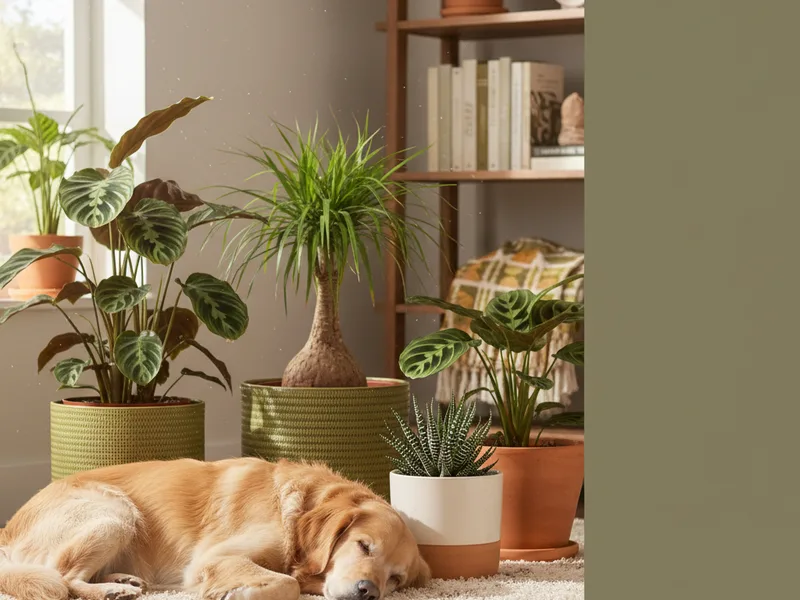
Spider plant. Arching green and white stripes, very forgiving, and happy in bright indirect light.
Parlor palm. A soft, classic palm that tolerates lower light and the occasional missed watering.
Cast iron plant. Dark, sturdy leaves that survive low light and neglect better than almost anything.
Ponytail palm. A sculptural trunk with a fountain of leaves, needs bright light and very little water.
Compact picks
Pet-safe plants for small spaces
Peperomia. Dozens of leaf shapes and colors, stays compact, and likes bright indirect light with light watering.
Prayer plant. Patterned leaves that fold up at night, prefers medium light and evenly moist soil.
Polka dot plant. Spotted pink, white or red leaves that brighten a shelf, likes bright indirect light.
Baby tears. A low, dense mat of tiny leaves, great for a small pot in indirect light with regular water.
Nerve plant. Bold veined leaves in pink or white, likes low to medium light and consistent moisture.
Trailing and hanging
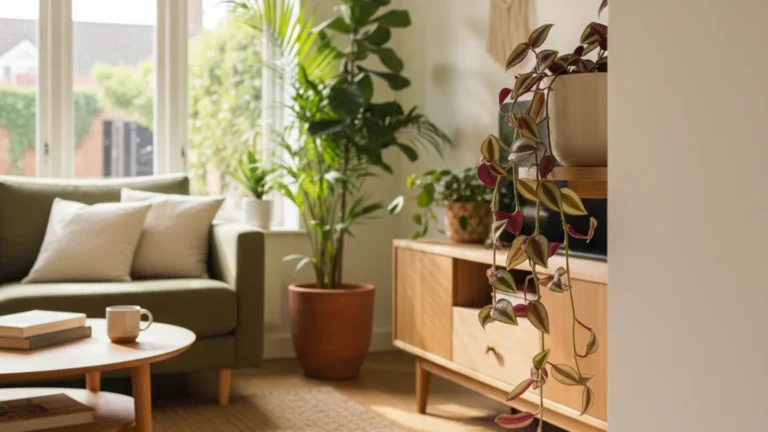
Pet-safe trailing plants
Boston fern. Full, feathery fronds that look great in a hanging basket, likes humidity and indirect light.
Lipstick plant. Glossy leaves with bright red tubular flowers, happy in bright indirect light.
Burro's tail. Thick, bead-like trailing stems, needs bright light and infrequent watering.
Hoya. Waxy leaves and star-shaped flowers, easy care in bright indirect light.
Keep hanging plants truly out of reach if your cat likes to bat at moving leaves. Even a safe plant is no fun when it ends up on the floor.
Statement plants
Pet-safe plants with big presence
Areca palm. Tall, feathery fronds that fill a corner, likes bright indirect light and regular water.
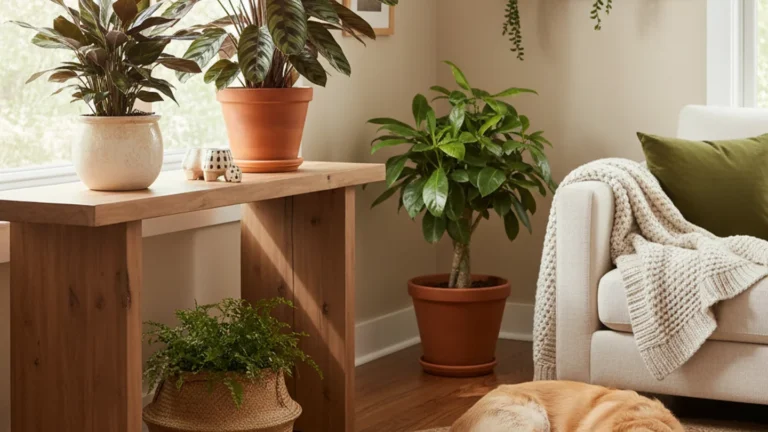
Money tree. A braided trunk with glossy leaves, easy going in medium to bright indirect light.
Calathea. Dramatic patterned leaves, medium light and consistent moisture keep it happy.
Bird's nest fern. Broad, rippled leaves in a rosette, prefers medium light and humidity.
Bamboo palm. Airy, upright growth that tolerates lower light, a good choice for dimmer rooms.
Blooming options
Pet-safe flowering plants
African violet. Small, velvety leaves with purple, pink or white blooms, likes bright indirect light.
Orchid. Elegant flowers that last for weeks, bright indirect light and a weekly soak.
Bromeliad. A bold central flower in pink, red or orange, easy care in bright indirect light.
Christmas cactus. Winter blooms in pink or red, tolerates medium light and forgiving watering.
Note that not every flowering plant is safe. Lavender, for example, is toxic to cats and dogs, so always check before you bring a blooming plant home.
Popular plants that are not safe
Some of the most common houseplants are toxic to cats, dogs or both. Knowing these matters as much as knowing the safe list.
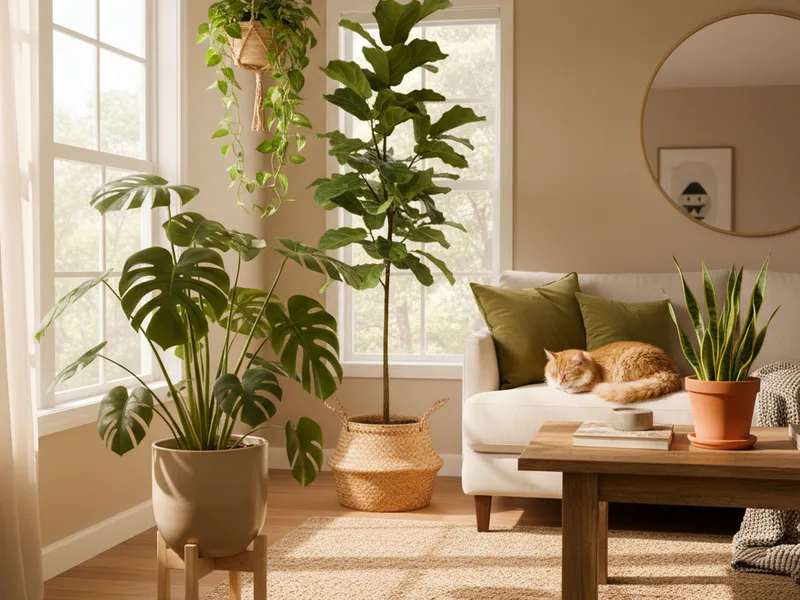
Monstera is toxic to both cats and dogs. So are pothos, philodendron and snake plants. Cyclamen is another one to avoid in pet homes.
If you love the look of a toxic plant, pick a safe stand-in from the list above that fits a similar look and light level.
Common questions about pet safe houseplants
What does non-toxic actually mean?
It means the plant is not expected to cause poisoning if your cat or dog chews or eats it. It does not mean zero risk. Eating any plant can cause mild vomiting or diarrhea, so call your vet if symptoms appear.
Is a pet-safe plant safe if my cat eats a lot of it?
Large amounts of any plant can upset your pet's stomach, even non-toxic ones. If your cat is a dedicated chewer, keep plants out of reach and offer cat grass as a safer outlet.
Are these plants safe for both cats and dogs?
Yes. Every plant on this list is generally considered non-toxic to both cats and dogs. Some plants are only a problem for one species, which is why we check both.
How do I stop my pet from chewing my plants?
Place plants on high shelves or in hanging planters, use rooms your pet cannot access, and redirect chewing to toys or cat grass. Bitter sprays made for plants can also help.
What should I do if my pet eats a plant?
Identify the plant, remove any remaining pieces from your pet's mouth, and watch for symptoms like drooling, vomiting or lethargy. Call your vet or a pet poison hotline if you are unsure or symptoms appear.
Not sure about a plant you already own?
Search our guides for a clear verdict first: is it toxic to cats, dogs or both, and what is a safe alternative that fits your light and lifestyle.