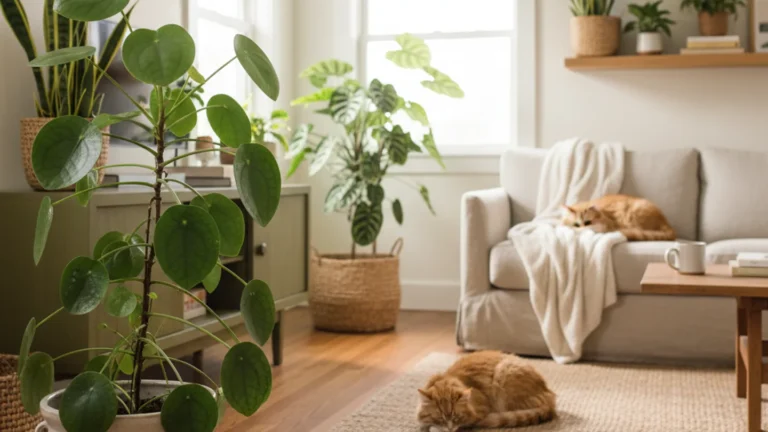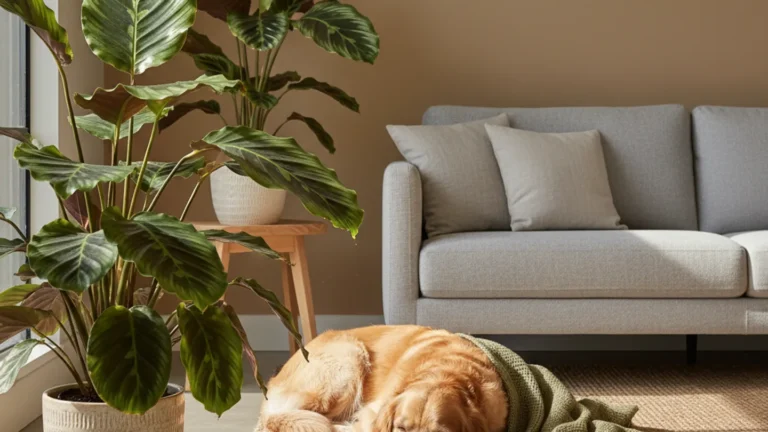
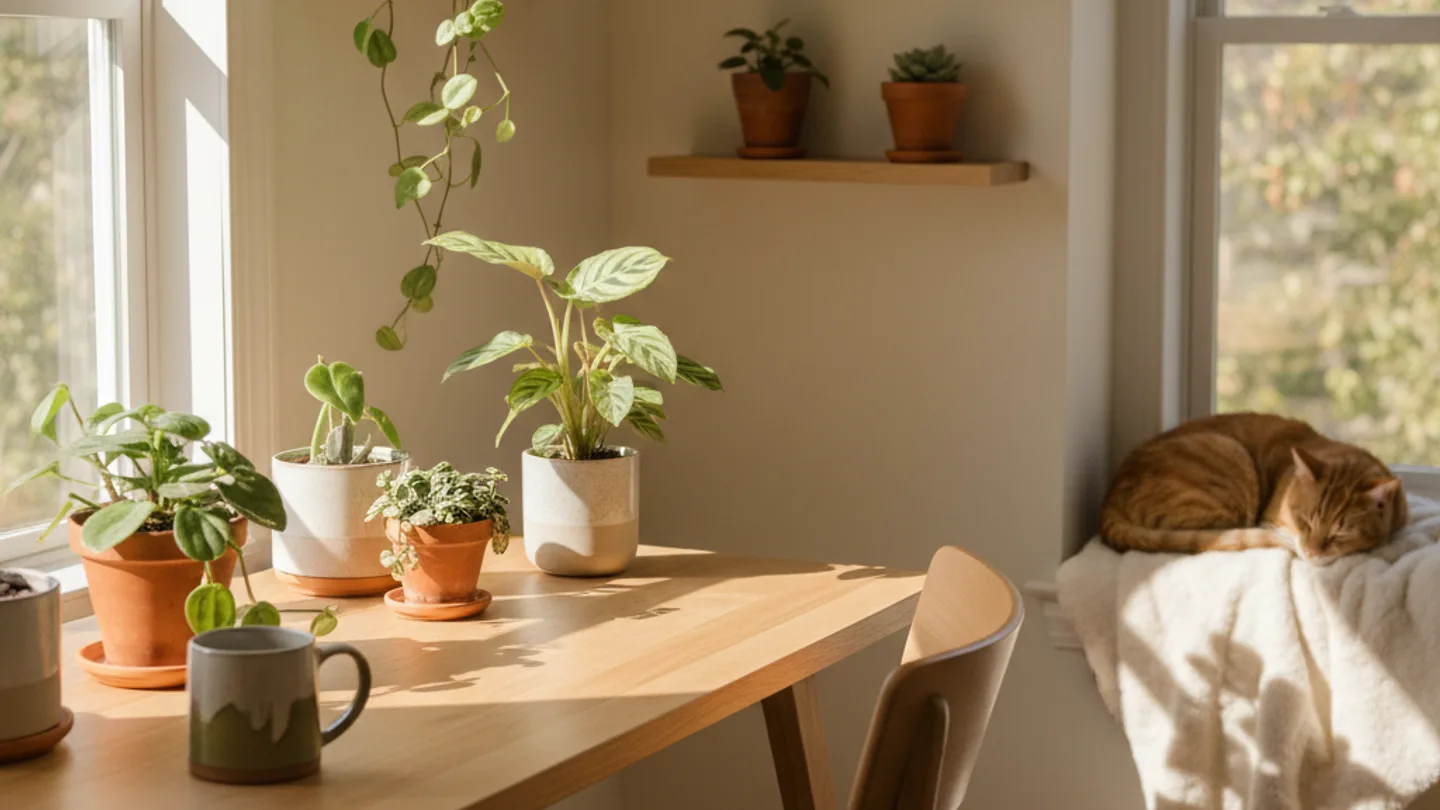
Small Pet-Safe Plants for Desks and Shelves
Small pet safe plants do exist, and they are easier to keep than you might think. Every plant on this list is generally considered non-toxic to both cats and dogs, and each one stays compact enough for a desk, shelf or bedside table.
We kept the list short and practical. For each plant you get its footprint, its light needs and one care line. No greenhouse conditions, just what works in a real apartment.
One note before you start: non-toxic means a nibble is unlikely to cause poisoning. Any plant material can still upset a pet's stomach, so if your cat or dog eats a plant and shows symptoms like vomiting or drooling, call your vet.
The short version
- All plants listed here are generally considered non-toxic to cats and dogs.
- Every pick stays small, roughly under 10 inches (25 cm), so it fits a desk, shelf or nightstand.
- Each entry includes footprint, light and one care line so you can decide in seconds.
- Even safe plants can cause a mild stomach upset if eaten in quantity. Call your vet if symptoms appear.
How we chose these plants
Three rules made this list. First, the plant is generally considered non-toxic to both cats and dogs. Second, it stays compact, roughly under 10 inches tall, or is easy to keep small with light pruning. Third, it tolerates normal indoor light, not a sunny greenhouse.
The result: ten plants that fit small spaces and busy lives, without putting your pet at risk.
| Plant | Footprint | Light | Care line |
|---|---|---|---|
| Parlor palm | 4-inch pot | Low to medium indirect light | Water when the top inch of soil dries out |
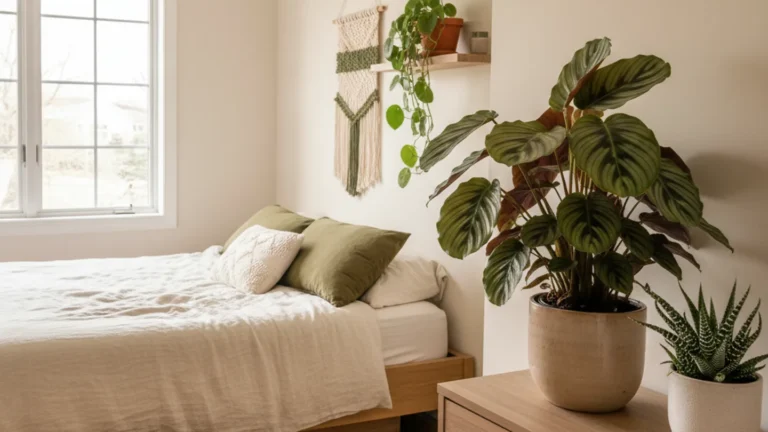
| Calathea rattlesnake | 4 to 6-inch pot | Medium indirect light | Keep soil lightly moist, likes humidity |
| Prayer plant (maranta) | 4-inch pot | Low to medium indirect light | Water when the top inch feels dry |
| Peperomia | 3 to 4-inch pot | Medium to bright indirect light | Let soil dry between waterings |
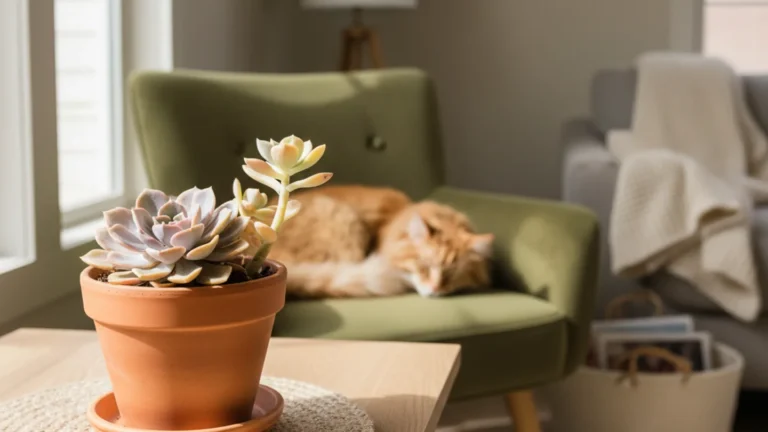
| Haworthia | 2 to 3-inch pot | Bright indirect light | Water sparingly, like a succulent |
| Fittonia (nerve plant) | 3 to 4-inch pot | Low to medium indirect light | Keep soil moist, wilts dramatically when thirsty |
| Pilea peperomioides (young) | 4-inch pot | Bright indirect light | Water when top inch dries, rotate weekly |
| Spider plant (young) | 4-inch pot | Medium to bright indirect light | Water when half the soil is dry |
| Boston fern (small) | 4 to 6-inch pot | Medium indirect light | Keep evenly moist, likes a humid spot |
| Baby tears | 3 to 4-inch pot | Medium indirect light | Keep soil consistently moist |
The easiest picks for beginners
New to plants? Start with peperomia or haworthia. Both forgive missed waterings, both stay tiny, and both handle the average apartment without fuss.
The spider plant is another good first choice. It grows fast, tells you clearly when it is thirsty, and a young plant fits a shelf for a long time before it needs more space.
If your pet is a determined chewer, remember that non-toxic is not the same as a snack. Place even safe plants where your pet cannot make a daily habit of them.
Small plants for low light
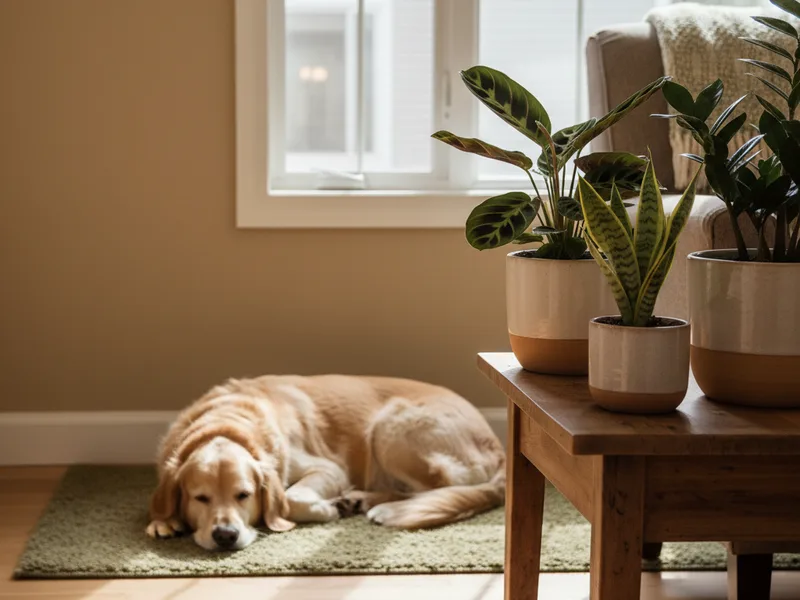
No sunny windowsill? The parlor palm, prayer plant and fittonia all cope with lower light, which makes them good candidates for a desk away from the window or a bedside table.
Low light means slower growth, so water less often. Soggy soil is the most common way these small plants die indoors.
Thinking about bigger statement plants instead? Check whether they are safe first. Our guides on snake plants, pothos and monstera explain why those popular picks are a problem for pets.
A quick word on pots and placement
Small plants tip over easily, and a curious cat makes that worse. Choose pots with a bit of weight, or set the plant inside a heavier decorative pot.
Shelves are safer than desks if your cat jumps on furniture. A plant at the back of a high shelf is out of paw's reach and still gets decent light.
Skip small stones or moss as top dressing if your dog likes to dig or swallow things. Plain soil is the safest finish.
Common questions about small pet-safe plants
Are these plants really safe if my cat or dog eats a leaf?
These plants are generally considered non-toxic, so a small nibble is unlikely to poison your pet. That said, any plant material can cause mild vomiting or diarrhea. If your pet shows symptoms, contact your vet.
What counts as a small plant here?
We used roughly 10 inches (25 cm) as the ceiling, including the pot. Some plants, like the spider plant, eventually outgrow that, but they stay compact for a long time and can be divided or trimmed.
Can I keep these plants in a room with no windows?
Not without help. Every plant needs some light. In a windowless room, use a small grow light, or choose a spot in the next room and rotate the plant weekly.
Which small safe plant needs the least water?
Haworthia. It stores water like a succulent and only needs a drink every couple of weeks. Peperomia is a close second.
Are pet-safe plants also safe for children?
Generally considered non-toxic applies to cats and dogs in this context. Keep plants out of reach of small children too, and ask your pediatrician or poison control if a child eats any plant.