Pet-Safe Flowering Houseplants for Color All Year
Good news first: you do not have to choose between flowers and your pets. There are houseplants that bloom indoors and are generally considered non-toxic to cats and dogs.
This list covers eight pet safe flowering plants, from the classic African violet to the Christmas cactus. For each one you get the bloom season, the light it needs, and a quick tip to get it flowering again.
One note before we start. Non-toxic means a nibble is unlikely to cause poisoning. Eating any plant can still upset a pet's stomach, so call your vet if your cat or dog shows symptoms after chewing.
The short version
- African violets, moth orchids, bromeliads and Christmas cacti all bloom indoors and are generally considered non-toxic to cats and dogs.
- Most pet-safe bloomers need bright, indirect light to flower well. A dark corner means leaves, not blooms.
- Reblooming usually comes down to three things: enough light, a rest period, and the right feeding rhythm.
- Non-toxic is not the same as harmless. Any plant can cause a mild stomach upset if eaten in quantity.
- Popular flowering plants like cyclamen are toxic to pets, so always check before you buy.
African violet (Saintpaulia)
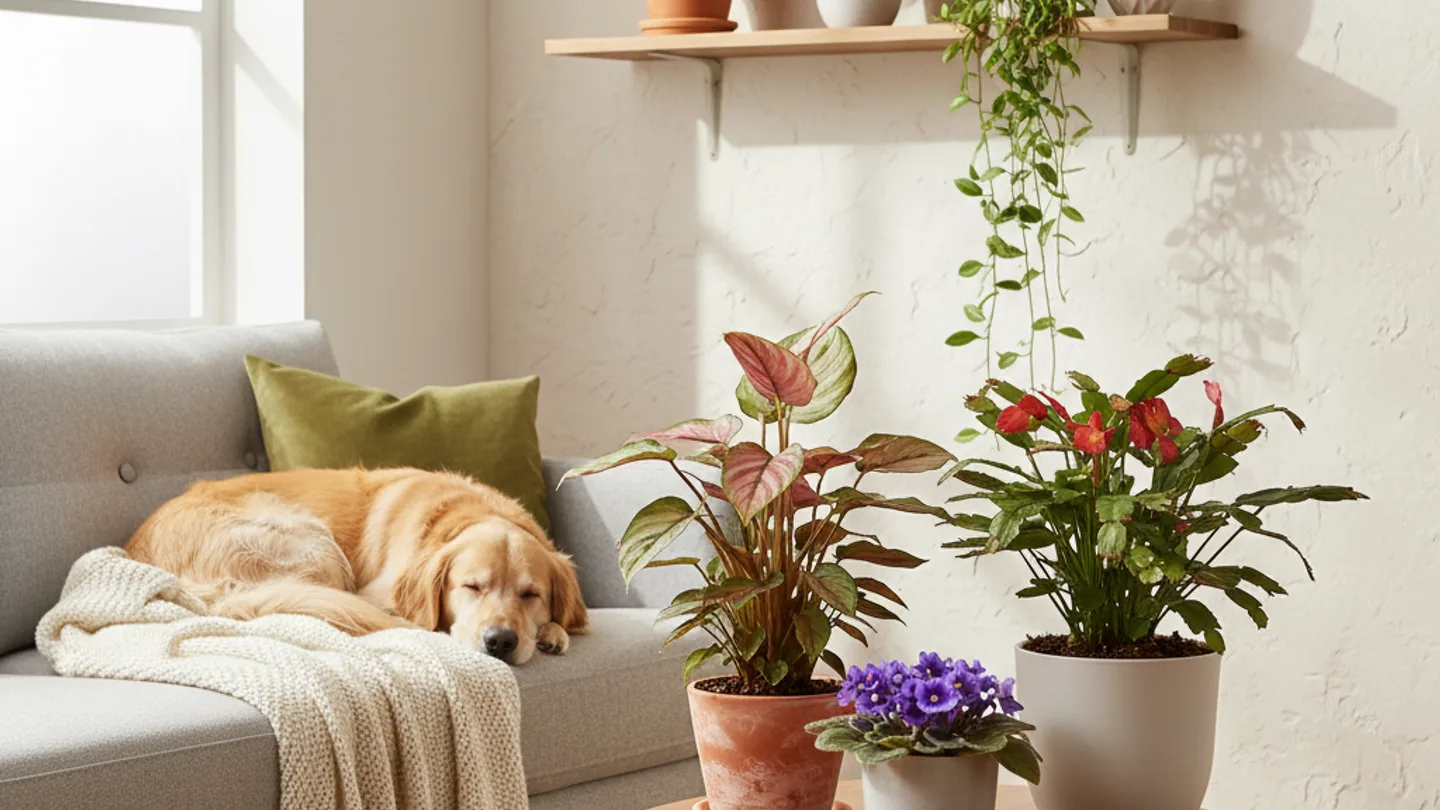
The African violet is the easiest way to get flowers on a windowsill without worrying about your pets. It is generally considered non-toxic to cats and dogs, and it can bloom almost year round with enough light.
Bloom season: nearly continuous in good conditions, with short breaks between flushes.
Light: bright, indirect light. An east or north facing window works well. Too little light is the main reason they stop blooming.
Rebloom tip: water from the bottom so the fuzzy leaves stay dry, and feed with a diluted violet fertilizer every few weeks during active growth.
Moth orchid (Phalaenopsis)
Orchids look exotic, but the common moth orchid is one of the safest flowering plants you can bring home. It is generally considered non-toxic to cats and dogs.
Bloom season: the flowers can last two to three months, often appearing in late winter or spring. With care, the same plant blooms again each year.
Light: bright, indirect light. Direct sun scorches the leaves.
Rebloom tip: after the last flower drops, cut the spike just above a lower node. Keep up the light and water lightly when the bark feels dry. Many plants send up a new spike within a few months.
Bromeliad (Guzmania and friends)
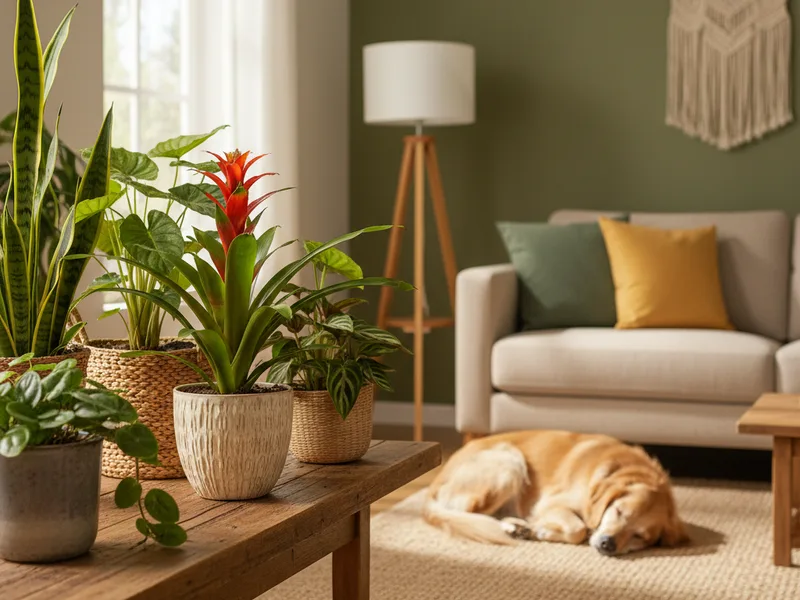
Bromeliads give you a bold, tropical bloom in red, pink or orange, and they are generally considered non-toxic to cats and dogs. One heads up: the stiff leaves tempt cats to chew, so a high shelf still helps.
Bloom season: the central bloom can hold its color for three to six months. Each rosette blooms only once, but the mother plant produces baby plants, called pups, that bloom in turn.
Light: bright, indirect light. They tolerate lower light than most bloomers but flower best near a bright window.
Rebloom tip: the original rosette will not bloom again, but do not throw it out. Let the pups grow to about half the size of the mother, then separate and pot them up.
Christmas cactus (Schlumbergera)
The Christmas cactus is a holiday favorite that is generally considered non-toxic to cats and dogs. Its hanging stems full of pink, red or white flowers arrive just when everything outside looks gray.
Bloom season: late fall through early winter, usually November to January.
Light: bright, indirect light most of the year. It sets buds when nights get longer and temperatures cool slightly.
Rebloom tip: starting in early fall, give the plant 12 to 14 hours of darkness each night for about six weeks and cut back on water. Once buds appear, move it back to its normal spot and keep it away from cold drafts.
More safe bloomers worth knowing
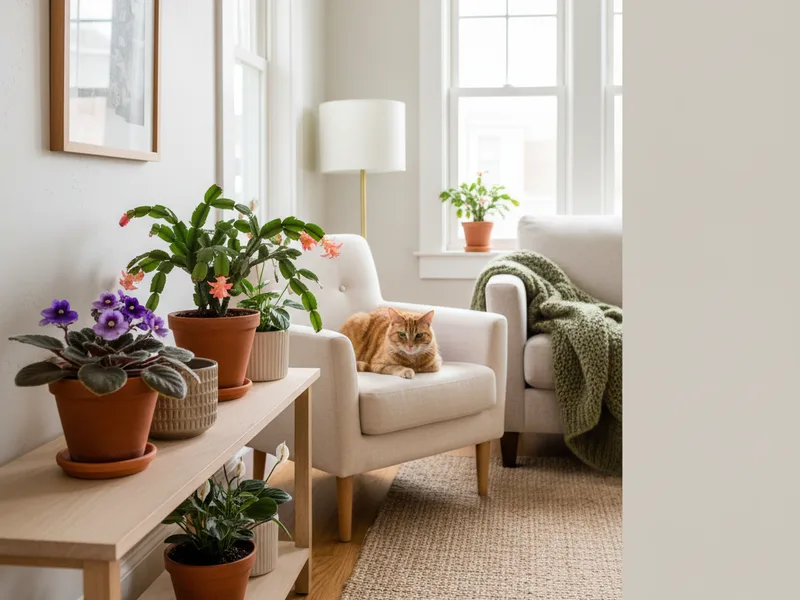
Lipstick plant (Aeschynanthus): trailing stems with red tubular flowers, mostly in spring and summer. Generally considered non-toxic to cats and dogs. It likes bright, indirect light and slightly moist soil.
Polka dot plant (Hypoestes): grown for its spotted leaves, but it also produces small flowers. Non-toxic to cats and dogs, and a good filler for a plant shelf.
Gerbera daisy: cheerful daisy-like blooms and generally considered non-toxic. It needs a lot of light to keep flowering indoors, so give it your brightest spot.
Prayer plant (Calathea and Maranta): grown mainly for foliage, but the small flowers are a bonus. Non-toxic and happy in medium light, which makes it useful in shadier rooms.
| Plant | Toxic to cats or dogs? | Bloom season | Light for best blooms |
|---|---|---|---|
| African violet | No, generally considered non-toxic | Nearly year round | Bright, indirect |
| Moth orchid | No, generally considered non-toxic | Winter to spring, flowers last months | Bright, indirect |
| Bromeliad | No, generally considered non-toxic | One bloom lasting 3 to 6 months | Bright, indirect |
| Christmas cactus | No, generally considered non-toxic | November to January | Bright, indirect plus dark fall nights |
| Lipstick plant | No, generally considered non-toxic | Spring and summer | Bright, indirect |
| Gerbera daisy | No, generally considered non-toxic | Spring through fall with strong light | Very bright, some direct sun |
How to get any of these plants to rebloom
Give it more light than you think
Most bloomers fail because of light, not water or fertilizer. Move the plant within a few feet of a bright window, out of harsh direct sun.
Respect the rest period
Orchids and Christmas cacti need a cooler, drier or darker phase to set buds. Check what your specific plant expects after flowering.
Feed lightly and regularly
Use a diluted balanced fertilizer during active growth, roughly every two to four weeks. Stop feeding when the plant is resting.
Water on the plant's schedule, not yours
Let orchid bark dry before rewatering, and let Christmas cactus soil dry slightly. Soggy roots stop blooms before they start.
Be patient
Many plants skip a season after being moved or repotted. If the foliage looks healthy, buds usually follow.
Common questions
Are pet safe flowering plants completely risk free?
No plant is completely harmless. The plants on this list are generally considered non-toxic, but eating leaves or flowers can still cause a mild stomach upset. Keep plants out of reach of heavy chewers and call your vet if your pet vomits, drools or seems off after nibbling.
Which flowering houseplants should I avoid with cats and dogs?
Some popular bloomers are toxic. Cyclamen, for example, is toxic to cats and dogs and can cause serious symptoms if the tubers are eaten. Lilies are extremely dangerous for cats. Always check a plant before it comes through the door.
Why does my African violet have leaves but no flowers?
Almost always light. African violets need bright, indirect light for most of the day to bloom. A spot a few feet from an east or west window, plus regular diluted feeding, usually restarts flowering within a couple of months.
Can I keep these plants if my cat chews everything?
Non-toxic plants are the right starting point, but chewing still risks stomach upset and a shredded plant. Try hanging planters, closed terrariums or a room your cat cannot access for the tempting trailing types.
Do these plants bloom all year?
African violets come closest, with repeat flushes most of the year. Orchids bloom once or twice a year but hold flowers for months. Mixing several plants from this list gives you color in every season.
Check before you bring a new plant home
The plants on this list are the safe picks. Many other flowering houseplants are not. Before you buy anything new, look it up first. We have done the same verdict-first checks for popular plants, like snake plants, pothos and cyclamen.
If your pet does eat a plant and shows symptoms like vomiting, drooling, diarrhea or unusual tiredness, contact your vet right away. Bring a photo or a piece of the plant so they know what they are dealing with.