Pet-Safe Herbs You Can Grow on the Windowsill
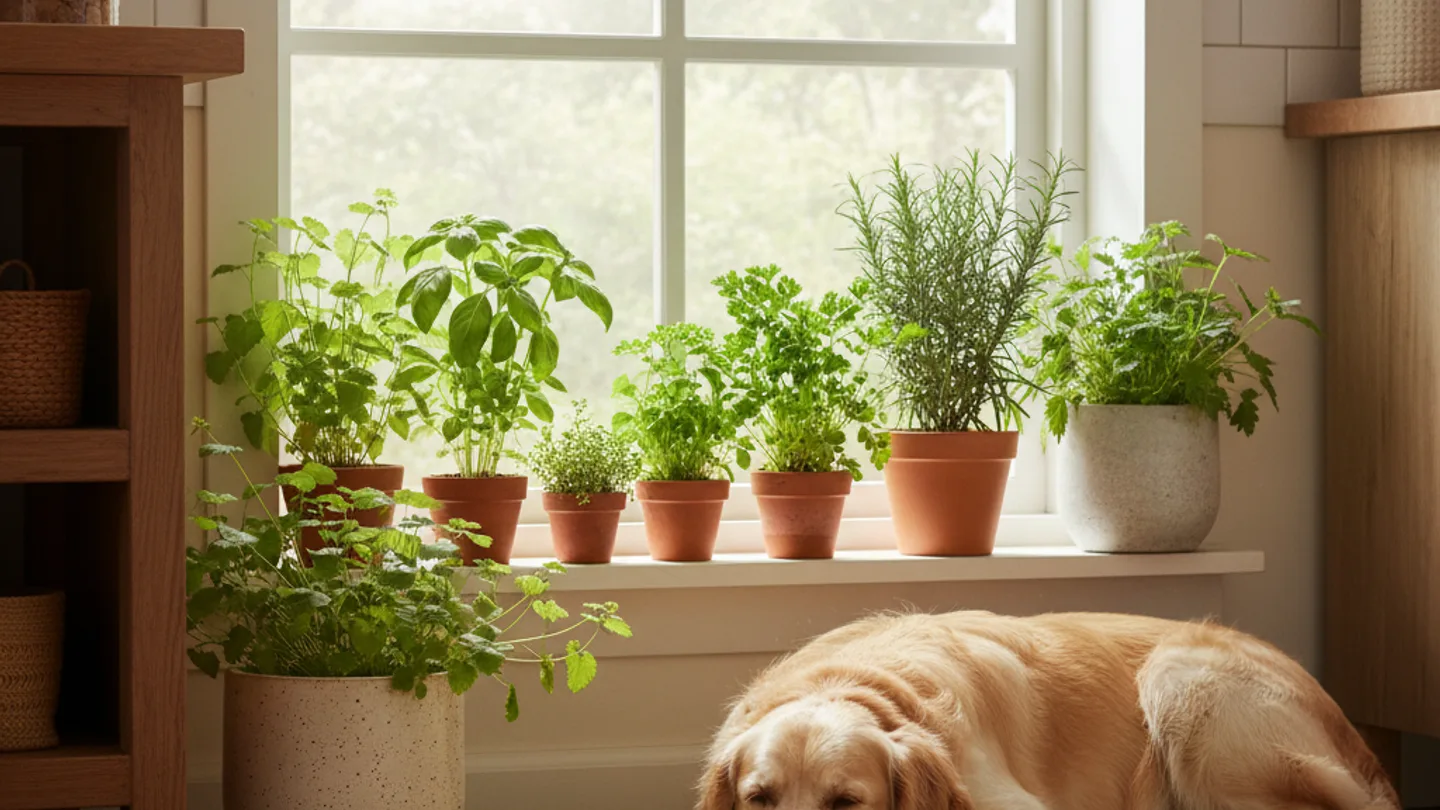
Good news for cooks with curious pets: several popular culinary herbs are generally considered non-toxic to cats and dogs, and they grow happily on a sunny windowsill.
The short answer: basil, rosemary, thyme, sage and dill are the safe picks. Chives are the big one to skip. And mint deserves a caution label, because a lot of it can upset your pet's stomach.
Here is the full list, with light and care notes matched to real apartments, not greenhouses.
The quick verdict
- Basil, rosemary, thyme, sage and dill are generally considered non-toxic to both cats and dogs.
- Chives are toxic to cats and dogs. Skip them indoors if your pet grazes.
- Mint is not classified as highly toxic, but large amounts can cause stomach upset, so limit access.
- Even with safe herbs, a lot of nibbling can irritate any pet's stomach. Call your vet if symptoms appear.
- Most culinary herbs want 6 or more hours of sun. A south or west-facing window works best.
Safe to grow: the five best pet-safe herbs
These five herbs are widely listed as non-toxic to cats and dogs. That does not mean unlimited snacking is a good idea. Any plant material eaten in quantity can cause mild stomach upset. But normal kitchen growing poses low risk.
Basil. A fast grower that loves warmth and sun. Give it a bright window and keep the soil lightly moist. Pinch the tops often and it stays bushy.
Rosemary. Woody, fragrant and tough. It wants full sun and soil that dries out between waterings. Overwatering is the main way people kill it.
Thyme. Compact and low maintenance, great for a narrow sill. Full sun, let it dry between waterings.
Sage. Soft leaves, strong flavor, and happy in the same sunny, on-the-dry-side conditions as rosemary and thyme.
Dill. Feathery and quick from seed. It likes sun and steady moisture. Note that dill goes to seed fast indoors, so sow small batches often.
| Herb | Cats | Dogs | Light needed | Notes |
|---|---|---|---|---|
| Basil | Generally non-toxic | Generally non-toxic | 6+ hours direct sun | Keep soil lightly moist |
| Rosemary | Generally non-toxic | Generally non-toxic | 6+ hours direct sun | Let soil dry between waterings |
| Thyme | Generally non-toxic | Generally non-toxic | 6+ hours direct sun | Compact, good for small sills |
| Sage | Generally non-toxic | Generally non-toxic | 6+ hours direct sun | Prefers drier soil |
| Dill | Generally non-toxic | Generally non-toxic | 6+ hours direct sun | Grows fast, sow small batches |
| Mint | Limit access | Limit access | 4 to 6 hours sun | Large amounts can upset the stomach |
| Chives | Toxic | Toxic | 6+ hours direct sun | Skip indoors with pets |
Herbs to limit: mint
Mint is not in the same danger class as chives, but it is not a free pass either. Eaten in larger amounts, mint can cause vomiting and diarrhea in cats and dogs.
The practical approach: if you grow mint, keep the pot out of casual reach. A hanging planter or a high shelf works well. A leaf or two stolen off a plant is unlikely to cause trouble, but a cat chewing on it daily is worth stopping.
One more tip: mint spreads aggressively. Give it its own pot, or it will crowd out its neighbors.
Herbs to skip: chives and the allium family
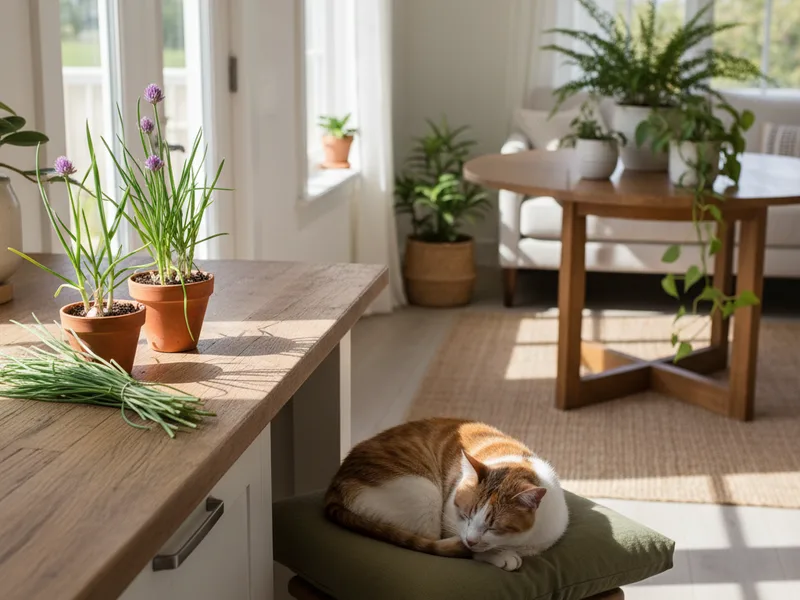
Chives are toxic to both cats and dogs. They belong to the allium family, along with onions, garlic and leeks, and alliums can damage red blood cells in pets. Cats are especially sensitive.
Symptoms of allium poisoning can include drooling, vomiting, diarrhea, weakness and pale gums, and they can be delayed by a few days. If your pet eats chives, call your vet or a pet poison hotline, even if they seem fine at first.
The good news: chives are easy to replace in the kitchen. The green tops of dill or a little extra parsley-style flavor from safe herbs can fill the gap. If you love the onion note, cook with it and keep the growing plants out of the house.
Setting up a pet-safe windowsill herb garden
Pick your brightest window. Most herbs want 6 or more hours of direct sun. South and west-facing windows usually deliver. If your place is dim, thyme and mint tolerate slightly lower light better than basil and rosemary.
Use pots with drainage holes. Wet roots kill more windowsill herbs than pets do.
Think about access. Non-toxic means low risk, not a salad bar. If your cat chews everything green, put the pots on a high sill or in a hanging planter. The herbs stay safe, and so does your harvest.
If you also keep houseplants, check them before adding herbs nearby. Common favorites like pothos and philodendron are toxic, so it pays to check which houseplants are toxic before your pet starts exploring the green corner.
Common questions about herbs and pets
Are pet safe herbs completely harmless if my cat eats a lot?
No plant is completely harmless in large amounts. Even non-toxic herbs can cause mild stomach upset if a pet eats a big quantity. Generally considered non-toxic is the right way to think about it, and you should call your vet if vomiting, diarrhea or other symptoms appear.
What should I do if my dog eats chives?
Call your vet or a pet poison hotline, even if your dog seems fine. Allium poisoning symptoms can be delayed by a few days. Note roughly how much was eaten and when, so you can tell the vet.
Can I grow these herbs in a low-light apartment?
Most culinary herbs want 6 or more hours of direct sun. In low light, thyme and mint cope best, but growth will be slow and leggy. A small grow light is a practical fix for darker kitchens.
Is dried or cooked herb as risky as the fresh plant?
For toxic herbs like chives, yes, the dried and cooked forms still contain the problematic compounds. For safe herbs, normal cooking amounts are not a concern, though rich, salty or buttery dishes are another story for pets.
My cat keeps digging in the herb pots. What helps?
Cover the soil with large pebbles, move the pots to a higher spot, or offer a pot of cat grass as a decoy. Digging is often boredom or habit, so giving an allowed target usually works better than blocking alone.